
Iran War Spikes US Gas, Diesel and Fertilizer Prices, Squeezing Farmers and Small Businesses
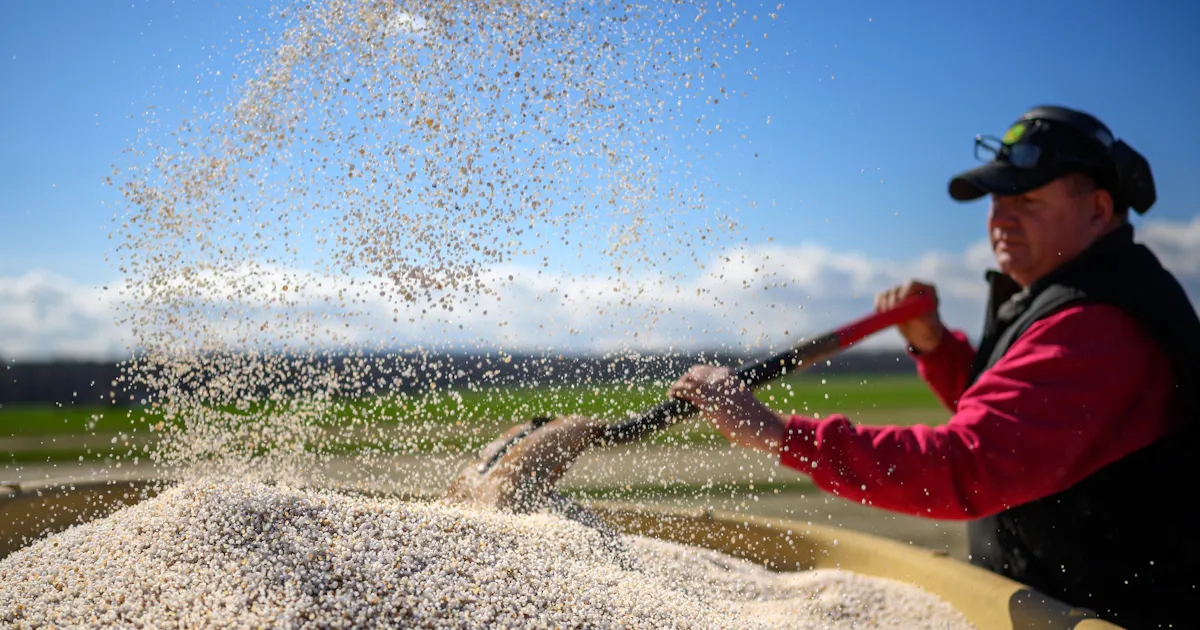
Cover image from newrepublic.com, which was analyzed for this article
The Iran war threatens small businesses and consumers' wallets while American farmers suffer from disruptions. Polls show Americans blaming Trump for surging gas prices heading into midterms. Refunds from illegal tariffs loom but savings may not reach families.
PoliticalOS
Friday, April 24, 2026 — Business
The 2026 Iran conflict produced verifiable spikes in U.S. gasoline, diesel and fertilizer prices that are raising costs for food, transport and farming, with effects likely to appear in summer and fall harvests. A Reuters/Ipsos poll indicates most Americans, including a majority of Republicans, hold President Trump responsible, narrowing Republican advantages on economic issues ahead of midterms. The episode reveals structural vulnerabilities in global commodity chains that predate the war and will persist after it, regardless of competing claims about strategic necessity.
What outlets missed
Most outlets underplayed the mid-April ceasefire and partial resumption of Strait of Hormuz shipping by April 16, which began easing some price pressure even as downstream harvest effects remained. Coverage also gave limited attention to U.S. domestic nitrogen fertilizer production, which meets 80-90 percent of needs and reduced exposure to Gulf supplies compared with the portrayal of total vulnerability. The $12 billion in supplemental farm subsidies and Trump administration moves to restore certain Biden-era grants for domestic and climate-smart fertilizer projects were mentioned in only one piece and not analyzed for adequacy. Finally, potential tariff refunds referenced in the broader economic context received no treatment, leaving unclear whether any savings would offset higher energy costs for households or simply remain tied up in legal and distribution processes.
American drivers, grocers and farmers are absorbing higher costs from the 2026 conflict with Iran, with average gasoline prices climbing above $4 a gallon and diesel reaching $5.40 in many markets. The disruption began after U.S. and Israeli strikes on February 28 targeted Iranian nuclear facilities and missile production sites, prompting Iranian responses that damaged oil infrastructure and restricted shipping through the Strait of Hormuz. That chokepoint handles roughly one-fifth of global oil trade and up to a third of fertilizer shipments from Gulf producers, according to industry analyses.
The war lasted approximately 40 days before a ceasefire took hold in mid-April, with shipping partially resuming by April 16. Yet the price shocks have lingered. Truckers added fuel surcharges to delivery contracts, according to Todd Spencer of the Owner-Operator Independent Drivers Association. Independent grocers reported diesel, packaging and energy costs compounding at every stage from field to shelf. Fertilizer prices jumped about 45 percent, per reports citing the American Farm Bureau Federation, which found 70 percent of farmers could not afford full applications for the current planting season. Some switched from corn to soybeans or cut acreage, adding an estimated $35 per acre to corn production costs in certain analyses.
A Reuters/Ipsos poll conducted April 15-20 found 77 percent of registered voters said President Trump bore at least some responsibility for the price surge, including 55 percent of Republicans. Fifty-eight percent said they would be less likely to support midterm candidates backing Trump's approach to the conflict. The survey's exact crosstabs on blame could not be independently verified in all secondary reports. Republicans hold narrow majorities in Congress heading into the November midterms; party strategists cited in the poll coverage expressed concern that sustained high prices could erode their edge on economic issues, where their advantage had narrowed from 14 points in January 2025 to roughly 1 point.
Small family farms face the sharpest margin pressure. With net profits often between 1 and 2 percent, many lack reserves to absorb repeated shocks, according to John Ross of the Independent Grocers Alliance. The U.S. government issued roughly $12 billion in additional farm subsidies, but Ross and others suggested this may prove insufficient if the cycle of higher input costs and lower yields repeats. Longer-term questions remain about U.S. agriculture's dependence on natural-gas-derived nitrogen fertilizer. Experts including soil scientists at the University of Saskatchewan and Columbia University noted that alternatives such as precision application, expanded crop rotation, or renewable-powered ammonia synthesis exist but require infrastructure investment and changes to federal farm policy that have so far proved elusive.
The conflict also exposed limits of air power against dispersed production facilities. Israeli and U.S. analysts said Iran replenished missile stocks faster than expected from prior engagements, though specific claims of 700 ballistic missiles fired and 23 Israeli civilian deaths were not corroborated by all trackers. Iranian casualties, estimated above 3,000 by several international outlets, received less attention in U.S. tactical assessments. On the economic side, JPMorgan analysts warned of cascading effects into fall harvests and imported produce, while noting that localized supply chains offered small grocers modest short-term insulation compared with national chains.
Whether these disruptions prove temporary or accelerate structural reforms in energy and agriculture will shape household budgets through 2026 and beyond. Prices had begun easing in late April in some markets as shipping lanes reopened, yet consumer sentiment data showed 82 percent still viewed inflation as a major concern. The episode underscores how distant military decisions can rapidly translate into domestic price volatility when global commodities are involved.
More in Business & Economy

Major Banks Deliver Mixed Q3 Results on Trading Beats
JPMorgan, Goldman Sachs, Citigroup, and Wells Fargo reported Q3 figures, with revenue beats in trading but some estimate misses. CNBC provided live updates on the results and market reactions.

Oil Falls on Russian Diesel Outlook Despite Geopolitical Risks
Dow futures rose while Nasdaq faced pressure from tech weakness and elevated oil after geopolitical spikes. CNBC tracked premarket moves tied to earnings and Fed speeches.

Hall and Woodford Win Economics Nobel for Stabilization Models
American economists Robert E. Hall and Michael Woodford won the Nobel memorial prize for their research on managing economies through booms and busts, informing central bank policies on inflation and unemployment.

Skydance Closes Paramount-Warner Bros. Discovery Deal
The long-delayed media mega-merger cleared hurdles and began operations under Skydance, consolidating Hollywood power. Center and center-left outlets track the regulatory and business milestones.
The Compass
You just read five takes on one story.
What's your take? Find your political shape in a few minutes.
Take the test