
Warsh Pledges Fed Independence as Senators Probe Rates, Wealth and Powell Inquiry
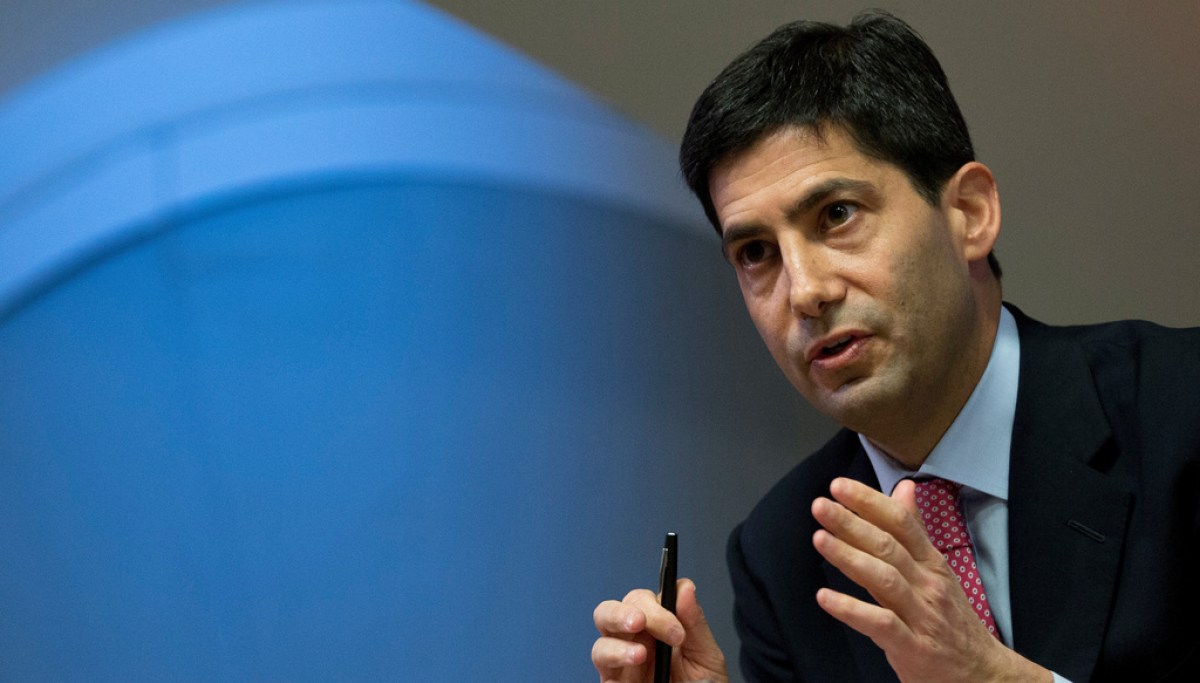
Cover image from washingtonexaminer.com, which was analyzed for this article
President Trump's pick Kevin Warsh, with a $226 million fortune, faced intense Senate scrutiny during his confirmation hearing for Federal Reserve chair amid economic strains from the Iran conflict. Questions centered on his plans for interest rates, Fed independence, and handling inflation. The hearing highlighted partisan divides over monetary policy direction.
PoliticalOS
Tuesday, April 21, 2026 — Business
Warsh's confirmation is not guaranteed in the short term because a single Republican senator's insistence on resolving the Powell probe could stall the committee vote despite the GOP majority. The nominee must persuade lawmakers he will defend data-driven monetary policy even as inflation has risen from the Iran conflict and the president who chose him has repeatedly called for lower rates. The most important fact is that the Fed chair does not set rates alone; any shift will require consensus on a divided FOMC, making credible independence more than rhetorical.
What outlets missed
Multiple outlets omitted or downplayed March 2026 federal court rulings that quashed DOJ subpoenas targeting Powell, describing the inquiry as having "zero evidence" of crime and labeling it pretextual; an appeal was noted but the decisions materially weakened the probe's immediate leverage. Few pieces fully reconciled Warsh's 2006-2011 meeting transcripts, which show consistent inflation concerns, with his more recent writings on AI-driven disinflation, leaving the evolution of his philosophy underscrutinized. Precise timing received short shrift: Trump nominated Warsh in late January, before the Iran conflict began February 28 and before the latest probe developments, yet many stories blurred that sequence. Uncorroborated personal allegations, such as any Jeffrey Epstein connection, appeared in one live blog but were absent from every other account and could not be independently verified. Finally, Powell's separate 14-year governor term runs until January 2028, providing continuity regardless of chair transition; that structural fact was rarely mentioned yet shapes the stakes of any delay.
The Federal Reserve's ability to set interest rates free from White House pressure hangs in the balance as Kevin Warsh, President Trump's nominee to lead it, testifies before the Senate Banking Committee. With Jerome Powell's term ending May 15 and inflation jumping nearly a full point after the late-February U.S.-Iran conflict drove energy prices higher, the hearing centers on one unresolved question: can a nominee who has publicly favored lower rates credibly insulate monetary policy from politics? Warsh, a former Fed governor from 2006 to 2011, entered the session with prepared remarks that monetary policy independence "is essential" and "earned by steering clear of distractions." He committed to keeping decisions focused on analytic rigor while working with Congress and the administration on non-monetary issues within the Fed's remit.
The central tension surfaced quickly. Republicans hold a 12-10 edge on the committee, yet Sen. Thom Tillis, R-N.C., has conditioned his support on resolution of a Justice Department probe into Powell's congressional testimony about a $2.5 billion headquarters renovation. Court rulings in March limited that inquiry, though an appeal remains possible; those developments were not uniformly detailed across coverage. Democrats, led by Sen. Elizabeth Warren, pressed on whether Warsh could resist expected demands for rate cuts. His financial disclosures list assets between $135 million and $226 million, largely tied to his marriage to Jane Lauder of the Estée Lauder fortune. The Office of Government Ethics flagged certain holdings requiring divestment for compliance; Warsh pledged to sell them within 90 days if confirmed. Democrats on the committee noted in a staff memo that incomplete details on some investments over $100 million made it "impossible to determine" potential conflicts with institutions the Fed regulates.
Warsh's views have shifted since the 2008 crisis, when transcripts show him voicing inflation concerns over aggressive easing. More recently he has argued artificial intelligence and productivity gains could prove disinflationary, opening room for lower rates. Former Atlanta Fed President Dennis Lockhart, who worked with Warsh, described him as a "careful navigator" likely to answer with "some degree of ambiguity." Bill English, who overlapped with Warsh at the Fed and later directed monetary affairs, said the nominee would likely affirm that rates could go lower while insisting independence matters for the country's long-term health.
The hearing occurred as scheduled on April 21 despite earlier procedural questions over disclosures. No single lawmaker's threat to block the nomination was corroborated across outlets; several reports of specific vows or "leaks" of testimony could not be independently verified and appear to reflect standard release of prepared opening remarks. Warsh's background spans Morgan Stanley, the Bush White House National Economic Council, Stanford's Hoover Institution and advisory work for investor Stanley Druckenmiller. He is not an economist by training yet served on the Fed board under both Bush and Obama.
Markets will watch whether Warsh can build consensus on the Federal Open Market Committee, where officials have penciled in possible cuts but remain divided. The Fed's balance sheet stood near $6.7 trillion in mid-April. Reducing it gradually could complement rate policy, analysts noted, though Warsh has previously called for faster normalization. His confirmation path ultimately requires a simple majority in the full Senate, but the committee vote looms first. By afternoon, senators had covered independence, past crisis decisions, inflation trends and divestment timelines without dramatic surprises. The session left the core contradiction unresolved: a nominee selected in part for alignment on rates must now demonstrate he will not bend to any administration on the mechanics of achieving them.
More in Business & Economy

Major Banks Deliver Mixed Q3 Results on Trading Beats
JPMorgan, Goldman Sachs, Citigroup, and Wells Fargo reported Q3 figures, with revenue beats in trading but some estimate misses. CNBC provided live updates on the results and market reactions.

Oil Falls on Russian Diesel Outlook Despite Geopolitical Risks
Dow futures rose while Nasdaq faced pressure from tech weakness and elevated oil after geopolitical spikes. CNBC tracked premarket moves tied to earnings and Fed speeches.

Hall and Woodford Win Economics Nobel for Stabilization Models
American economists Robert E. Hall and Michael Woodford won the Nobel memorial prize for their research on managing economies through booms and busts, informing central bank policies on inflation and unemployment.

Skydance Closes Paramount-Warner Bros. Discovery Deal
The long-delayed media mega-merger cleared hurdles and began operations under Skydance, consolidating Hollywood power. Center and center-left outlets track the regulatory and business milestones.
The Compass
You just read five takes on one story.
What's your take? Find your political shape in a few minutes.
Take the test