
Leavitt Resigns as White House Press Secretary to Focus on Family
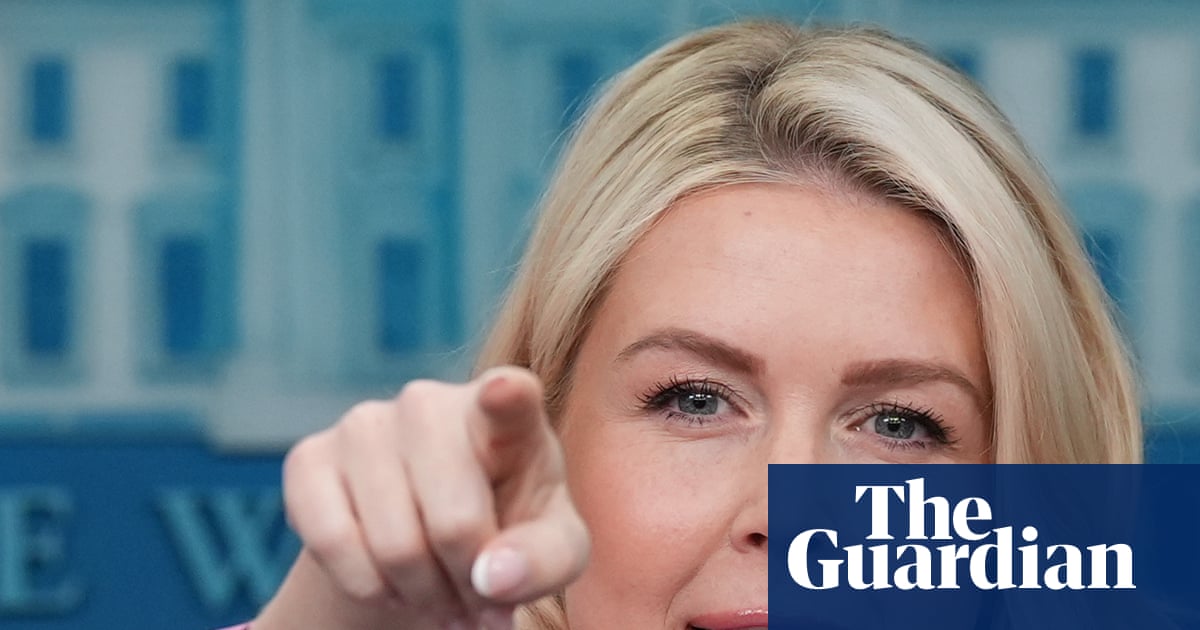
Cover image from theguardian.com, which was analyzed for this article
Karoline Leavitt is stepping down from her role as White House press secretary, with reports of praise from President Trump and speculation about her future as an adviser. Coverage spans reactions to her tenure and questions about a replacement amid low Trump approval ratings.
PoliticalOS
Thursday, August 13, 2026 — Politics
Leavitt’s exit removes a visible communications figure three months before midterms while Trump’s approval sits at a record low. Her stated reason centers on family demands after maternity leave, and no replacement has been announced. The story’s core unresolved element is how the White House will manage daily briefings and messaging through the election period.
What outlets missed
Leavitt’s full statement explicitly tied her decision to balancing motherhood after her May 2026 maternity leave rather than external pressures. Multiple outlets omitted the precise timeline of her return from leave and the birth date of her second child. No outlet supplied comparative data on prior press secretaries’ tenures or retention patterns under the same administration. Details on potential successors remained limited to unnamed sources in one report and were absent from others. The absence of a named replacement and the lack of any official transition plan were noted but not examined for operational impact on briefing schedules.
Leavitt Departs White House Press Post For Family As Midterms Loom
White House Press Secretary Karoline Leavitt announced her departure from the role at the end of the month, citing the demands of raising two young children as the primary reason. The 28-year-old, who became the youngest person to hold the position, described the choice as bittersweet in a statement that emphasized her desire to prioritize motherhood over the constant demands of the job. President Trump endorsed the move and indicated she would continue as an outside adviser.
Leavitt's tenure stood out for its direct confrontations with reporters, often delivering sharp rebuttals during daily briefings. Supporters noted her ability to push back against what they viewed as hostile questioning from outlets critical of the administration. Her approach contrasted with previous Republican spokespeople who sometimes appeared more defensive under similar pressure.
The timing raises questions about the administration's communications strategy. Midterm elections are scheduled for November, and historical patterns show the president's party frequently loses ground in those contests. Trump's approval ratings have reached a record low of negative 27 according to recent polling aggregates, driven in part by voter concerns over prices and ongoing military involvement abroad.
Sources indicate that CNN contributor Scott Jennings has emerged as a leading candidate to replace Leavitt. Jennings, a former Bush administration official and adviser to Senator Mitch McConnell, has built a profile through regular appearances on the cable network. His record includes pointed on-air exchanges, such as telling a colleague to remove a hand from his face during a heated moment. He has also drawn attention for comments that some colleagues have privately questioned.
Jennings downplayed any interest in the position during a recent appearance, instead praising Leavitt's performance as among the strongest in decades. The administration has not confirmed any successor, leaving the press operation in a period of uncertainty just as election season intensifies.
Leavitt's exit highlights a recurring tension for women in high-pressure political roles. She returned to work after the birth of her second child before deciding the schedule was incompatible with family responsibilities. Critics from the left have attacked her past statements on generational issues, while backers see her focus on traditional priorities as consistent with broader voter sentiment on work-life balance.
The search for a replacement occurs against a backdrop of administration turnover in communications roles. Jennings brings experience from earlier Republican campaigns and White House service, yet his public style includes language that some view as overly combative for the daily briefing room. The position requires managing relations with a press corps that has shown consistent skepticism toward Trump policies on trade, immigration, and foreign engagements.
Leavitt is expected to remain an influential voice outside government. Her departure removes a figure who regularly challenged narratives from outlets that have framed the administration's record in negative terms. The coming weeks will test whether the new spokesperson can maintain similar pressure while navigating a challenging electoral environment.
You just read America First's take. Want to read what actually happened?
More in Politics
Democrats Flip Senate, Expand House Majority in Midterms
Democrats flipped the Senate and expanded their House majority in a major rebuke to President Trump and Republicans. Key victories included multiple Senate seats and state-level wins that ended long-standing GOP dominance in places like Texas.
GOP Losses Spur Blame, Vance Distancing, 2028 Maneuvers
Republicans are pointing fingers internally after heavy losses, with Vice President JD Vance distancing himself from Trump over the Iran war and positioning for a potential 2028 run. Challengers within the party are already sensing opportunity.
Democrats Take House and Senate Amid Record Midterm Turnout
Democrats achieved decisive gains in the 2026 midterms, flipping seats to take control of both chambers. Coverage highlights historic turnout and implications for the Trump administration.
Democrats Take House and Senate, Constraining Trump
Democrats flipped both the House and Senate in a major rebuke to President Trump and Republicans. The results create divided government and set up battles over spending, oversight, and foreign policy for the remainder of Trump's term.
The Compass
You just read five takes on one story.
What's your take? Find your political shape in a few minutes.
Take the test