
Leavitt Resigns as White House Press Secretary to Focus on Family
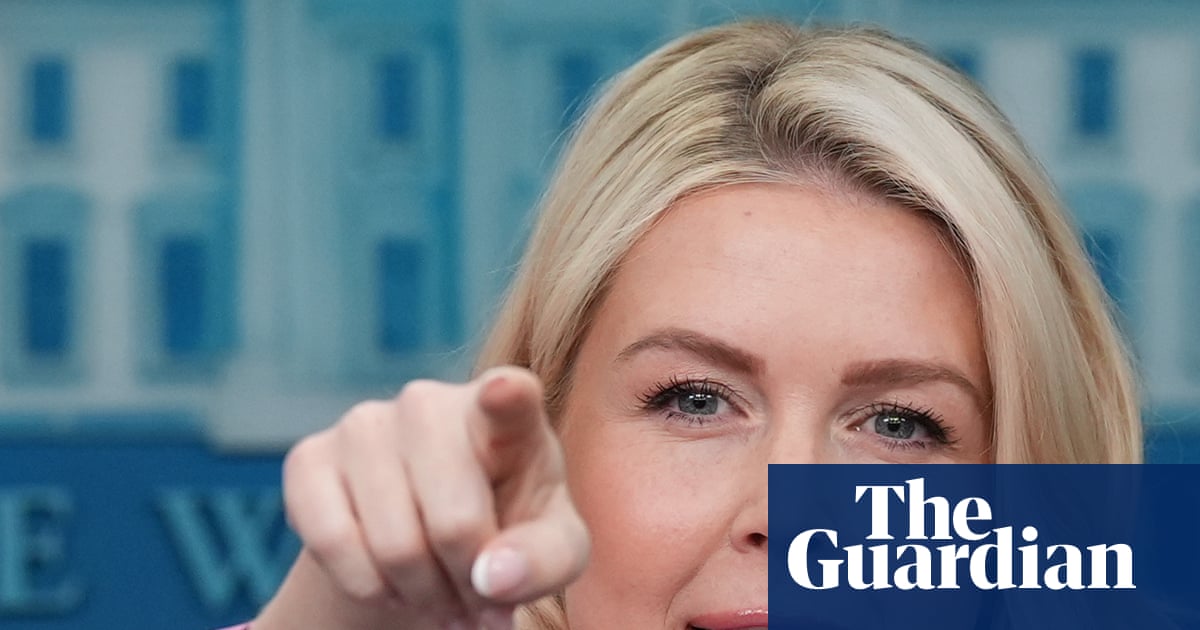
Cover image from theguardian.com, which was analyzed for this article
Karoline Leavitt is stepping down from her role as White House press secretary, with reports of praise from President Trump and speculation about her future as an adviser. Coverage spans reactions to her tenure and questions about a replacement amid low Trump approval ratings.
PoliticalOS
Thursday, August 13, 2026 — Politics
Leavitt’s exit removes a visible communications figure three months before midterms while Trump’s approval sits at a record low. Her stated reason centers on family demands after maternity leave, and no replacement has been announced. The story’s core unresolved element is how the White House will manage daily briefings and messaging through the election period.
What outlets missed
Leavitt’s full statement explicitly tied her decision to balancing motherhood after her May 2026 maternity leave rather than external pressures. Multiple outlets omitted the precise timeline of her return from leave and the birth date of her second child. No outlet supplied comparative data on prior press secretaries’ tenures or retention patterns under the same administration. Details on potential successors remained limited to unnamed sources in one report and were absent from others. The absence of a named replacement and the lack of any official transition plan were noted but not examined for operational impact on briefing schedules.
Karoline Leavitt Resigns as White House Press Secretary as Midterms Loom
White House press secretary Karoline Leavitt announced her departure from the role on Wednesday, citing a desire to spend more time with her young children after returning from maternity leave. The 28-year-old, the youngest person ever to hold the position, had served in the job for roughly 18 months during President Donald Trump’s second term. Her exit comes less than three months before the November midterm elections, a period when the president’s party typically faces headwinds and when steady messaging on policy and events becomes especially important.
Leavitt described the decision as bittersweet in a social media post, noting that she felt unable to balance the demands of the job with being the mother she wanted to be for her two children. President Trump praised her performance and said she would remain one of his top outside advisers. The timing, however, places added pressure on an administration already navigating historically low approval ratings. Recent polling from The Economist and YouGov shows Trump’s net approval at minus 27, reflecting voter concerns over inflation and the ongoing conflict with Iran.
Leavitt’s tenure was marked by combative exchanges with reporters and a willingness to defend the president’s most pointed rhetoric. She repeatedly justified Trump’s threats against Iran, including statements that the country’s “whole civilization will die,” arguing that tough language helped reopen the Strait of Hormuz. Critics viewed her approach as dismissive of institutional norms around accountability, while supporters credited her with effectively countering what they saw as hostile media questioning. Her departure leaves the administration without its most visible daily communicator at a moment when both legislative prospects and public perception of the Iran conflict and economic conditions will be tested.
Sources close to the White House have identified CNN commentator Scott Jennings as the leading candidate to succeed her. Jennings, a former adviser to President George W. Bush and longtime associate of Senator Mitch McConnell, brings experience in political communications and Republican campaign strategy. He has appeared regularly on cable news defending Trump’s agenda while occasionally drawing internal party criticism for private skepticism about the president. His selection would represent a shift toward a more seasoned operative with institutional ties, potentially altering the tone of daily briefings ahead of the midterms.
The press secretary’s role has grown more central in recent administrations as the primary interface between the White House and both traditional and digital media. Leavitt’s briefings often set the daily narrative on issues ranging from foreign policy to domestic spending. Replacing her now requires not only finding someone who can manage those exchanges but also ensuring continuity in how the administration explains its positions on the Iran war and economic pressures that have contributed to Trump’s approval slump. The absence of an immediate successor announcement has left reporters and lawmakers speculating about whether the White House intends to elevate an internal figure or bring in someone from outside with established media relationships.
Leavitt is expected to continue influencing Republican messaging from outside government, a common path for recent press secretaries who remain aligned with their former bosses. For the administration, the more immediate task is stabilizing its communications operation before voters begin focusing on the midterm contests that will determine the balance of power in Congress for the remainder of Trump’s term.
You just read Liberal's take. Want to read what actually happened?
More in Politics
Democrats Flip Senate, Expand House Majority in Midterms
Democrats flipped the Senate and expanded their House majority in a major rebuke to President Trump and Republicans. Key victories included multiple Senate seats and state-level wins that ended long-standing GOP dominance in places like Texas.
GOP Losses Spur Blame, Vance Distancing, 2028 Maneuvers
Republicans are pointing fingers internally after heavy losses, with Vice President JD Vance distancing himself from Trump over the Iran war and positioning for a potential 2028 run. Challengers within the party are already sensing opportunity.
Democrats Take House and Senate Amid Record Midterm Turnout
Democrats achieved decisive gains in the 2026 midterms, flipping seats to take control of both chambers. Coverage highlights historic turnout and implications for the Trump administration.
Democrats Take House and Senate, Constraining Trump
Democrats flipped both the House and Senate in a major rebuke to President Trump and Republicans. The results create divided government and set up battles over spending, oversight, and foreign policy for the remainder of Trump's term.
The Compass
You just read five takes on one story.
What's your take? Find your political shape in a few minutes.
Take the test