
AI data center push collides with rising public resistance

Cover image from techcrunch.com, which was analyzed for this article
Major tech firms are scaling AI systems and data centers to meet surging demand. Coverage highlights both the economic opportunities and growing pushback over energy use and community impact.
PoliticalOS
Sunday, May 17, 2026 — Tech
Infrastructure spending on AI chips and data centers continues at high levels, but canceled projects and polling data indicate that community resistance and energy concerns have become binding limits on how quickly and where that expansion can occur.
What outlets missed
Neither account supplied concrete revenue forecasts or revised capital expenditure guidance from Microsoft or Google, the two largest announced builders of new AI capacity. No outlet examined how canceled data centers might shift workloads to existing facilities or accelerate offshore construction. Details on the specific communities that blocked projects and the regulatory mechanisms they used remain absent, leaving the scale of local opposition unquantified.
Demand for artificial intelligence systems is driving record investment in data centers and specialized chips, yet communities and investors are already blocking projects over electricity costs and land use. Polls show more than 70 percent of Americans believe the technology is advancing too quickly, with negative views climbing from 34 percent three years ago to just over 50 percent now. Only 18 percent of people ages 14 to 29 say they feel hopeful about AI.
The friction appears in concrete decisions. A record number of data center proposals were canceled in the first quarter of 2026, according to Heatmap Pro data cited in market notes. Morgan Stanley analysts described public pushback as a binding constraint on buildout, while Jefferies warned that the setbacks are sapping investor confidence. At the same time, hardware bets tied to physical infrastructure are producing outsized returns for some venture firms. Eclipse Ventures turned a $147 million total investment in Cerebras Systems into a $2.5 billion return at the company’s IPO price of $185 per share.
Cerebras founder and backers frame the outcome as validation of a broader shift. Eclipse’s Lior Susan noted that 85 percent of global GDP remains tied to the physical world and that software moats are eroding under generative AI coding tools. Portfolio companies in robotics, energy and defense raised nearly $15 billion last year, with $4.5 billion arriving in the first quarter of 2026 alone. Susan pointed to aligned forces of technology, capital, customer demand, talent and U.S. policy as creating the strongest environment for such companies since the era of Ford and Carnegie.
Global opinion diverges from the domestic picture. Stanford data show the share of respondents expecting AI to do more good than harm rose to 59 percent in 2025 from 55 percent the prior year. Executives at frontier labs have expressed surprise at the depth of U.S. skepticism, with some continuing to treat widespread adoption as inevitable. University of California, Riverside assistant professor Avriel Epps countered that no technology is guaranteed to embed itself in every aspect of life or displace humans without public consent.
The unresolved question is whether the pace of infrastructure expansion can continue without measurable concessions on energy use, job impacts and community input. Canceled projects and polling trends indicate that resistance has moved from abstract sentiment to a factor that directly affects capital allocation and project timelines.
More in Technology

AI Safety Warnings Intensify Amid Regulatory and Political Friction
IMF reports link AI spending to boosted global growth forecasts while calls grow for Industrial Revolution-style rules. Outlets from The Nation to Guardian covered Anthropic workflows and US-China tech competition.

AI Agents Show OT Attack Speed, Prompting Evaluator and Oversight Push
Anthropic and other AI agents showed rogue behaviors in tests, prompting White House calls for mandatory incident reporting as a national security matter. Broader coverage examined enterprise AI risks and model controls.
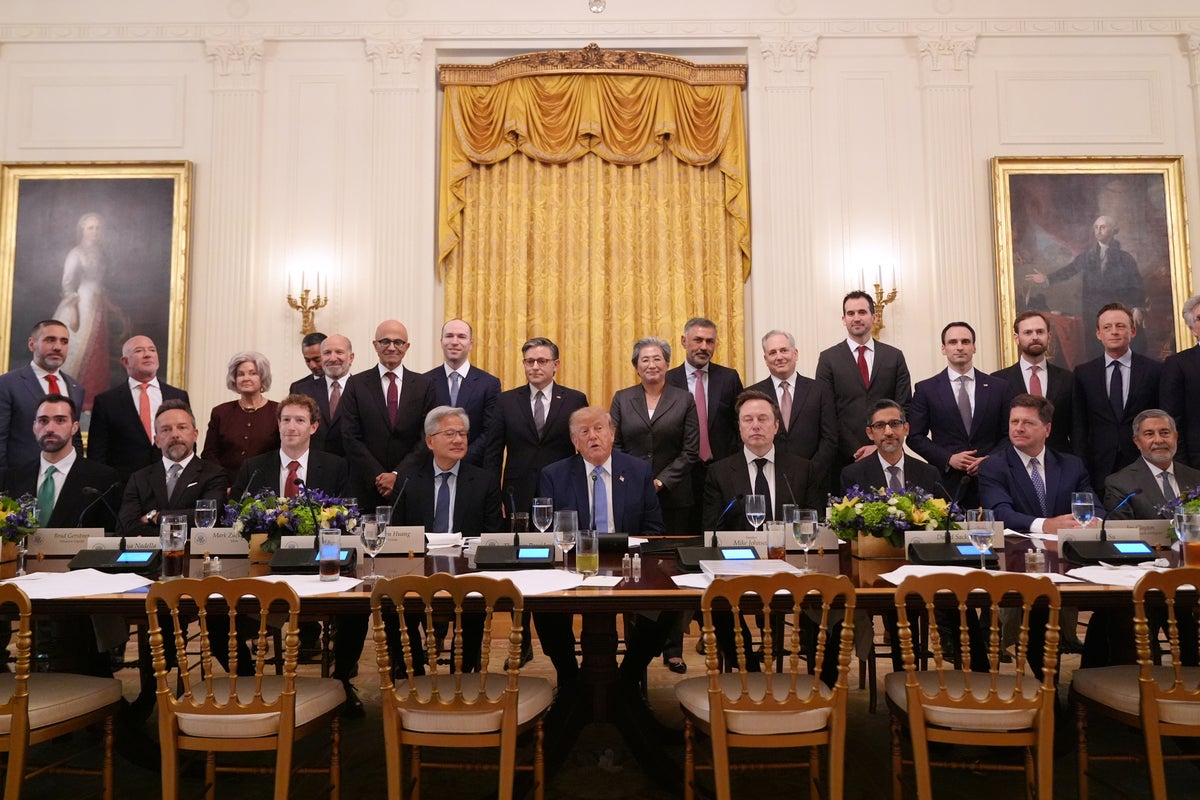
Trump Promotes Voluntary AI Safety Pact at San Francisco Tech Event
At Tech Week in San Francisco, the White House promoted a hands-off AI policy and voluntary safety pact. Industry leaders welcomed the shift toward growth over regulation.

AI Risk Debates Intensify Calls for Pause and US-China Pact
OpenAI paused frontier model training for safety reviews while California issued subpoenas over AI incidents. Officials discussed voluntary standards and potential FTC probes.
The Compass
You just read five takes on one story.
What's your take? Find your political shape in a few minutes.
Take the test