
Polls Show Partisan Split on Midterm Fairness Expectations
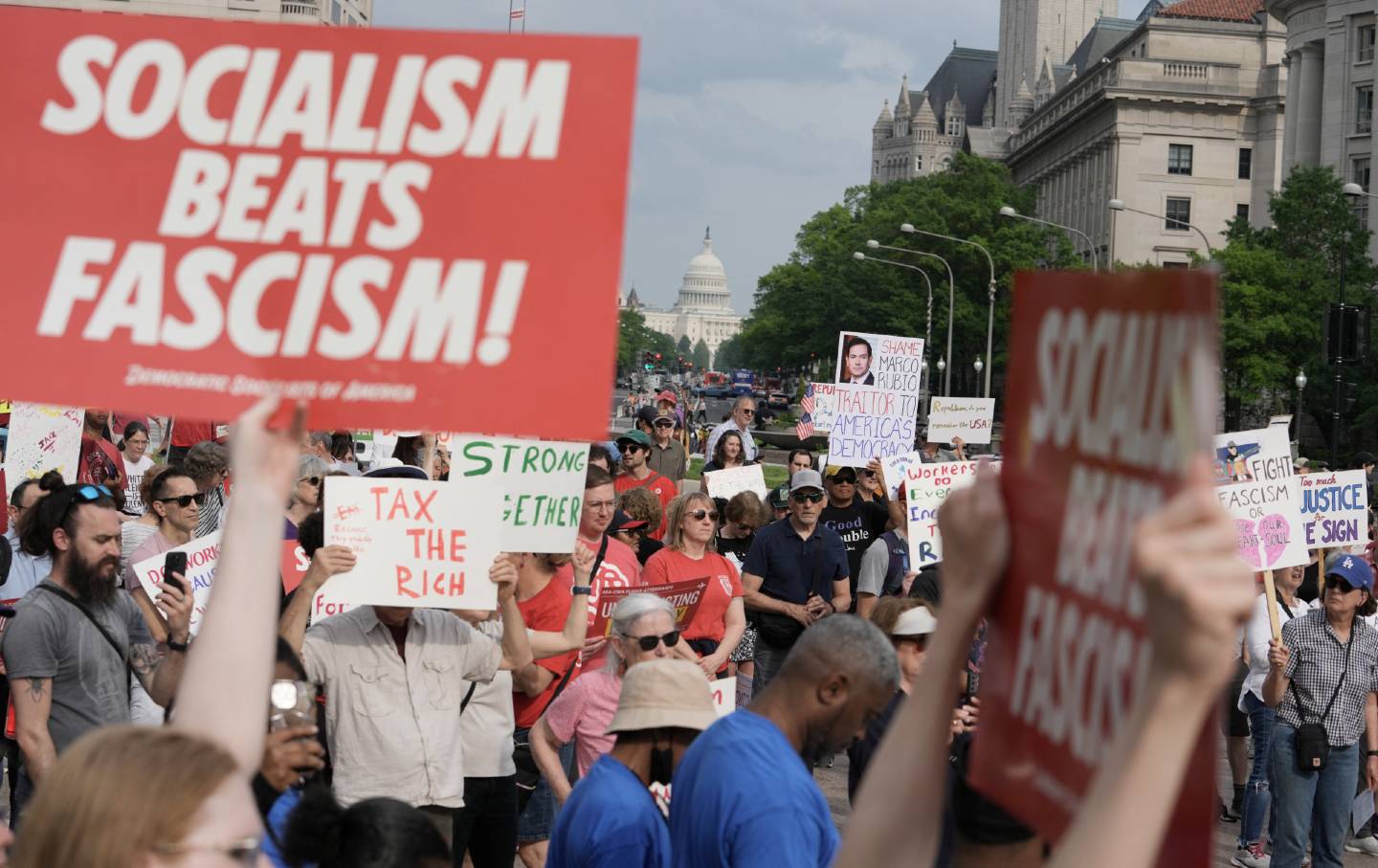
Cover image from thenation.com, which was analyzed for this article
Polls show about 60% of Americans expect fair midterms, but most doubt Trump would accept results if Republicans lose, reflecting deep partisan skepticism two weeks before Election Day.
PoliticalOS
Tuesday, October 20, 2026 — Politics
Available reporting does not substantiate claims about 60 percent expecting fair midterms or doubts over result acceptance. Readers lack verified survey evidence on these points from the sources examined.
What outlets missed
Neither article examined public confidence in election administration or willingness of candidates to accept results. The independent piece stopped at voting intention demographics and historical patterns without linking them to fairness perceptions. The Nation essay remained entirely outside the topic of elections. No data on partisan differences in trust or on specific survey questions about result acceptance appeared in either source.
Rising Interest in Socialism Reflects Deep Voter Discontent Ahead of Midterms
Public attitudes toward capitalism and its alternatives are shifting in measurable ways as the country heads into the November midterms, with younger voters expressing particular skepticism about the economic status quo. Recent polling and commentary point to a mix of economic pressures and institutional frustrations that have left many Americans pessimistic about the direction of the country and open to ideas once considered marginal.
A Gallup survey from the previous year found that only 54 percent of Americans held a positive view of capitalism, while 39 percent expressed favor toward socialism. Among those under 30, the gap narrows further, with a growing share describing themselves as disillusioned by the outcomes of liberal economic policy. This sentiment has emerged alongside broader national pessimism documented in an Economist/YouGov poll completed in mid-October. Just 27 percent of respondents said the country was heading in the right direction, while 66 percent said it was on the wrong track. Only 19 percent believed things were under control.
The same survey revealed that large majorities associate President Trump with negative descriptors such as corruption and danger, with far smaller shares describing him as effective or honest. These views coincide with ongoing concerns about inflation and its effects on household budgets. Analysts note that such conditions often amplify interest in alternatives to market-driven approaches, even when those alternatives remain loosely defined.
Historian Ronald Grigor Suny has argued that contemporary references to socialism frequently describe not the centralized systems of the 20th century but a set of reforms aimed at tempering market outcomes. In this framing, socialism functions as a call for stronger regulation, expanded public services, and measures to reduce inequality within a capitalist framework. Suny observes that right-wing leaders have revived warnings of a communist threat in response, even as the underlying proposals from younger progressives center on incremental changes to existing institutions rather than wholesale replacement.
The combination of economic strain and low confidence in political leadership creates space for these ideas to gain traction. Midterm elections historically produce losses for the president's party, and the current environment of widespread dissatisfaction may intensify that pattern. What remains less clear is whether the turn toward socialist language will translate into specific policy demands or remain a broad expression of frustration with stagnant wages, housing costs, and uneven recovery from inflation.
Data from multiple surveys indicate that support for measures such as higher minimum wages, expanded healthcare access, and wealth taxes has grown steadily among younger cohorts. These preferences align more closely with regulated capitalism than with traditional socialist models, yet the terminology persists as a shorthand for dissatisfaction with the results of the past several decades. As voters prepare to cast ballots, the challenge for both parties will be addressing the underlying sources of pessimism rather than simply contesting the labels attached to proposed solutions.
You just read Liberal's take. Want to read what actually happened?
More in Politics
Democrats Flip Senate, Expand House Majority in Midterms
Democrats flipped the Senate and expanded their House majority in a major rebuke to President Trump and Republicans. Key victories included multiple Senate seats and state-level wins that ended long-standing GOP dominance in places like Texas.
GOP Losses Spur Blame, Vance Distancing, 2028 Maneuvers
Republicans are pointing fingers internally after heavy losses, with Vice President JD Vance distancing himself from Trump over the Iran war and positioning for a potential 2028 run. Challengers within the party are already sensing opportunity.
Democrats Take House and Senate Amid Record Midterm Turnout
Democrats achieved decisive gains in the 2026 midterms, flipping seats to take control of both chambers. Coverage highlights historic turnout and implications for the Trump administration.
Democrats Take House and Senate, Constraining Trump
Democrats flipped both the House and Senate in a major rebuke to President Trump and Republicans. The results create divided government and set up battles over spending, oversight, and foreign policy for the remainder of Trump's term.
The Compass
You just read five takes on one story.
What's your take? Find your political shape in a few minutes.
Take the test