
Polls Show Democrats With 12-Point Midterm Edge as Trump Approval Slips
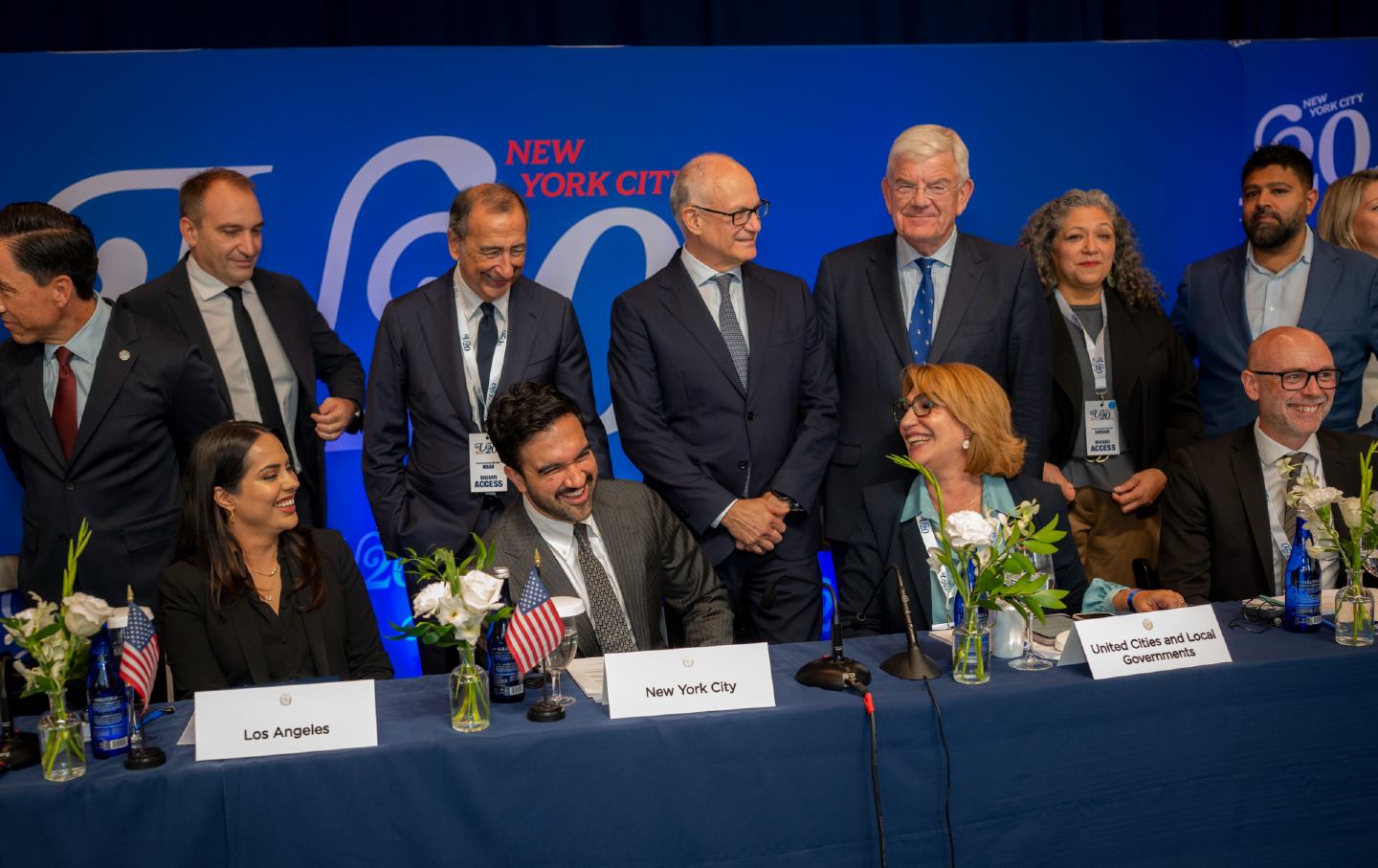
Cover image from thenation.com, which was analyzed for this article
New polls show Democrats with a double-digit generic ballot edge as Trump unpopularity weighs on Republicans. Candidates distance from White House policies amid fears of losses in key races.
PoliticalOS
Wednesday, September 23, 2026 — Politics
Recent surveys indicate Democratic candidates hold a double-digit generic-ballot lead tied to low Trump approval, and some Republican office-seekers have begun publicly diverging from administration positions on the Iran conflict and energy costs. Whether these trends hold through Election Day remains the central unresolved question.
What outlets missed
No outlet supplied sample sizes, fieldwork dates, or trend lines for the Reuters poll beyond the single 32 percent figure. Coverage omitted any mention of Republican candidates who continue to defend Trump policies or of polling data showing stable GOP support in specific House districts. The reviewed articles also left unexamined the legal and budgetary constraints cities or states would face if they attempted to implement the climate measures discussed in one unrelated report.
Local Leaders Seek Climate Fixes as National Politics Shift
Mayors from more than 30 cities gathered in Los Angeles and New York this month for the Urban 20 Summit to coordinate on climate measures, migration pressures, and housing shortages. Organizers from C40 Cities and United Cities and Local Governments framed the event as proof that metropolitan areas can advance policies even when national governments lag. Discussions centered on adapting to heavier rains in places like New York and extreme heat in Paris, with participants describing cities as practical testing grounds for new approaches.
Empirical patterns from earlier local initiatives suggest caution about rapid scaling. Cities that imposed strict emissions targets or building mandates in prior years often recorded higher energy costs passed to residents and businesses, with limited measurable global temperature effects given the scale of worldwide emissions. Data from various U.S. metropolitan areas show that aggressive local rules on fuel standards or development frequently coincide with slower job growth in construction and manufacturing sectors compared with areas that relied more on price signals and technological adaptation.
The summit occurs against a backdrop of declining national support for expansive climate and foreign policy packages. Recent surveys place President Trump's approval near historic lows for his terms, with particular weakness on cost-of-living concerns. Separate polling indicates voters increasingly view congressional races as a referendum against current leadership, favoring Democratic candidates by double-digit margins in some measures. Republican candidates in several states have begun distancing themselves from ongoing international engagements tied to higher fuel prices, including calls to end specific conflicts and temporary tax adjustments once opposed by the same party.
These developments illustrate recurring trade-offs in policy design. Local officials can experiment with targeted infrastructure or zoning changes that respond to immediate voter priorities, such as flood defenses or housing supply increases. Broader mandates, however, tend to overlook how dispersed decision-making and market incentives have historically driven efficiency gains in energy use without centralized coordination. Historical records from both U.S. and European cities reveal that innovation in private sectors often outpaces government-directed programs when cost and reliability remain central metrics.
Participants at the summit stressed cross-border learning on adaptation. Yet outcomes depend less on declarations than on whether adopted measures align with local economic realities and available technology. National polling trends suggest voters continue to weigh direct household impacts heavily, including energy affordability, when assessing leadership performance across levels of government. Continued focus on verifiable results rather than symbolic alignment offers the clearest path for assessing which approaches endure.
You just read Conservative's take. Want to read what actually happened?
More in Politics
Democrats Flip Senate, Expand House Majority in Midterms
Democrats flipped the Senate and expanded their House majority in a major rebuke to President Trump and Republicans. Key victories included multiple Senate seats and state-level wins that ended long-standing GOP dominance in places like Texas.
GOP Losses Spur Blame, Vance Distancing, 2028 Maneuvers
Republicans are pointing fingers internally after heavy losses, with Vice President JD Vance distancing himself from Trump over the Iran war and positioning for a potential 2028 run. Challengers within the party are already sensing opportunity.
Democrats Take House and Senate Amid Record Midterm Turnout
Democrats achieved decisive gains in the 2026 midterms, flipping seats to take control of both chambers. Coverage highlights historic turnout and implications for the Trump administration.
Democrats Take House and Senate, Constraining Trump
Democrats flipped both the House and Senate in a major rebuke to President Trump and Republicans. The results create divided government and set up battles over spending, oversight, and foreign policy for the remainder of Trump's term.
The Compass
You just read five takes on one story.
What's your take? Find your political shape in a few minutes.
Take the test