
Guard Member Arrested After Drawing Gun on Colleague Over Haircuts
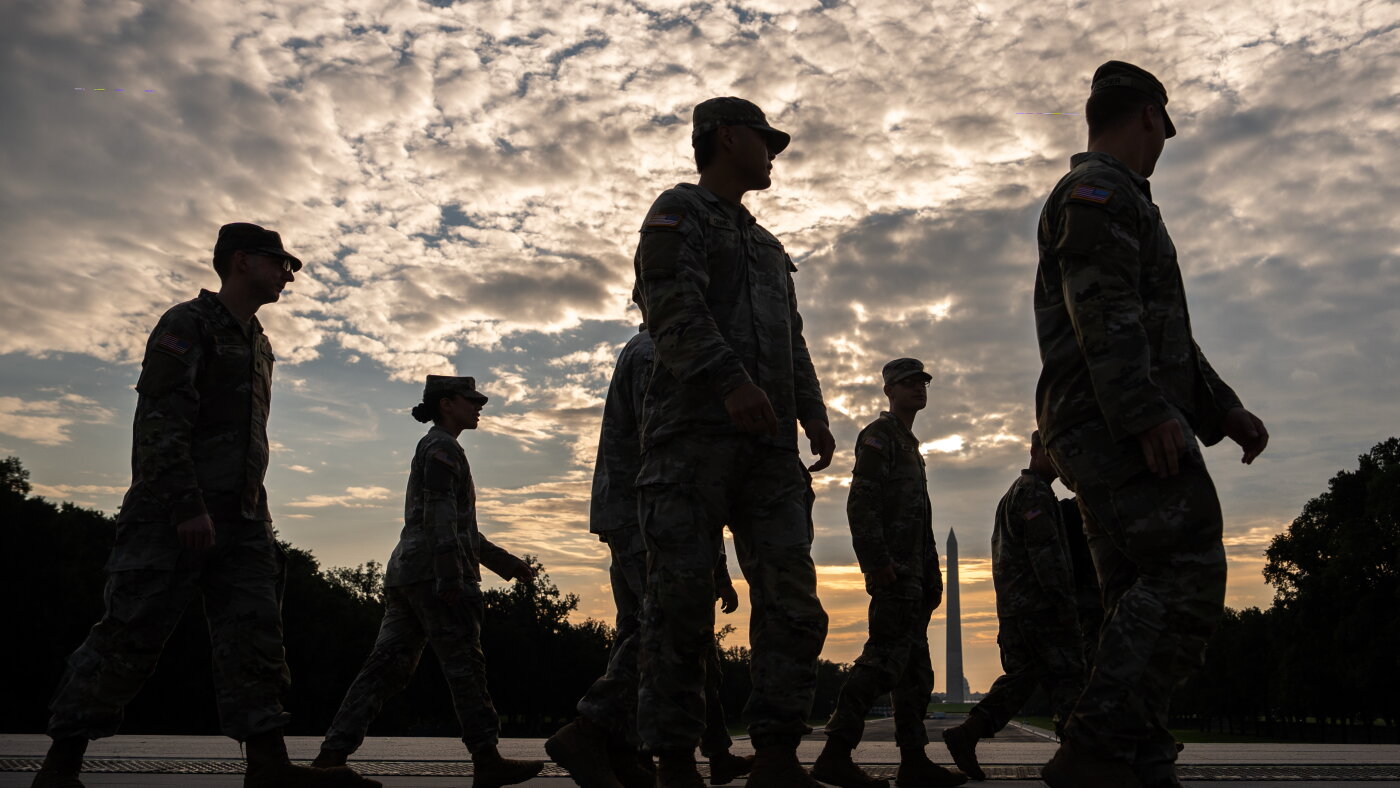
Cover image from npr.org, which was analyzed for this article
A Georgia National Guard member on a crime-fighting task force was arrested after drawing a gun on a colleague during a dispute over haircuts.
PoliticalOS
Wednesday, September 9, 2026 — Politics
The arrest highlights a narrow but concrete disciplinary failure inside a politically charged, multi-state deployment that remains in place through 2029. Readers should track whether the criminal case produces a conviction and whether the task force issues any public response on troop conduct standards.
What outlets missed
The NPR account supplies the precise date of the incident, the suspect’s age, the exact felony charges, and the narrow trigger of the dispute. The Nation article contains no reference to the arrest or the deployment at all. No outlet provided an update on Mitchell’s unit status, any internal Guard investigation, or whether the female Guard member filed additional complaints.
UAW Pushes Candidates With Record of Backing Labor Actions
The United Auto Workers union has endorsed several candidates in recent primaries who have histories of supporting worker protests and rallies, leading to victories in a handful of races this summer. Organizers describe the effort as a deliberate attempt to shift political priorities toward organized labor and away from broader market considerations.
In New York, one such candidate, Claire Valdez, won her bid for a congressional seat after years in the state assembly marked by repeated appearances at picket lines and union events. Campaign supporters highlighted her consistent involvement, with the phrase "Claire was there" circulating among labor groups. A March fundraiser for Amazon workers drew Teamsters organizers who repeated the line while raising funds for a Labor Notes conference.
Union officials frame these endorsements as part of a larger plan to influence policy on wages, workplace rules, and government spending. Similar patterns appeared in other districts where backed candidates prevailed, often in areas with strong public-sector or manufacturing employment. Data from past cycles shows union political spending has grown, with contributions directed at races where turnout among union households can tip close contests.
Critics of expanded union influence point to economic patterns in heavily unionized industries. Manufacturing employment has faced pressure from automation and global competition, with studies indicating that rigid work rules and above-market compensation packages can accelerate plant closures or relocation. Historical episodes, such as the auto sector crises of prior decades, illustrate how concentrated bargaining power sometimes shifts costs onto consumers and taxpayers through subsidies or bailouts.
The UAW strategy also extends to training programs and conferences aimed at building activist networks. These efforts seek to coordinate across unions, including the Teamsters and others, to pressure employers and legislators simultaneously. Proponents argue this approach delivers tangible gains for members in contract negotiations. Yet repeated interventions in labor markets have coincided with slower job growth in some regions, as employers adjust hiring or investment decisions in response to higher mandated costs.
Public records show union political action committees directing resources toward candidates who favor expanded collective bargaining rights and restrictions on non-union competition. While turnout among union voters remains a measurable factor in certain elections, broader voter surveys consistently rank pocketbook concerns such as inflation and employment stability ahead of union-specific priorities.
Observers note that the current wave of endorsements occurs against a backdrop of declining private-sector union membership rates, which stand below 7 percent nationally according to government statistics. Public-sector unions retain higher density, often tied to taxpayer-funded payrolls. This divergence suggests the political push may reflect efforts to sustain influence even as traditional membership bases shrink.
Economic analyses from various think tanks have examined how union-driven policies affect overall mobility. Evidence indicates that workers in right-to-work states sometimes experience faster wage growth in lower-skill categories due to increased hiring flexibility, while heavily unionized areas show mixed results depending on industry and skill level. The pattern aligns with arguments that institutional arrangements matter less than individual productivity and adaptability over time.
The UAW campaign continues into the fall, with additional endorsements planned for state and local offices. Outcomes will depend on whether the emphasis on collective action translates into durable electoral advantages or encounters limits from voters focused on measurable economic results rather than organized advocacy.
You just read Conservative's take. Want to read what actually happened?
More in Politics
Democrats Flip Senate, Expand House Majority in Midterms
Democrats flipped the Senate and expanded their House majority in a major rebuke to President Trump and Republicans. Key victories included multiple Senate seats and state-level wins that ended long-standing GOP dominance in places like Texas.
GOP Losses Spur Blame, Vance Distancing, 2028 Maneuvers
Republicans are pointing fingers internally after heavy losses, with Vice President JD Vance distancing himself from Trump over the Iran war and positioning for a potential 2028 run. Challengers within the party are already sensing opportunity.
Democrats Take House and Senate Amid Record Midterm Turnout
Democrats achieved decisive gains in the 2026 midterms, flipping seats to take control of both chambers. Coverage highlights historic turnout and implications for the Trump administration.
Democrats Take House and Senate, Constraining Trump
Democrats flipped both the House and Senate in a major rebuke to President Trump and Republicans. The results create divided government and set up battles over spending, oversight, and foreign policy for the remainder of Trump's term.
The Compass
You just read five takes on one story.
What's your take? Find your political shape in a few minutes.
Take the test