
Guard Member Arrested After Drawing Gun on Colleague Over Haircuts
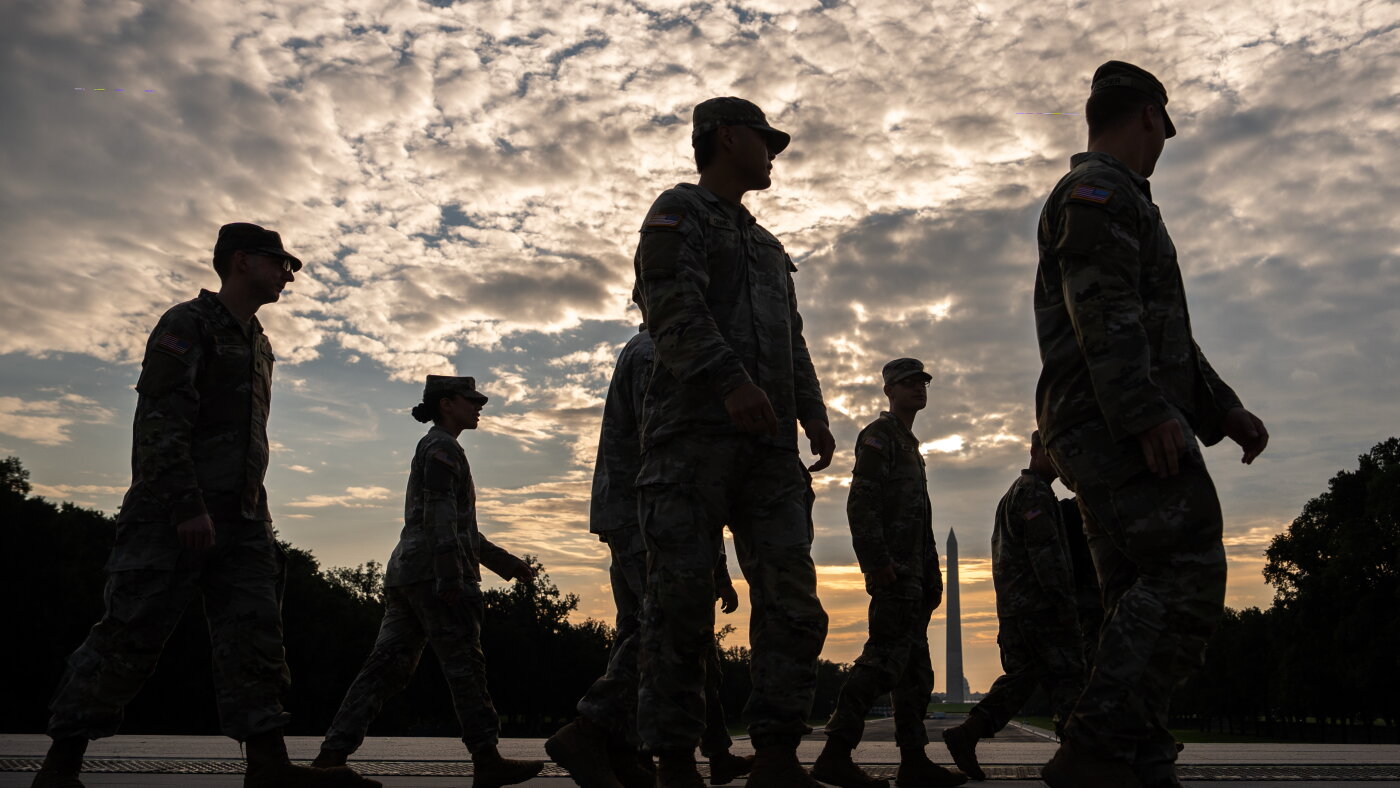
Cover image from npr.org, which was analyzed for this article
A Georgia National Guard member on a crime-fighting task force was arrested after drawing a gun on a colleague during a dispute over haircuts.
PoliticalOS
Wednesday, September 9, 2026 — Politics
The arrest highlights a narrow but concrete disciplinary failure inside a politically charged, multi-state deployment that remains in place through 2029. Readers should track whether the criminal case produces a conviction and whether the task force issues any public response on troop conduct standards.
What outlets missed
The NPR account supplies the precise date of the incident, the suspect’s age, the exact felony charges, and the narrow trigger of the dispute. The Nation article contains no reference to the arrest or the deployment at all. No outlet provided an update on Mitchell’s unit status, any internal Guard investigation, or whether the female Guard member filed additional complaints.
UAW Strategy Builds Working Class Power Through Targeted Political Endorsements
The United Auto Workers union has quietly assembled one of the more deliberate political operations in recent labor history, using endorsements to back candidates who have demonstrated consistent support for workplace organizing rather than relying on traditional party machinery. This approach produced several notable primary wins over the summer, including in New York state legislative races and at least one congressional contest, reflecting a longer-term calculation about how unions can reshape the incentives inside the Democratic coalition.
The union’s method centers on identifying candidates with proven records at picket lines and organizing drives. In New York’s 7th congressional district, Claire Valdez’s campaign repeatedly highlighted her attendance at worker actions during her time in the state assembly. Organizers and surrogates used the shorthand “Claire was there” to signal reliability on labor issues that extend beyond standard legislative votes. The phrase originated at a March fundraising event for Amazon workers attending a Labor Notes conference, where Teamsters members first popularized it among delivery drivers and union staff.
This pattern of support differs from earlier cycles in which unions often endorsed incumbents or candidates with broad party backing. The UAW has instead directed resources toward insurgents who treat workplace organizing as a core political project. The strategy assumes that electing officials with direct experience of labor disputes will produce more durable policy changes than periodic legislative pushes alone. Union officials describe the effort as an attempt to rebuild the institutional infrastructure that once connected shop-floor activity to electoral outcomes.
Data from recent primaries shows measurable effects. Endorsed candidates outperformed expectations in several districts with high concentrations of union households, particularly where turnout among younger workers increased. The union has paired these endorsements with training programs that prepare members to run for local office and with funding for community organizations that sustain organizing between elections. The goal is to create overlapping networks that make it harder for elected officials to ignore labor priorities once in office.
Critics within the broader labor movement have questioned whether this focus on candidate selection diverts resources from direct workplace campaigns. Union leaders counter that political power and organizing capacity reinforce each other, pointing to recent contract gains at major automakers as evidence that political leverage can improve bargaining positions. The UAW’s political director has framed the summer results as proof that a narrower set of criteria—consistent presence at worker actions—can identify candidates who deliver on both fronts.
The approach also carries risks. Concentrating support on a smaller number of aligned candidates can leave the union exposed if those candidates lose or if internal divisions emerge over priorities. It also requires sustained investment in candidate recruitment and training at a time when many unions face declining membership density. Still, the results this cycle suggest the model has gained traction beyond the UAW’s traditional strongholds in manufacturing states.
Observers note that the union’s emphasis on “being there” for workers reflects a broader recalibration across parts of the labor movement. Rather than treating politics as a separate track from organizing, the UAW is attempting to make electoral work an extension of shop-floor activity. Whether this produces lasting institutional change will depend on follow-through in office and continued success in translating primary wins into general election victories. The pattern established this summer provides a clear test case for measuring how effectively unions can convert consistent presence at worker actions into durable political influence.
You just read Liberal's take. Want to read what actually happened?
More in Politics

Democrats Flip Senate, Expand House Majority in Midterms
Democrats flipped the Senate and expanded their House majority in a major rebuke to President Trump and Republicans. Key victories included multiple Senate seats and state-level wins that ended long-standing GOP dominance in places like Texas.

GOP Losses Spur Blame, Vance Distancing, 2028 Maneuvers
Republicans are pointing fingers internally after heavy losses, with Vice President JD Vance distancing himself from Trump over the Iran war and positioning for a potential 2028 run. Challengers within the party are already sensing opportunity.

Democrats Take House and Senate Amid Record Midterm Turnout
Democrats achieved decisive gains in the 2026 midterms, flipping seats to take control of both chambers. Coverage highlights historic turnout and implications for the Trump administration.
Democrats Take House and Senate, Constraining Trump
Democrats flipped both the House and Senate in a major rebuke to President Trump and Republicans. The results create divided government and set up battles over spending, oversight, and foreign policy for the remainder of Trump's term.
The Compass
You just read five takes on one story.
What's your take? Find your political shape in a few minutes.
Take the test