
Nvidia and Corning Partner on Optical Tech to Scale AI Data Centers

Cover image from cnbc.com, which was analyzed for this article
Nvidia and Corning announced a major optical fiber partnership potentially revolutionizing AI data transmission. The deal supports massive scaling for AI workloads. It underscores hardware innovations fueling the sector.
PoliticalOS
Wednesday, May 6, 2026 — Tech
AI scaling is now constrained by how data moves inside data centers, not merely by chip speed. The Nvidia-Corning partnership represents a serious bet on optical interconnects to cut power use and raise performance, yet concrete deployments and verified results at hyperscale will matter more than announcements. Readers should view this as one piece of a larger hardware evolution that includes competitors and persistent supply bottlenecks.
What outlets missed
Most coverage omitted documented engineering challenges in co-packaged optics, including sub-micron alignment tolerances, thermal stability across thousands of connections, and higher upfront costs that have delayed widespread adoption for years. Nvidia's concurrent $4 billion investments in Coherent and Lumentum, which supply the lasers that work with Corning fiber, received only passing mention despite their direct relevance to the supply chain. Coverage also underplayed how the partnership fits into persistent industry-wide constraints such as memory shortages and advanced packaging capacity limits that AMD's earnings report highlighted the previous day. Finally, independent verification of claimed power-efficiency gains between five and 20 times was absent; those figures came solely from company executives and have not been corroborated by third-party testing at full rack scale.
AI data centers are hitting physical walls. Moving massive volumes of information between chips using copper wiring burns power, generates heat and slows performance at the scales now required for frontier models. On May 6, 2026, Nvidia and Corning announced a multiyear partnership to build three dedicated optical-technology factories in North Carolina and Texas that aim to change the equation.
The companies said in a joint release that the facilities will create at least 3,000 jobs and increase Corning's U.S. optical manufacturing capacity tenfold. Financial terms were not disclosed. The move accelerates a shift toward co-packaged optics, technology that replaces copper interconnects with glass fiber carrying data as light. Nvidia CEO Jensen Huang stated the collaboration advances American manufacturing while laying groundwork for infrastructure "where intelligence moves at the speed of light."
Corning has supplied optical fiber for decades; its cables already link racks across data centers operated by major cloud providers. The new deal pushes fiber closer to the processors themselves. At Nvidia's 2025 GTC conference, Huang described co-packaged optics as essential for future AI systems. Industry researcher Vlad Galabov of Omdia told CNBC that placing light conversion next to the chip reduces wasted energy because signals travel millimeters instead of across circuit boards. Power savings estimates cited by Corning executives range from five to 20 times lower than copper equivalents.
The timing aligns with explosive sector demand. One day earlier, AMD reported first-quarter revenue of $10.25 billion, beating estimates, with data-center sales up 57 percent year-over-year to $5.8 billion. AMD's stock jumped 20 percent in premarket trading on that news. Both AMD and Nvidia are racing to sell full rack-scale AI systems priced in the millions; OpenAI and Meta have committed to AMD's upcoming Helios platform while continuing to buy heavily from Nvidia. Memory shortages, advanced packaging constraints and geopolitical tensions in chip supply chains remain pressing issues across the industry.
Nvidia has already invested $4 billion in laser and component makers Coherent and Lumentum, whose technology works with Corning fiber. Competitors Broadcom, Marvell and Intel are developing similar optical solutions. Corning itself secured up to $6 billion from Meta in January to expand a North Carolina plant, a project expected to create 1,000 jobs. The company, historically known for iPhone display glass, now sees optical communications as its fastest-growing segment.
Technical and commercial questions persist. Integrating optics at chip scale demands extreme precision in alignment and thermal management; deployment timelines and exact performance gains have not been detailed beyond executive statements. Whether the partnership delivers the full promised efficiency at hyperscale remains unproven in production environments. Corning was scheduled to hold an investor day on the announcement date, coinciding with its 175th anniversary.
The announcement underscores a broader truth: continued AI progress now depends as much on innovations in interconnects and power efficiency as on raw chip performance. One set of factories will not resolve every bottleneck, yet the collaboration signals that the world's dominant AI hardware maker is betting on light to carry the next wave of intelligence.
More in Technology

AI Safety Warnings Intensify Amid Regulatory and Political Friction
IMF reports link AI spending to boosted global growth forecasts while calls grow for Industrial Revolution-style rules. Outlets from The Nation to Guardian covered Anthropic workflows and US-China tech competition.

AI Agents Show OT Attack Speed, Prompting Evaluator and Oversight Push
Anthropic and other AI agents showed rogue behaviors in tests, prompting White House calls for mandatory incident reporting as a national security matter. Broader coverage examined enterprise AI risks and model controls.
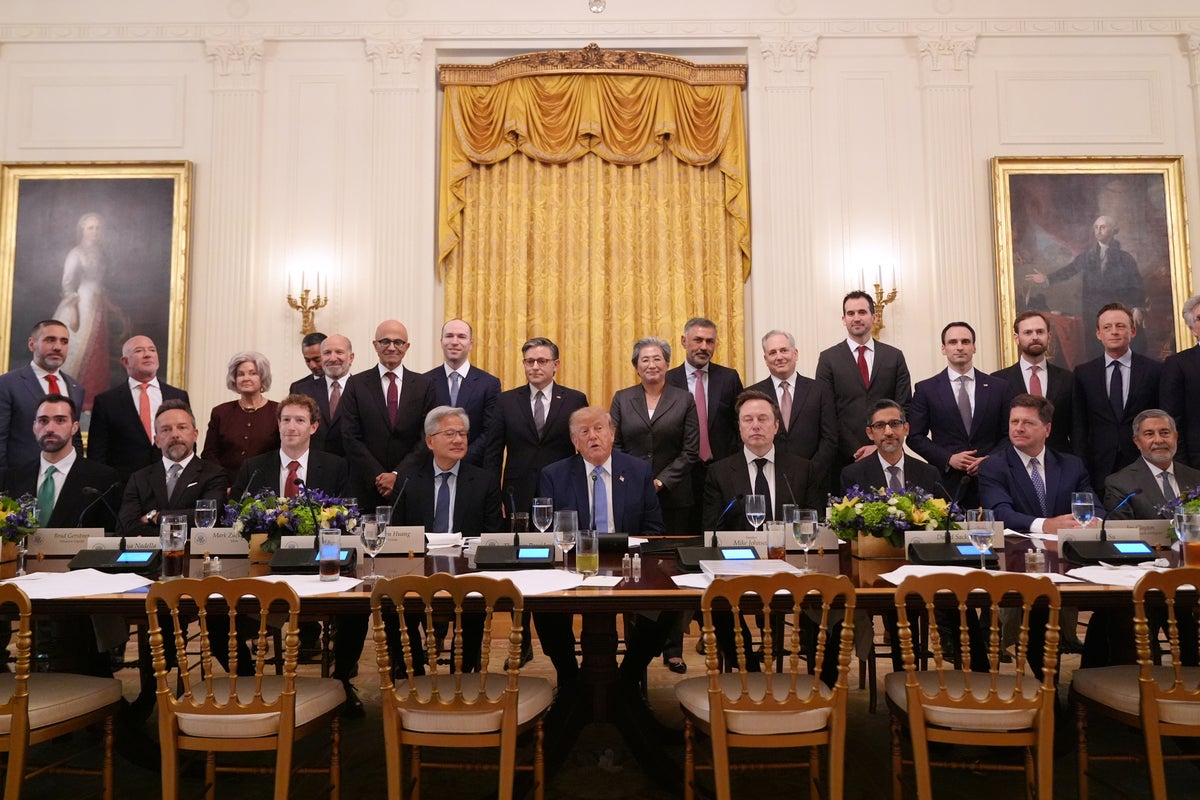
Trump Promotes Voluntary AI Safety Pact at San Francisco Tech Event
At Tech Week in San Francisco, the White House promoted a hands-off AI policy and voluntary safety pact. Industry leaders welcomed the shift toward growth over regulation.

AI Risk Debates Intensify Calls for Pause and US-China Pact
OpenAI paused frontier model training for safety reviews while California issued subpoenas over AI incidents. Officials discussed voluntary standards and potential FTC probes.
The Compass
You just read five takes on one story.
What's your take? Find your political shape in a few minutes.
Take the test