
Oil Hits Four-Year High as US-Iran Standoff Chokes Global Energy Flows
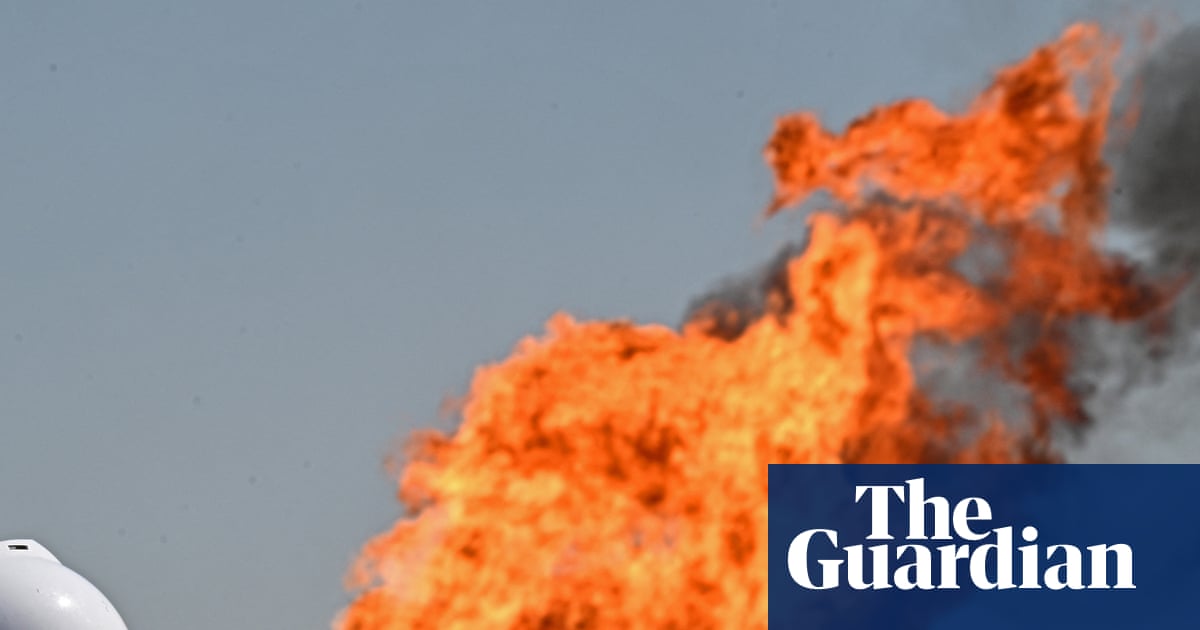
Cover image from theguardian.com, which was analyzed for this article
Brent crude prices climbed above $126 per barrel, the highest in four years, driven by US naval siege of Iranian ports disrupting $6 billion in exports and risks to the Strait of Hormuz. US gas prices reached a national average of $4.30 per gallon, with California topping $6. Markets are warned to better price in prolonged conflict risks.
PoliticalOS
Thursday, April 30, 2026 — Business
The single most important reality is that a narrow diplomatic impasse over whether nuclear limits must precede any reopening of oil routes has already imposed measurable costs on households and businesses worldwide. Both governments believe time favors them, yet each day the strait stays restricted and ports remain blockaded deepens the risk of broader economic damage and renewed combat. Readers should recognize that forecasts of $140 or even $200 oil are no longer fringe scenarios but plausible outcomes if the current test of endurance continues without compromise.
What outlets missed
Most accounts underplayed the scale of Iran's internal crackdown, including the U.N.-reported 21 executions and more than 4,000 national-security arrests since February 28. Few examined the precise sequence of Hormuz restrictions, where evidence from shipping trackers and multiple governments shows mines and drones reduced transits to low single digits while limited toll-based passage continued for some vessels. Internal Iranian dynamics received short shrift: the anonymous official's account of hardliner pressure curtailing Parliament Speaker Ghalibaf's negotiating flexibility appeared in only one outlet and could not be independently verified. The $25 billion Pentagon figure for U.S. war costs surfaced in a single Al Jazeera report without broad corroboration from other defense-budget trackers. Finally, the potential for renewed direct strikes was often reduced to headline color rather than tied to specific contingency briefings that several outlets treated as unconfirmed.
American drivers are paying more to fill their tanks. Global economies face fresh recession warnings. And the reason traces to a narrow shipping lane half a world away where two determined governments are testing whose pain threshold is lower.
Brent crude climbed above $126 a barrel this week, according to trading data, the highest price since Russia's 2022 invasion of Ukraine. West Texas Intermediate followed similar gains before both benchmarks pulled back slightly. The surge reflects investor realization that disruptions to Persian Gulf oil shipments could last months, not weeks. U.S. gasoline prices reached a national average of $4.30 per gallon, AAA reported, up 31 cents in a month. In California, pumps in some areas topped $6.
At the center of the tension sits a contradiction that neither side has resolved. The United States insists any reopening of blocked oil routes must include ironclad limits on Iran's nuclear program. Iran says it will discuss the strait only after the shooting stops and the naval blockade ends. That deadlock has turned cheap drones, naval mines and port inspections into levers that move markets worth trillions.
The conflict began February 28 with U.S. and Israeli strikes on Iranian nuclear and military sites that also killed Supreme Leader Ayatollah Ali Khamenei, multiple outlets reported. Iran retaliated with attacks on Israel, Gulf states and U.S. targets. By mid-April it had sharply curtailed traffic through the Strait of Hormuz using low-cost weapons that raise insurance costs for commercial ships. The U.S. responded with a blockade of Iranian ports, an operation President Trump has described as highly effective. A fragile ceasefire took hold in early April after talks in Pakistan, yet both sides continue indirect negotiations that have so far produced no breakthrough.
Trump has signaled he will maintain pressure until Iran agrees to forgo nuclear weapons. Iranian officials counter that decades of sanctions have taught them how to adapt and that their military gains from the opening phase of the war will not be surrendered easily. One senior Iranian figure, speaking anonymously to the Washington Post, said Parliament Speaker Mohammad Bagher Ghalibaf once held authority to offer a five-year suspension of uranium enrichment but that hardliners have since narrowed his room to maneuver. The exact details of current proposals could not be independently verified across all sources.
Global reactions have been largely rhetorical. Asian economies dependent on Middle East imports are absorbing the heaviest blows, with the Asian Development Bank trimming its 2026 growth forecast. European bond yields climbed on stagflation fears. No coalition has formed to challenge Iran's strait restrictions militarily. The UAE's decision to exit OPEC, announced this week and welcomed by Trump, is unlikely to ease near-term tightness because its exports remain constrained by the same chokepoint, analysts at Wood Mackenzie and Goldman Sachs noted.
The human toll inside Iran has drawn less attention. The U.N. High Commissioner for Human Rights reported at least 21 executions and more than 4,000 arrests on national-security grounds since February 28. Iranian leaders insist their food stockpiles remain adequate and that unity between civilian and military factions has held. Yet analysts such as Brian Katulis at the Middle East Institute describe a leadership that is simultaneously more hard-line, more divided and less capable of swift compromise.
Whether markets have fully priced the risks remains debated. Goldman Sachs estimates Hormuz exports have dropped to single-digit percentages of normal volumes. ING's Warren Patterson warned that prolonged disruption will require demand destruction through even higher prices. Some traders point to strategic reserves and floating inventories as temporary buffers, but diesel and jet-fuel markets already show acute strain. A return to $147 oil, last seen in 2008, is no longer dismissed as impossible.
The central question now is simple and unresolved. How much economic damage must accumulate before one side accepts terms it has repeatedly ruled out? Until that answer arrives, every commuter, manufacturer and airline executive will continue paying the bill for a naval standoff that began with missiles and drones and is now enforced by tankers that cannot sail.
More in Business & Economy

Major Banks Deliver Mixed Q3 Results on Trading Beats
JPMorgan, Goldman Sachs, Citigroup, and Wells Fargo reported Q3 figures, with revenue beats in trading but some estimate misses. CNBC provided live updates on the results and market reactions.

Oil Falls on Russian Diesel Outlook Despite Geopolitical Risks
Dow futures rose while Nasdaq faced pressure from tech weakness and elevated oil after geopolitical spikes. CNBC tracked premarket moves tied to earnings and Fed speeches.

Hall and Woodford Win Economics Nobel for Stabilization Models
American economists Robert E. Hall and Michael Woodford won the Nobel memorial prize for their research on managing economies through booms and busts, informing central bank policies on inflation and unemployment.

Skydance Closes Paramount-Warner Bros. Discovery Deal
The long-delayed media mega-merger cleared hurdles and began operations under Skydance, consolidating Hollywood power. Center and center-left outlets track the regulatory and business milestones.
The Compass
You just read five takes on one story.
What's your take? Find your political shape in a few minutes.
Take the test