
Oil Tops $114 as Iran Standoff Spurs U.S. Gas Spike and Approval Worries
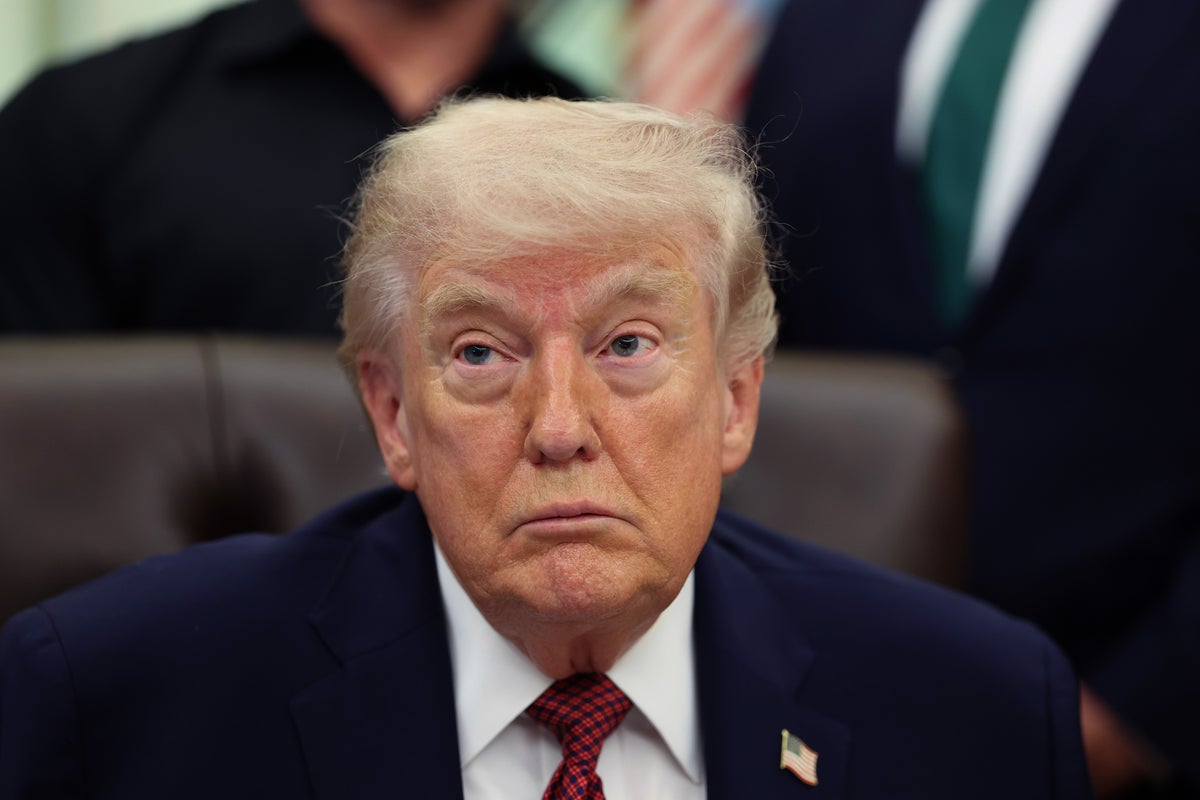
Cover image from independent.co.uk, which was analyzed for this article
Brent crude extended gains topping $114 per barrel on Trump's Iran threats and Hormuz blockade fears, with US gas prices up 20 cents per gallon recently. Affordability concerns sink Trump's approval amid stalled talks. Markets remain volatile ahead of Fed decision.
PoliticalOS
Wednesday, April 29, 2026 — Business
Rising oil and gasoline prices are the tangible domestic consequence of a conflict that began with strikes on Iranian nuclear sites in February, followed by a fragile April ceasefire whose breakdown keeps the Strait of Hormuz contested. Public polls show clear disapproval of the war's economic costs and the president's handling of inflation, yet the path to relief depends on whether stalled talks produce a verifiable agreement on nuclear limits and tanker access. Readers should treat precise poll margins and certain official quotes with caution when they appear in only one outlet.
What outlets missed
Most outlets underplayed the documented nuclear trigger for the February 28 U.S.-Israel strikes: Iran's accumulation of nearly weapons-grade uranium and near-breakout timeline, cited in Arms Control Association and UK parliamentary reports. The April 8 ceasefire, though fragile, predates the latest price spike by three weeks and was conditioned on partial de-escalation that neither side has fully met. Iran's April 27 proposal to reopen Hormuz in exchange for lifting the U.S. blockade and ending the war was referenced by only some outlets and often stripped of its linkage to nuclear deferral. Poll numbers varied across sources; the specific 34/64 and 21/70 figures in one report could not be independently verified against Reuters/Ipsos public trackers that showed slightly higher approval. Finally, the assassination attempt's timing relative to poll fieldwork received minimal attention despite its potential to influence later responses.
American drivers are paying more than $4.20 for a gallon of regular gasoline. That reality, arriving amid broader inflation pressures, has sharpened public dissatisfaction with President Trump's handling of the economy and contributed to his approval rating falling to the low-to-mid 30s in recent polling. Brent crude futures climbed above $114 a barrel on Wednesday, extending a multi-day rally driven by fears that stalled U.S.-Iran negotiations will keep energy supplies tight.
The price surge follows a familiar pattern since late February, when the United States and Israel conducted strikes on Iranian nuclear facilities at Natanz and Fordow. Iran had amassed roughly 400 kilograms of uranium enriched to 60 percent, according to arms control assessments, a level close to weapons-grade and months from potential breakout capacity. A fragile ceasefire took hold around April 8, yet talks remain deadlocked over Iran's nuclear program, its support for regional proxies and access through the Strait of Hormuz. That narrow waterway carries about one-fifth of global seaborne oil. U.S. naval forces maintain a blockade of Iranian ports; Iran has restricted tanker traffic in response, though neither side has imposed a total shutdown. Independent verification of exact daily throughput remains limited.
Futures markets priced in the uncertainty. Brent rose 2.8 percent to $114.37, while West Texas Intermediate gained 3.3 percent to $103.18, according to trading data. The national average for regular gasoline reached $4.229 per gallon on Wednesday, up more than 20 cents in a week and roughly 25 cents higher than a month earlier, AAA reported. Diesel climbed even faster in some regions, feeding higher shipping and food costs. These figures come after prices had fallen to a monthly low near $4.02 before rebounding on renewed Hormuz concerns.
Public reaction has been swift. A Reuters/Ipsos poll conducted mostly before an April 25 assassination attempt at the White House Correspondents' Dinner registered Trump's overall approval near 36 percent, with only about one-quarter of respondents approving his handling of inflation. A separate Gallup survey found a record 55 percent of Americans saying their financial situation is worsening, the fifth straight year of net-negative sentiment. Fifty-three percent in the Reuters/Ipsos survey called the Iran conflict not worth its costs. Trump has maintained that Iran must abandon its nuclear ambitions and enriched uranium stockpile, a position echoed by Secretary of State Marco Rubio, who declined to speculate on accepting any Iranian proposal that postpones nuclear talks.
Complicating the supply picture, the United Arab Emirates announced it will leave OPEC and OPEC+ effective May 1, citing a desire for production flexibility. Analysts at ING and elsewhere described the move as eroding cartel discipline and potentially welcome for consumers and importers over time, though its near-term effect on prices is expected to be modest while Hormuz disruptions persist. Chevron CEO Mike Wirth told CBS that higher prices linked to the conflict could last for some time because inventory buffers are thin. Treasury Secretary Scott Bessent and Energy Secretary Chris Wright had earlier projected a return to $3 gasoline by summer or later, though those timelines now appear optimistic.
The central tension is whether diplomatic progress can ease the blockade and reopen reliable oil flows before sustained high energy costs deepen economic strain or alter political calculations in Washington. Markets remain volatile ahead of the Federal Reserve's next interest-rate decision. Regional variations are stark: Oklahoma's statewide average sits at $3.66 while California's exceeds $5.98. Truckers, farmers and households feel the difference immediately; broader ripple effects on inflation and consumer confidence appear in real time. No single outlet captured every verified element: the precise nuclear trigger for February strikes, the conditional April ceasefire terms, the range of poll wording across Reuters/Ipsos, Marquette and AP-NORC surveys, or Iran's specific offer to reopen the strait if the U.S. lifts its blockade first. Those details matter for understanding both the conflict's origins and the narrow path to de-escalation.
More in Business & Economy

Major Banks Deliver Mixed Q3 Results on Trading Beats
JPMorgan, Goldman Sachs, Citigroup, and Wells Fargo reported Q3 figures, with revenue beats in trading but some estimate misses. CNBC provided live updates on the results and market reactions.

Oil Falls on Russian Diesel Outlook Despite Geopolitical Risks
Dow futures rose while Nasdaq faced pressure from tech weakness and elevated oil after geopolitical spikes. CNBC tracked premarket moves tied to earnings and Fed speeches.

Hall and Woodford Win Economics Nobel for Stabilization Models
American economists Robert E. Hall and Michael Woodford won the Nobel memorial prize for their research on managing economies through booms and busts, informing central bank policies on inflation and unemployment.

Skydance Closes Paramount-Warner Bros. Discovery Deal
The long-delayed media mega-merger cleared hurdles and began operations under Skydance, consolidating Hollywood power. Center and center-left outlets track the regulatory and business milestones.
The Compass
You just read five takes on one story.
What's your take? Find your political shape in a few minutes.
Take the test