
Houthi missile kills 12 at Riyadh airport, Trump weighs US strikes
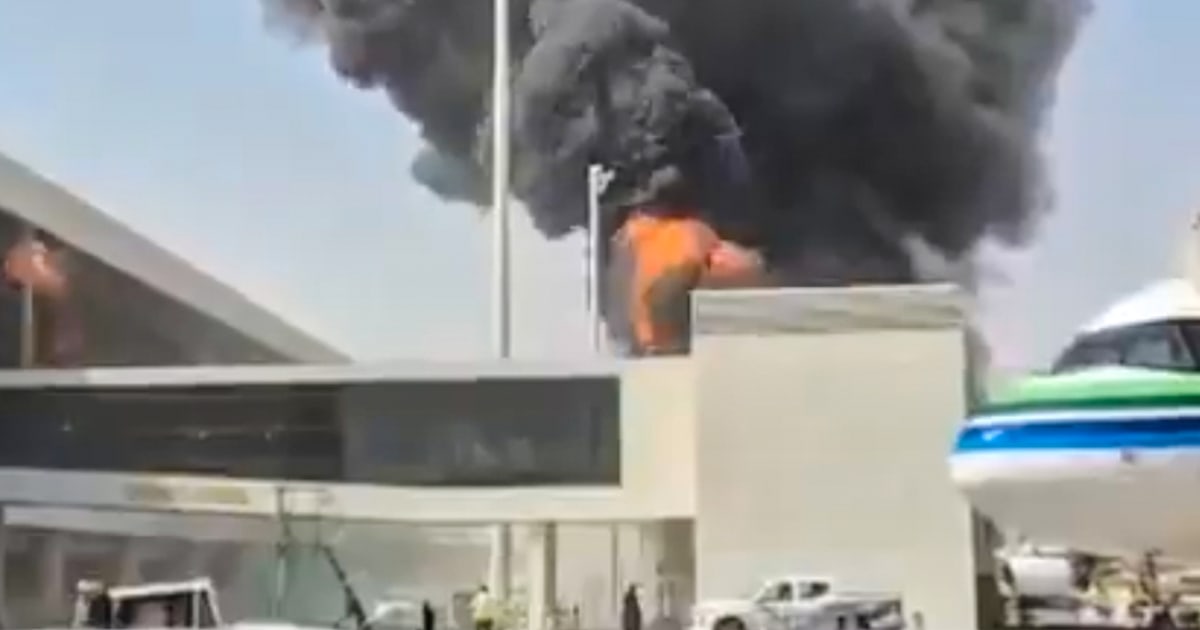
Cover image from nbcnews.com, which was analyzed for this article
A missile strike on Riyadh's airport killed 12 and injured over 300, with Houthis claiming responsibility amid Yemen conflict escalation. The attack prompted Saudi closures, US citizen casualties, and Trump weighing military involvement against Iran-backed forces.
PoliticalOS
Sunday, October 11, 2026 — Politics
The Riyadh airport attack has escalated the Yemen conflict into direct threats against Saudi infrastructure and potential U.S. military involvement, while both sides report mounting civilian casualties that remain only partially verified. Energy routes and regional stability now hinge on whether the latest offensive produces lasting gains or further retaliation.
What outlets missed
Most coverage omitted the specific civilian casualty from a government airstrike in Sanaa’s Sa’wan district and the scale of recent internal displacement from Taiz. Few outlets detailed Houthi claims of 91 Yemeni deaths in five weeks or the precise nationalities of all Riyadh victims beyond the American. The continuation of the international energy conference and Saudi requests for interceptor support from multiple countries received limited attention. The pattern of Houthi missile launches from urban areas near civilian sites in Sanaa was rarely connected to targeting decisions.
Houthi Missile Strike on Riyadh Airport Kills 12 and Raises Stakes for US Role in Yemen
Saudi officials reported that a missile attack on King Khalid International Airport in Riyadh killed 12 people and injured more than 300 others on Saturday, marking the deadliest such incident in the kingdom in over a decade. The victims included one American citizen along with nationals from Saudi Arabia, Bangladesh, Egypt, Jordan, Palestine, Syria and Sudan. Airport operations remained suspended into Sunday as authorities extended closures.
The Saudi-led coalition immediately attributed the strike to Yemen's Iran-backed Houthi movement, describing it as a war crime and pledging a decisive response under international humanitarian law. The Houthis did not claim responsibility for this particular attack but renewed earlier warnings on social media urging airlines, travelers and airport staff to avoid Saudi facilities except those in Mecca and Medina. They stated that Saudi Arabia would bear responsibility for any interception failures.
The assault occurred against a backdrop of renewed fighting that has unraveled a UN-brokered ceasefire largely observed since 2022. Saudi-backed Yemeni government forces have launched an offensive aimed at recapturing territory, including Sanaa, while the Houthis have seized positions along the Red Sea coast. Air strikes on the Yemeni capital have already produced civilian casualties, including the death of a child in one recent incident. The Houthi-run Health Ministry claims 91 people killed and 168 wounded by coalition actions in recent weeks, with a majority described as women and children.
President Trump stated that the United States was examining whether to join Saudi military operations against the Houthis, telling reporters that a decision would come quickly. Two Saudi officials indicated that Riyadh had requested urgent American defense support. The attack also prompted the coalition to report an additional projectile near King Fahd International Airport in Dammam and the interception of a drone in the region.
The escalation carries immediate implications for global energy markets and maritime security in the Red Sea and Persian Gulf. An international energy conference scheduled in Riyadh is proceeding despite the disruptions. Regional governments including Iraq, Lebanon and Syria joined broader international condemnation of the Riyadh strike. Yemen's conflict, now intertwined with the wider US and Israeli confrontation with Iran that began earlier this year, illustrates how localized proxy dynamics can rapidly draw in external powers.
Analysts note that Saudi Arabia faces pressure to demonstrate resolve without committing to prolonged escalation, given the kingdom's interest in economic stability. The Houthis' demonstrated reach into Saudi territory, combined with their capacity to threaten shipping lanes, complicates efforts to contain the fighting. Civilian populations in both countries now confront renewed uncertainty as operations expand beyond established front lines.
You just read Liberal's take. Want to read what actually happened?
More in Politics

Democrats Flip Senate, Expand House Majority in Midterms
Democrats flipped the Senate and expanded their House majority in a major rebuke to President Trump and Republicans. Key victories included multiple Senate seats and state-level wins that ended long-standing GOP dominance in places like Texas.

GOP Losses Spur Blame, Vance Distancing, 2028 Maneuvers
Republicans are pointing fingers internally after heavy losses, with Vice President JD Vance distancing himself from Trump over the Iran war and positioning for a potential 2028 run. Challengers within the party are already sensing opportunity.

Democrats Take House and Senate Amid Record Midterm Turnout
Democrats achieved decisive gains in the 2026 midterms, flipping seats to take control of both chambers. Coverage highlights historic turnout and implications for the Trump administration.
Democrats Take House and Senate, Constraining Trump
Democrats flipped both the House and Senate in a major rebuke to President Trump and Republicans. The results create divided government and set up battles over spending, oversight, and foreign policy for the remainder of Trump's term.
The Compass
You just read five takes on one story.
What's your take? Find your political shape in a few minutes.
Take the test