
Houthi missile kills 12 at Riyadh airport, Trump weighs US strikes
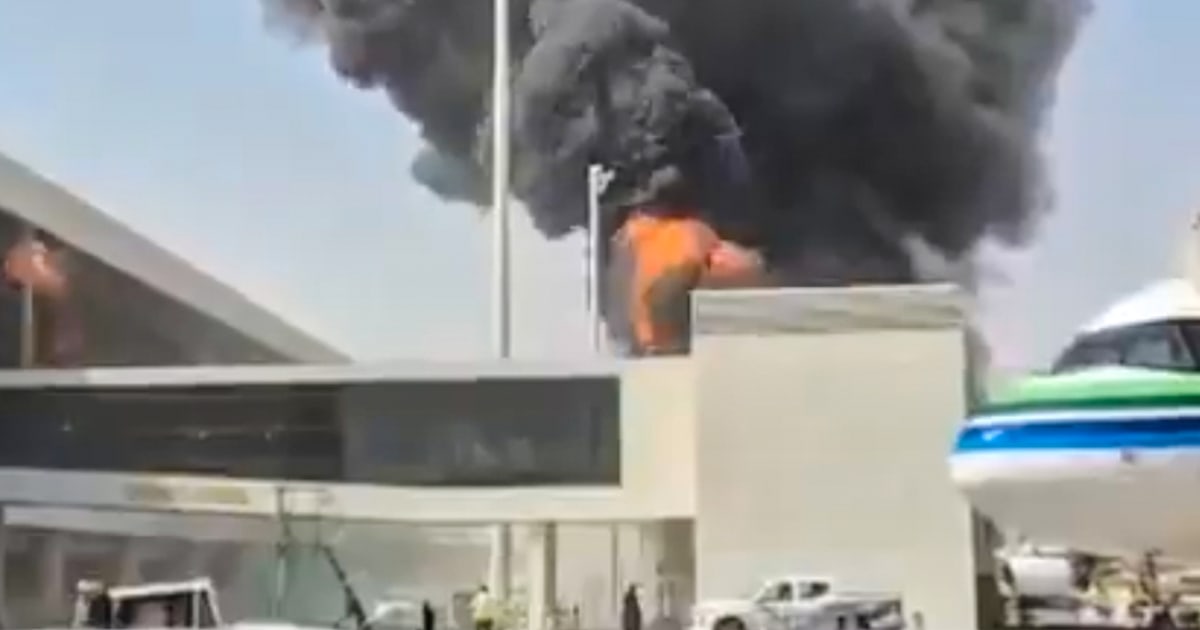
Cover image from nbcnews.com, which was analyzed for this article
A missile strike on Riyadh's airport killed 12 and injured over 300, with Houthis claiming responsibility amid Yemen conflict escalation. The attack prompted Saudi closures, US citizen casualties, and Trump weighing military involvement against Iran-backed forces.
PoliticalOS
Sunday, October 11, 2026 — Politics
The Riyadh airport attack has escalated the Yemen conflict into direct threats against Saudi infrastructure and potential U.S. military involvement, while both sides report mounting civilian casualties that remain only partially verified. Energy routes and regional stability now hinge on whether the latest offensive produces lasting gains or further retaliation.
What outlets missed
Most coverage omitted the specific civilian casualty from a government airstrike in Sanaa’s Sa’wan district and the scale of recent internal displacement from Taiz. Few outlets detailed Houthi claims of 91 Yemeni deaths in five weeks or the precise nationalities of all Riyadh victims beyond the American. The continuation of the international energy conference and Saudi requests for interceptor support from multiple countries received limited attention. The pattern of Houthi missile launches from urban areas near civilian sites in Sanaa was rarely connected to targeting decisions.
Houthi Strike on Riyadh Airport Kills 12 and Raises Specter of Wider US Role in Yemen War
Saudi authorities extended the closure of King Khalid International Airport in Riyadh on Sunday after a missile attack the previous day killed 12 people and wounded more than 300 others, marking the deadliest assault on the kingdom in more than a decade. The strike, which Saudi officials and their allies attributed to Yemen's Iran-backed Houthis, hit the main terminal and forced the suspension of all flights as investigators examined the scene.
The victims included one American, four Saudis, two Bangladeshis, an Egyptian, a Jordanian, a Palestinian, a Syrian and a Sudanese national. Saudi civil aviation authorities said some of the injured remained in critical condition. The attack came days after smaller strikes on the same facility and followed weeks of intensified clashes between the Houthis and Saudi-backed Yemeni government forces along the Red Sea coast.
The Houthis, who have not formally claimed responsibility for Saturday's strike, renewed their warning on social media that Saudi airports and airspace remain legitimate targets. They urged airlines, travelers and workers to avoid all Saudi facilities except those in Mecca and Medina, adding that the kingdom bears responsibility for any failed interceptions. A separate projectile was reported near King Fahd International Airport in Dammam, while a drone was intercepted in the Eastern Province.
President Donald Trump told reporters outside the White House that the United States was considering joining Saudi strikes against the Houthis. "We may. We're going to look at it," he said. Two Saudi officials told reporters that Riyadh has requested urgent American defense support to bolster the coalition's operations in Yemen. The request comes amid the broader regional conflict that Washington and Israel launched against Iran in February.
The escalation has already disrupted an international energy conference scheduled in Riyadh and prompted fresh questions about the human cost of the renewed fighting. In Sanaa, Saudi-led coalition airstrikes have struck residential areas in recent days, killing at least one child and wounding others according to local reports. The Houthi-run Health Ministry claims 91 people have been killed and 168 injured across Yemen in the past five weeks, with the majority described as women and children.
Analysts note that the latest round of fighting follows the collapse of a UN-brokered ceasefire that had largely held since 2022. Saudi Arabia has increased its military involvement in response to Houthi territorial gains, while the Houthis have expanded their campaign to include direct strikes on Saudi infrastructure. The prospect of direct US participation raises the possibility of further entanglement in a conflict that has already produced one of the world's worst humanitarian crises.
Arab governments including Iraq, Lebanon and Syria joined the United Nations in condemning the Riyadh attack, though calls for restraint have so far gone unheeded on both sides. Saudi coalition spokesman Colonel Turki Al-Maliki described the airport strike as a war crime and vowed a decisive response under international humanitarian law. Airport operations in Riyadh are now expected to remain suspended until at least Sunday evening.
You just read Progressive's take. Want to read what actually happened?
More in Politics
Democrats Flip Senate, Expand House Majority in Midterms
Democrats flipped the Senate and expanded their House majority in a major rebuke to President Trump and Republicans. Key victories included multiple Senate seats and state-level wins that ended long-standing GOP dominance in places like Texas.
GOP Losses Spur Blame, Vance Distancing, 2028 Maneuvers
Republicans are pointing fingers internally after heavy losses, with Vice President JD Vance distancing himself from Trump over the Iran war and positioning for a potential 2028 run. Challengers within the party are already sensing opportunity.
Democrats Take House and Senate Amid Record Midterm Turnout
Democrats achieved decisive gains in the 2026 midterms, flipping seats to take control of both chambers. Coverage highlights historic turnout and implications for the Trump administration.
Democrats Take House and Senate, Constraining Trump
Democrats flipped both the House and Senate in a major rebuke to President Trump and Republicans. The results create divided government and set up battles over spending, oversight, and foreign policy for the remainder of Trump's term.
The Compass
You just read five takes on one story.
What's your take? Find your political shape in a few minutes.
Take the test