
Trump Urges Senate Action on SAVE Act Amid Filibuster, Voter Roll Issues
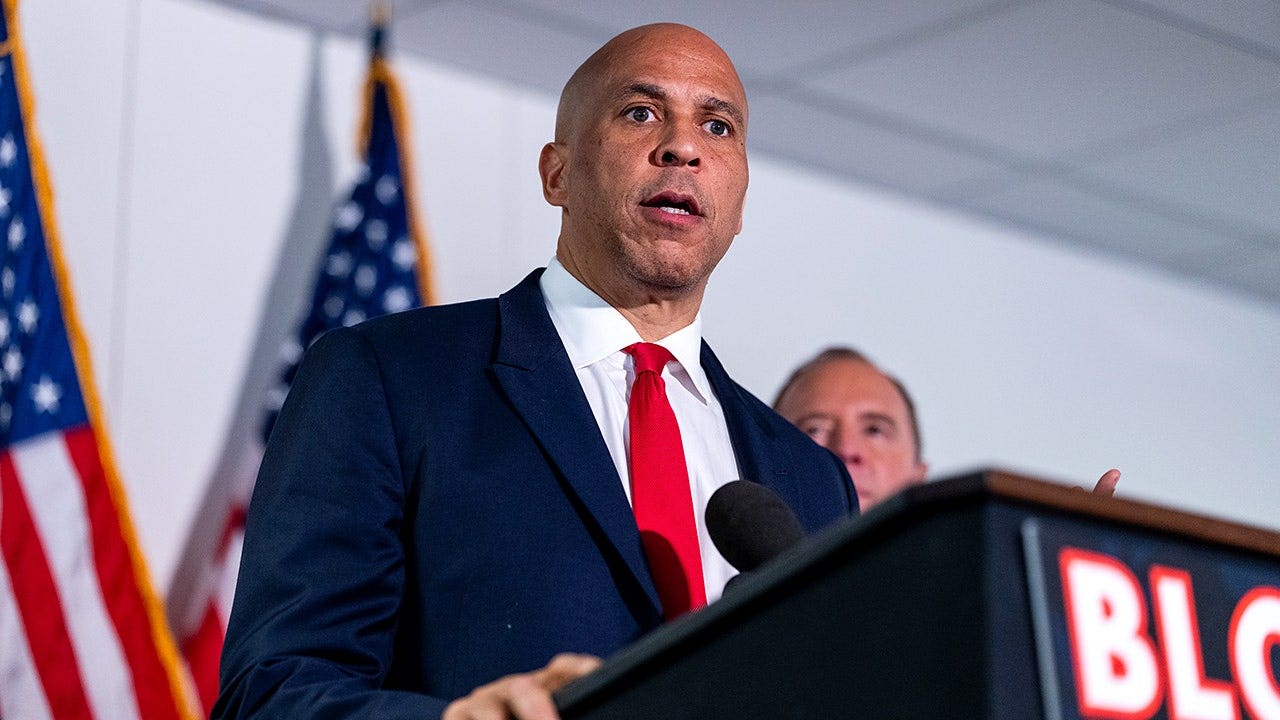
Cover image from foxnews.com, which was analyzed for this article
Trump demands Senate cancel recess to pass the SAVE Act requiring proof of citizenship and photo ID for voting. Democrats resist amid voter roll controversies and filibuster debates.
PoliticalOS
Saturday, August 1, 2026 — Politics
The core dispute centers on whether federal proof-of-citizenship rules are needed to address registration errors and whether Senate rules should be changed to enact them before the August recess; both sides agree that noncitizen voting is illegal, yet they differ sharply on the scope of any new federal mandate and the procedural steps required to pass it.
What outlets missed
The 2022 Senate vote in which Democratic Sens. Manchin and Sinema blocked their own party's attempt to carve out a filibuster exception for voting legislation received little attention, even though it shows internal Democratic divisions rather than uniform support for rules changes. State officials in New Jersey explicitly stated that the 6,600 erroneous registrations did not alter any election results, a finding omitted from coverage focused on the raw numbers. The precise mechanics of the SAVE Act—requiring passports or birth certificates rather than existing state ID—were not detailed in either report, leaving readers without a concrete basis to evaluate claims about voter access impacts.
Booker Stands Against Federal Voter Safeguards After State Errors
Sen. Cory Booker rejected calls for the SAVE Act even after New Jersey officials disclosed that a software glitch left about 6,600 noncitizens on the state's voter rolls ahead of the 2024 presidential election. The Democratic senator from New Jersey argued that the federal legislation, which centers on proof of citizenship and voter identification, would not have stopped the clerical mistake uncovered in his home state.
New Jersey Gov. Mikie Sherrill announced the removal of those noncitizens last week and attributed the problem to an error in the state's Motor Vehicle System. Officials said the individuals had been registered to vote despite lacking citizenship. Sherrill ordered an investigation and directed that the names be purged once the issue surfaced. Similar problems have appeared in other states, including Texas and Oregon, where noncitizens also appeared on rolls through administrative oversights.
Booker maintained that the episode stemmed from isolated technical failures rather than gaps in federal law. He insisted the SAVE Act would block millions of eligible Americans from casting ballots and that existing state processes already address such errors. "Nothing in the SAVE Act would have prevented a clerical error like we've seen in Texas and Oregon and New Jersey," he said. "We take this very seriously in New Jersey."
The comments come as President Trump presses Senate Republicans to advance the bill and, if necessary, alter Senate rules to overcome Democratic opposition. Several Democratic senators have signaled they would consider carving out exceptions to the filibuster for measures they favor, such as past voting rights legislation, while resisting changes that would allow the SAVE Act to pass. Sen. Richard Blumenthal of Connecticut said he supports eliminating the filibuster only for specific items, not as a blanket change. Sen. Maria Cantwell of Washington noted that she backed exceptions during earlier debates over the Voting Rights Act and would weigh constitutional concerns.
These positions reflect a pattern in which procedural rules are defended or discarded based on which party holds the initiative. The New Jersey case illustrates how reliance on interconnected government databases can produce widespread inaccuracies without deliberate fraud. Noncitizens became eligible to vote because motor vehicle records fed directly into voter rolls, bypassing routine citizenship checks at the federal level. The SAVE Act seeks to require documentary proof of citizenship for federal elections, a step that would shift verification away from state systems prone to such glitches.
Critics of the bill claim it imposes unnecessary burdens on legitimate voters. Yet data from states that already require identification show high turnout rates and minimal suppression when simple alternatives like free IDs are provided. The alternative of trusting administrative fixes after errors occur leaves the system exposed until the next audit or scandal. Historical experience with voter integrity measures demonstrates that clear identification standards reduce opportunities for mistakes and disputes without disenfranchising citizens who meet basic qualifications.
Booker and other opponents emphasize ongoing state investigations as sufficient response. Those investigations may correct the current lists, but they do not alter the underlying registration process that allowed noncitizens to appear eligible in the first place. Federal legislation that mandates upfront proof of citizenship addresses the root mechanism rather than reacting after the fact. As Senate debate continues, the New Jersey disclosures add concrete examples to arguments that current safeguards remain too dependent on error-prone databases and post hoc corrections.
You just read Conservative's take. Want to read what actually happened?
More in Politics
Democrats Flip Senate, Expand House Majority in Midterms
Democrats flipped the Senate and expanded their House majority in a major rebuke to President Trump and Republicans. Key victories included multiple Senate seats and state-level wins that ended long-standing GOP dominance in places like Texas.
GOP Losses Spur Blame, Vance Distancing, 2028 Maneuvers
Republicans are pointing fingers internally after heavy losses, with Vice President JD Vance distancing himself from Trump over the Iran war and positioning for a potential 2028 run. Challengers within the party are already sensing opportunity.
Democrats Take House and Senate Amid Record Midterm Turnout
Democrats achieved decisive gains in the 2026 midterms, flipping seats to take control of both chambers. Coverage highlights historic turnout and implications for the Trump administration.
Democrats Take House and Senate, Constraining Trump
Democrats flipped both the House and Senate in a major rebuke to President Trump and Republicans. The results create divided government and set up battles over spending, oversight, and foreign policy for the remainder of Trump's term.
The Compass
You just read five takes on one story.
What's your take? Find your political shape in a few minutes.
Take the test