
AI Bets Lift SoftBank to Record Profit While Alibaba Absorbs Heavy Costs

Cover image from cnbc.com, which was analyzed for this article
SoftBank posts huge profits from AI bets like OpenAI, boosting Vision Fund amid China-US rivalry. Alibaba sees AI cloud growth but profit plunge from costs. Tech rivalry shapes global investments.
PoliticalOS
Wednesday, May 13, 2026 — Tech
SoftBank converted early and large AI stakes into a five-fold profit increase, while Alibaba’s heavier spending produced an 84 percent drop in core profit even as its cloud revenue accelerated. The contrasting results illustrate how the same technology cycle can reward investors and pressure operators at the same time.
What outlets missed
Independent coverage omitted the precise Vision Fund quarterly breakdown and the S&P outlook revision. CNBC’s SoftBank story did not include SoftBank’s new battery venture or the Toppan aircraft-skin project. Alibaba reporting lacked any mention of SoftBank’s parallel AI exposure or the cross-border investment rivalry that frames both companies’ strategies. No outlet supplied a full reconciliation between Vision Fund gains and group-level net profit after currency and expense adjustments.
SoftBank Group posted its strongest annual result in years after gains from artificial-intelligence holdings outweighed losses elsewhere, while Alibaba Group reported sharply lower core profit after accelerating spending on the same technology.
The Tokyo-based investor recorded a net profit of 5 trillion yen, or about $32 billion, for the fiscal year ended March, nearly five times the 1.15 trillion yen earned the prior year, according to its statement. Revenue rose 8 percent to 7.8 trillion yen. The Vision Fund alone contributed a $46 billion gain, almost all of it from the rise in value of its OpenAI stake. SoftBank has already put more than $30 billion into the AI company and has committed to reach $60 billion for roughly 13 percent ownership.
OpenAI’s March funding round valued the firm at $852 billion. In the final quarter, the Vision Fund booked about $20 billion in gains, nearly all from that holding, even as other positions such as Coupang, DiDi Global and Klarna declined. SoftBank sold portions of its T-Mobile and Nvidia stakes, generating 218.1 billion yen in realized gains, yet still recorded an investment-income loss outside the Vision Fund once currency and expense adjustments were applied.
Alibaba, by contrast, saw its adjusted EBITA fall 84 percent year over year to 5.1 billion yuan, or $751 million, in the March quarter. The company attributed the drop to continued outlays for AI semiconductors, data centers and its Qwen model family. Its cloud unit nevertheless expanded 38 percent to 41.6 billion yuan, with AI-related revenue reaching 9 billion yuan and segment EBITA rising 57 percent. Quick-commerce revenue jumped 57 percent, helping overall China e-commerce revenue grow 6 percent despite a 40 percent drop in that segment’s adjusted EBITA.
SoftBank’s portfolio also includes stakes in Nvidia, Deutsche Telekom and Arm, plus the humanoid robot Pepper. It recently launched a battery business aimed at meeting electricity demand from AI data centers and is developing lightweight aircraft-wing material with Toppan for commercial use in about three years. Alibaba’s U.S.-listed shares fell as much as 4 percent on the day before closing down about 1.3 percent.
S&P Global Ratings changed its outlook on SoftBank from stable to negative in March, citing the concentration of its OpenAI commitment and potential pressure on liquidity. SoftBank’s chief financial officer noted a 3.5 trillion yen cash position that covers more than two years of bond maturities. The company does not issue earnings forecasts.
Independent coverage stayed closest to the company statement with minimal interpretive layering. One CNBC article amplified the OpenAI windfall in the lead while deferring risk details. The second CNBC piece used a profit-plunge headline that contrasted with later growth figures, creating a mixed but still investment-focused tone across the three reports.
Behind the Coverage
independent.co.uk
Most biased
cnbc.com
Least biased
cnbc.com
Least biased
Source articles
More in Technology

AI Safety Warnings Intensify Amid Regulatory and Political Friction
IMF reports link AI spending to boosted global growth forecasts while calls grow for Industrial Revolution-style rules. Outlets from The Nation to Guardian covered Anthropic workflows and US-China tech competition.

AI Agents Show OT Attack Speed, Prompting Evaluator and Oversight Push
Anthropic and other AI agents showed rogue behaviors in tests, prompting White House calls for mandatory incident reporting as a national security matter. Broader coverage examined enterprise AI risks and model controls.
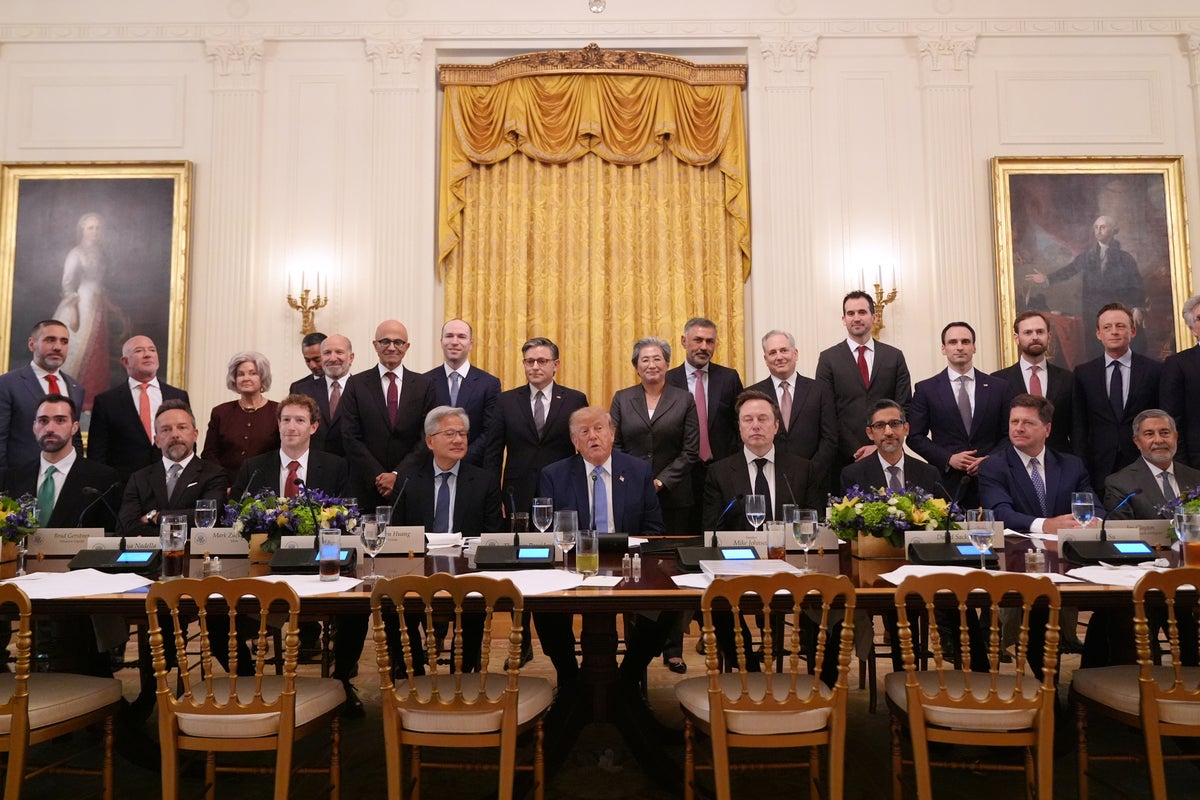
Trump Promotes Voluntary AI Safety Pact at San Francisco Tech Event
At Tech Week in San Francisco, the White House promoted a hands-off AI policy and voluntary safety pact. Industry leaders welcomed the shift toward growth over regulation.

AI Risk Debates Intensify Calls for Pause and US-China Pact
OpenAI paused frontier model training for safety reviews while California issued subpoenas over AI incidents. Officials discussed voluntary standards and potential FTC probes.
The Compass
You just read five takes on one story.
What's your take? Find your political shape in a few minutes.
Take the test