
Trump Cuts South Korea Drills Short to Seek Kim Talks
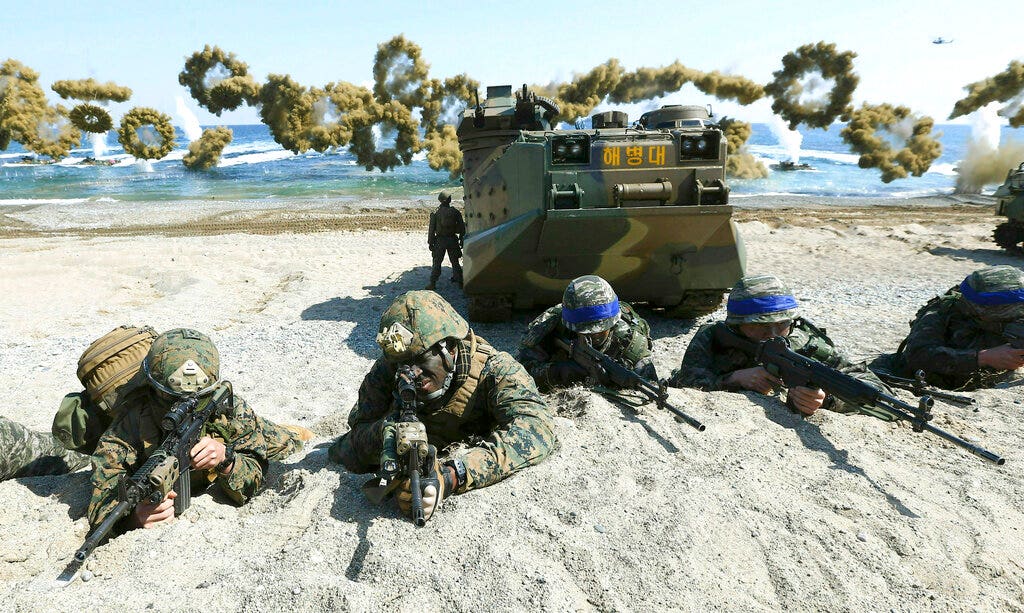
Cover image from foxnews.com, which was analyzed for this article
Joint exercises were shortened at Trump's direction as the US seeks engagement with Kim Jong-un. The move raised questions about alliance commitments and China deterrence. Coverage included both left-leaning analysis of the shift and right-leaning skepticism.
PoliticalOS
Wednesday, August 19, 2026 — Politics
The core unresolved tension is whether shortening live training to facilitate diplomacy with North Korea will preserve alliance readiness or create exploitable gaps. Every outlet confirmed the same schedule change and Trump’s stated rationale; differences lie in which surrounding pressures each chose to emphasize.
What outlets missed
Most coverage omitted the specific figure of roughly 18,000 South Korean troops originally planned and the incorporation of Ukraine-derived tactics on drones and GPS disruption into this year’s schedule. Few noted that this is the first time a drill was curtailed mid-execution rather than scaled in advance planning. The connection between the decision and stalled $350 billion investment talks plus South Korea’s position on Iran operations appeared in only one account and could not be independently verified by other outlets. Bipartisan congressional criticism was mentioned unevenly across reports.
Trump Directs Reduction in US-South Korea Military Exercises
The South Korean military announced Wednesday that joint drills with the United States would end five days early after President Trump instructed his defense secretary to scale them back. The Ulchi Freedom Shield exercise, which started Monday, will now conclude on August 21 instead of running through August 27. Seoul's joint chiefs of staff said the two sides agreed to downsize some field training at Washington's request, with the second phase focused on counterattack operations now cancelled outright.
Trump posted on Truth Social over the weekend that the annual drills cost too much and send a "totally inappropriate and hostile" signal to North Korea. He pointed to his personal relationship with Kim Jong Un as the reason for the change. North Korea had already fired two ballistic missiles into the sea ahead of the exercise, a routine protest against what Pyongyang calls provocative war games on its border.
Pentagon officials described the adjustments as preserving core readiness through simulations and reduced live events. They insisted training objectives would not suffer. South Korean defense officials confirmed the shortened timeline but noted the decision came suddenly. Foreign Minister Cho Hyun told lawmakers that neither Seoul nor most U.S. officials had advance warning of Trump's directive.
The move fits a pattern from Trump's first term, when he repeatedly questioned the value of large-scale exercises that keep American forces tied to distant commitments. Critics of the drills have long argued they function more as expensive theater than genuine deterrence, burning fuel and resources while giving North Korea fresh reasons to test missiles. This latest cut avoids further escalation at a time when Kim has shown willingness to engage directly with Washington.
Some analysts worry the reduction signals weakness to allies, yet the evidence from past rounds shows North Korea responds more to personal outreach than to another round of maneuvers. The exercises have continued for decades under multiple administrations with little lasting effect on Pyongyang's arsenal. Trump has instead prioritized direct talks, a approach that produced the first summits between a sitting U.S. president and a North Korean leader.
South Korea's own frustrations surfaced in the timing. Reports indicate lingering disputes over a stalled $350 billion trade and investment deal and Seoul's reluctance to back certain U.S. operations elsewhere. Those frictions highlight how one-sided the alliance can appear when American taxpayers fund the bulk of the defense burden while commercial talks drag. Cutting the drills sends a clear message that Washington will no longer treat every joint exercise as non-negotiable.
North Korea's missile launches underscore the risks of treating routine training as harmless. Each iteration prompts new tests and raises tensions without resolving the core issues of denuclearization. By dialing back the schedule, the administration removes one unnecessary irritant and keeps channels open for renewed diplomacy. Readiness remains intact through adjusted simulations, and the savings in time and money align with a policy that puts American interests ahead of endless alliance maintenance.
You just read America First's take. Want to read what actually happened?
More in Politics
Democrats Flip Senate, Expand House Majority in Midterms
Democrats flipped the Senate and expanded their House majority in a major rebuke to President Trump and Republicans. Key victories included multiple Senate seats and state-level wins that ended long-standing GOP dominance in places like Texas.
GOP Losses Spur Blame, Vance Distancing, 2028 Maneuvers
Republicans are pointing fingers internally after heavy losses, with Vice President JD Vance distancing himself from Trump over the Iran war and positioning for a potential 2028 run. Challengers within the party are already sensing opportunity.
Democrats Take House and Senate Amid Record Midterm Turnout
Democrats achieved decisive gains in the 2026 midterms, flipping seats to take control of both chambers. Coverage highlights historic turnout and implications for the Trump administration.
Democrats Take House and Senate, Constraining Trump
Democrats flipped both the House and Senate in a major rebuke to President Trump and Republicans. The results create divided government and set up battles over spending, oversight, and foreign policy for the remainder of Trump's term.
The Compass
You just read five takes on one story.
What's your take? Find your political shape in a few minutes.
Take the test