
Trump Cuts South Korea Drills Short to Seek Kim Talks
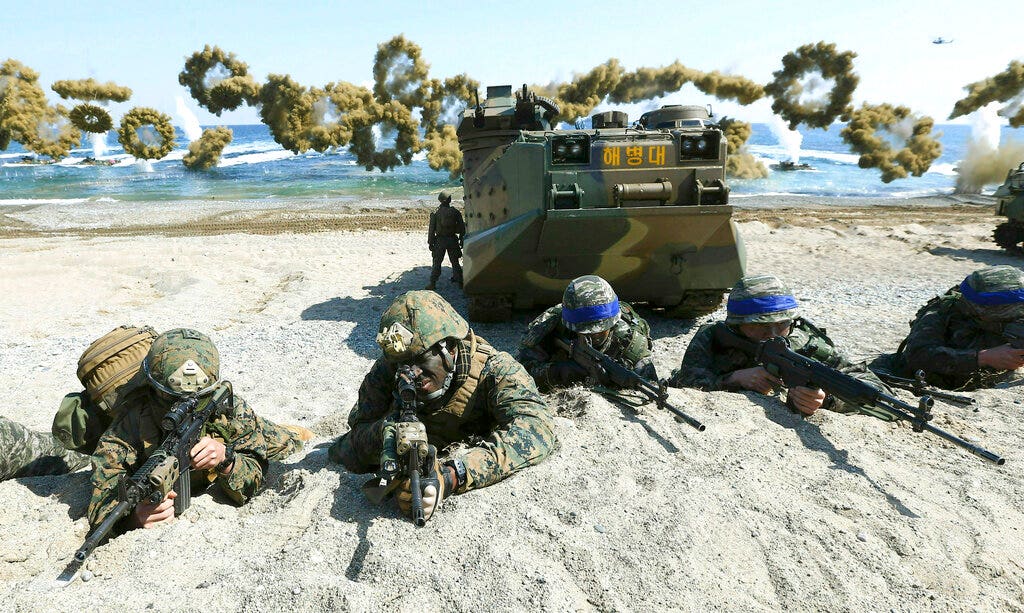
Cover image from foxnews.com, which was analyzed for this article
Joint exercises were shortened at Trump's direction as the US seeks engagement with Kim Jong-un. The move raised questions about alliance commitments and China deterrence. Coverage included both left-leaning analysis of the shift and right-leaning skepticism.
PoliticalOS
Wednesday, August 19, 2026 — Politics
The core unresolved tension is whether shortening live training to facilitate diplomacy with North Korea will preserve alliance readiness or create exploitable gaps. Every outlet confirmed the same schedule change and Trump’s stated rationale; differences lie in which surrounding pressures each chose to emphasize.
What outlets missed
Most coverage omitted the specific figure of roughly 18,000 South Korean troops originally planned and the incorporation of Ukraine-derived tactics on drones and GPS disruption into this year’s schedule. Few noted that this is the first time a drill was curtailed mid-execution rather than scaled in advance planning. The connection between the decision and stalled $350 billion investment talks plus South Korea’s position on Iran operations appeared in only one account and could not be independently verified by other outlets. Bipartisan congressional criticism was mentioned unevenly across reports.
Trump Directs Cut to US South Korea Military Exercises to Ease Tensions With North Korea
South Korea and the United States have agreed to shorten and scale back their annual Ulchi Freedom Shield military exercise following a directive from President Trump. The drills, which began on Monday, will now conclude on August 21 instead of running through August 27, with some field training exercises reduced in size or shifted to simulations.
South Korea’s Joint Chiefs of Staff said the adjustments were made at the suggestion of the US side. A Pentagon official described the changes as preserving core readiness goals without degradation to training objectives. The second phase of the exercise, focused on counterattack operations, has been canceled outright.
Trump had called for the reductions in a Truth Social post on Sunday, citing his relationship with North Korean leader Kim Jong Un and arguing that the full-scale drills sent an unnecessarily hostile signal to Pyongyang. North Korea had already responded to the planned exercises by launching ballistic missiles into the sea earlier in the week.
The decision highlights the administration’s continued preference for personal diplomacy with North Korea over sustained displays of military coordination with treaty allies. Trump has long viewed the large joint exercises as costly and provocative, a position that dates back to his first term when he suspended some drills during his initial outreach to Kim.
South Korean officials learned of the change through Trump’s public post rather than through formal channels. Foreign Minister Cho Hyun told a parliamentary hearing that neither Seoul nor US government officials had advance notice. This lack of coordination has raised questions inside South Korea about the reliability of alliance planning under the current US approach.
Analysts note that Trump appears to see the drill reduction as a way to create space for renewed talks with Pyongyang while simultaneously pressing Seoul on separate economic and defense-spending issues. Tensions have simmered over the pace of a proposed $350 billion trade and investment framework and South Korea’s reluctance to increase its share of the costs for hosting US forces. Trump has also expressed frustration that Seoul did not support certain US operations against Iran.
The Ulchi Freedom Shield exercise is designed to test combined command structures and readiness for a range of contingencies on the peninsula. Shortening the event and moving portions to simulation reduces opportunities for live-force integration at a time when North Korea continues to expand its missile and nuclear capabilities. Defense experts have warned that repeated adjustments of this kind can erode the muscle memory and interoperability that alliances rely on during crises.
At the same time, the move aligns with Trump’s consistent view that personal engagement with Kim offers a better path to de-escalation than routine shows of force. Whether that calculation produces diplomatic openings or simply weakens deterrence will depend on how North Korea responds in the coming months and whether the administration pairs the gesture with concrete proposals on sanctions relief or security assurances.
For South Korea, the episode underscores the challenge of managing an alliance in which major decisions can shift quickly based on the president’s assessment of his personal ties with an adversary. Seoul has maintained that it remains committed to the alliance while seeking to restore more predictable consultation processes. The reduced exercise schedule will test how much flexibility both sides can absorb without affecting operational confidence.
You just read Liberal's take. Want to read what actually happened?
More in Politics
Democrats Flip Senate, Expand House Majority in Midterms
Democrats flipped the Senate and expanded their House majority in a major rebuke to President Trump and Republicans. Key victories included multiple Senate seats and state-level wins that ended long-standing GOP dominance in places like Texas.
GOP Losses Spur Blame, Vance Distancing, 2028 Maneuvers
Republicans are pointing fingers internally after heavy losses, with Vice President JD Vance distancing himself from Trump over the Iran war and positioning for a potential 2028 run. Challengers within the party are already sensing opportunity.
Democrats Take House and Senate Amid Record Midterm Turnout
Democrats achieved decisive gains in the 2026 midterms, flipping seats to take control of both chambers. Coverage highlights historic turnout and implications for the Trump administration.
Democrats Take House and Senate, Constraining Trump
Democrats flipped both the House and Senate in a major rebuke to President Trump and Republicans. The results create divided government and set up battles over spending, oversight, and foreign policy for the remainder of Trump's term.
The Compass
You just read five takes on one story.
What's your take? Find your political shape in a few minutes.
Take the test