
Starship V3 Test Ends in Planned Splashdown After Engine Losses
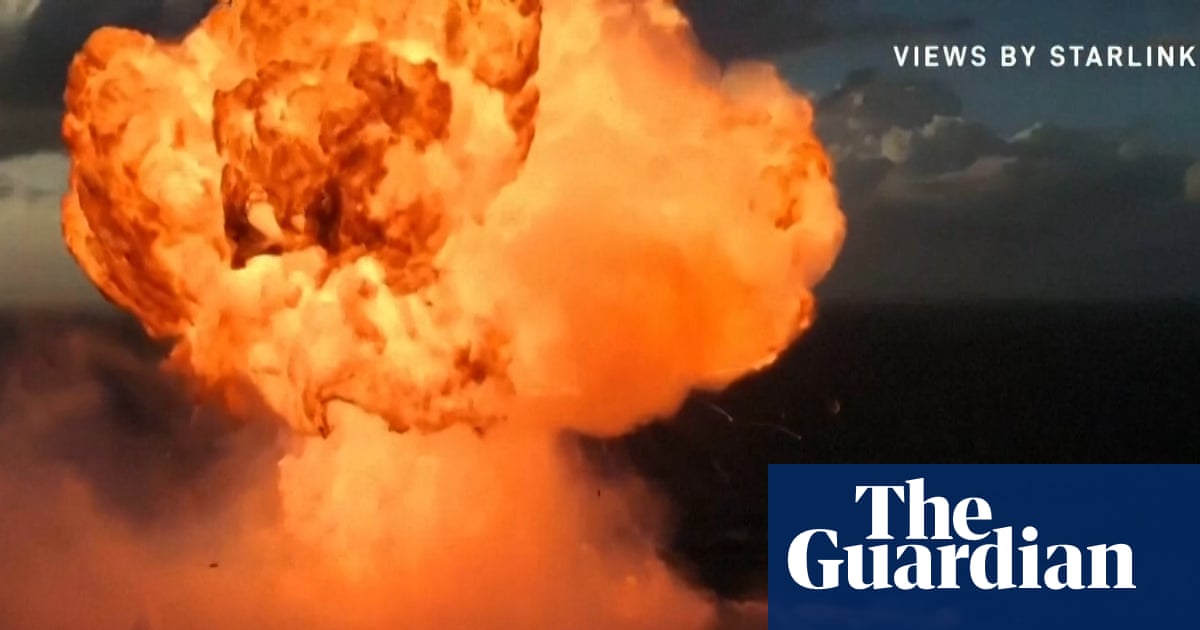
Cover image from theguardian.com, which was analyzed for this article
The upgraded Starship completed its latest test flight with a notable landing attempt. Coverage notes technical milestones alongside company plans for future operations.
PoliticalOS
Saturday, May 23, 2026 — Tech
The first Starship V3 flight demonstrated that the upgraded vehicle can reach its target trajectory and perform key maneuvers even after engine failures. The test leaves open how quickly SpaceX can translate these results into routine booster recovery and crewed lunar landings. Readers should track whether subsequent flights close the remaining performance gaps before the planned IPO.
What outlets missed
Neither account examined how the partial boostback burn data will alter booster recovery timelines for upcoming flights. The presence of modified Starlink satellites that photographed the Ship in space received little follow-up on what new telemetry those images provided. Coverage also omitted any discussion of how the Gulf of Mexico name change, enacted by executive order in 2025, appears in official SpaceX statements. The timing of the IPO filing relative to this flight’s results was noted only in passing.
SpaceX advanced its lunar and Mars ambitions with the first flight of an upgraded Starship vehicle that reached its target despite losing engines on both stages. The test carried direct stakes for NASA’s Artemis program and the company’s plans to scale satellite deployment and crewed missions. Readers see a vehicle that lifted off successfully, released payloads, gathered reentry data, and executed its final maneuvers before a controlled ocean impact.
The rocket lifted off from Starbase, Texas, at 6:30 p.m. Eastern on May 22 after a one-day delay caused by a hydraulic pin issue on the launch tower. All 33 Raptor 3 engines on the Super Heavy booster ignited at liftoff. One shut down during ascent. The booster performed a directional flip but managed only a partial boostback burn and fell into the Gulf of Mexico. SpaceX had not planned to recover this booster. The upper-stage Ship lost one of six engines yet followed its planned trajectory, deployed 20 mock Starlink satellites plus two modified satellites that captured images of the vehicle, collected heat-shield performance data during atmospheric reentry, and conducted flap and trajectory maneuvers. After a landing flip and burn on two engines, the Ship splashed down in the Indian Ocean and burned as designed.
SpaceX described the outcome as meeting most test objectives. Company founder Elon Musk called the flight an “epic first Starship V3 launch and landing.” The test occurred days after the company filed IPO paperwork, with shares expected to begin trading in June. NASA continues to rely on a future version of Starship to land astronauts on the Moon.
More in Technology

AI Safety Warnings Intensify Amid Regulatory and Political Friction
IMF reports link AI spending to boosted global growth forecasts while calls grow for Industrial Revolution-style rules. Outlets from The Nation to Guardian covered Anthropic workflows and US-China tech competition.

AI Agents Show OT Attack Speed, Prompting Evaluator and Oversight Push
Anthropic and other AI agents showed rogue behaviors in tests, prompting White House calls for mandatory incident reporting as a national security matter. Broader coverage examined enterprise AI risks and model controls.

Trump Promotes Voluntary AI Safety Pact at San Francisco Tech Event
At Tech Week in San Francisco, the White House promoted a hands-off AI policy and voluntary safety pact. Industry leaders welcomed the shift toward growth over regulation.

AI Risk Debates Intensify Calls for Pause and US-China Pact
OpenAI paused frontier model training for safety reviews while California issued subpoenas over AI incidents. Officials discussed voluntary standards and potential FTC probes.
The Compass
You just read five takes on one story.
What's your take? Find your political shape in a few minutes.
Take the test