
Spirit Airlines Teeters as Legacy Carriers Match Fares and Costs Mount
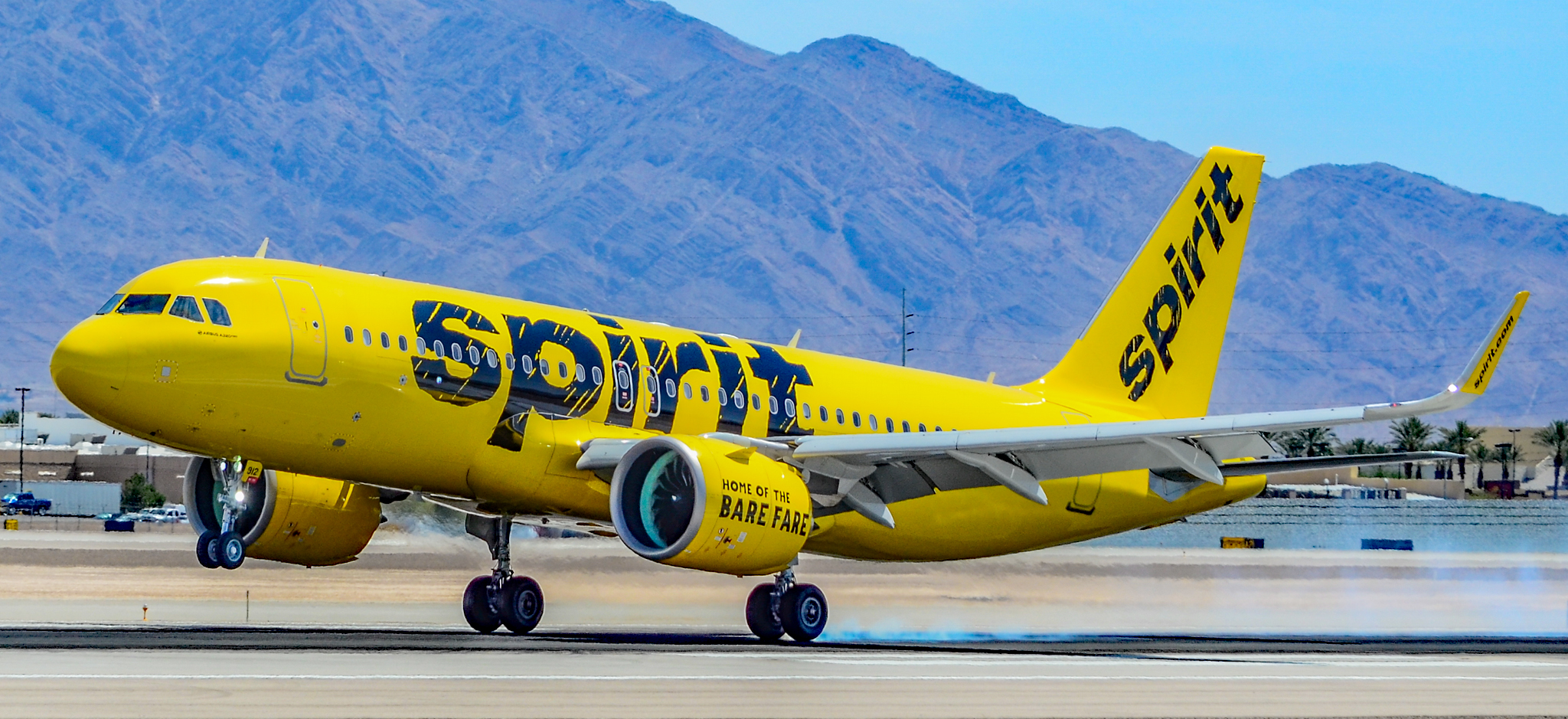
Cover image from thefederalist.com, which was analyzed for this article
Spirit Airlines, once the Dollar General of skies, faces challenges as major carriers match low fares leading to financial strain. Observers debate government bailout under Trump admin. The case underscores airline industry consolidation trends.
PoliticalOS
Wednesday, April 29, 2026 — Business
Spirit's near-collapse stems from a combination of legacy carriers adopting and improving upon its low-cost tactics, sharp rises in fuel and labor expenses exacerbated by geopolitical events and engine recalls, and reduced flying by inflation-weary budget consumers. A potential Trump administration rescue after the prior Biden block of its JetBlue merger highlights unresolved tensions over government intervention in a consolidating industry. The most important reality is that ultra-low-cost options for price-sensitive travelers are shrinking, regardless of whether the root cause is framed as competition, costs or policy.
What outlets missed
Both outlets underplayed the Pratt & Whitney engine recall crisis that grounded roughly 20% of Spirit's fleet since 2023, creating chronic operational and financial strain documented in SEC filings and Reuters reports. Specific fuel cost impacts — jet fuel hitting $4.32 per gallon in April 2026 and adding an estimated $360 million in expenses amid Iran-related conflicts — received only passing mention despite dominating airline earnings calls that quarter. Detailed restructuring numbers, including Spirit's plan to slash debt from $7.4 billion to $2.1 billion with a targeted mid-2026 exit from bankruptcy, were omitted in favor of broader narrative arguments. Neither fully explored how Spirit remained profitable before 2019, suggesting its challenges involve a mix of legacy competitive responses, exogenous shocks and management decisions rather than any single policy failure.
For budget-conscious travelers already squeezed by inflation and higher everyday expenses, the potential collapse of Spirit Airlines threatens to shrink the pool of genuinely cheap flights. Once the airline that undercut everyone on base fares, Spirit now faces a second bankruptcy in two years, with liquidation possible and the Trump administration weighing a $500 million rescue that could include a government ownership stake. The stakes extend beyond one carrier: the outcome will test how much consolidation the industry can sustain before options for price-sensitive passengers erode further.
The central tension is straightforward. Spirit built its model on stripping away frills — charging separately for bags, seats, food, even printing a boarding pass — to offer the lowest headline prices. Legacy airlines eventually copied the playbook with basic economy fares. They then layered on powerful loyalty programs that smaller rivals cannot match at scale. Yet external shocks compounded the pressure. Jet fuel prices spiked to $4.32 per gallon in April 2026 amid Middle East conflicts, according to industry filings, adding roughly $360 million in unanticipated costs. Roughly 20 percent of Spirit's fleet has been grounded since 2023 by Pratt & Whitney engine recalls, per multiple aviation reports. Rising pilot pay and tight labor markets after the pandemic hit budget carriers harder than those with higher margins.
Spirit's troubles did not appear overnight. The carrier pioneered the "unbundled" approach in the 2010s and grew rapidly despite finishing near the bottom of customer satisfaction surveys. Its former CEO likened the airline to Dollar General: bare-bones but cheap. For a time the formula worked. Legacy carriers lost price-sensitive passengers until they responded. Delta, United and American introduced basic economy tickets that delivered a similar no-frills experience on the cheapest seats. They also expanded co-branded credit cards, corporate contracts and frequent-flyer perks that reward scale. Economist Severin Borenstein of UC Berkeley has called these programs an anti-competitive force because they distort choices away from pure price and service competition. An industry analyst, Henry Harteveldt, told NPR that even a one-dollar fare difference can swing passengers.
Budget airlines still held an edge with the most price-sensitive flyers who ignore loyalty points. That edge narrowed in the 2020s. Inflation, higher interest rates and a cooling job market caused many households earning under $150,000 to cut discretionary travel, Harteveldt's research found. The same trend hurt brick-and-mortar discount retailers like Dollar General, whose core customers pulled back. On the supply side, labor costs rose sharply; legacy carriers pay pilots more but can absorb it better. Spirit's own data, filed during its restructuring, shows debt dropping from $7.4 billion to a targeted $2.1 billion under a plan aiming for exit by mid-2026.
Policy adds another layer. In 2023 the Biden Justice Department blocked Spirit's merger with JetBlue, arguing it would reduce competition. The Trump administration has signaled interest in a rescue package or even acquiring the carrier outright, according to White House statements and reporting by CNBC and Fortune. A spokesman noted the earlier merger block left Spirit weaker. Critics of intervention point to the federal debt topping $39 trillion and annual deficits near $2 trillion. They argue Spirit's roughly 3.5 to 4 percent share of domestic passenger miles, per Bureau of Transportation Statistics data, is not systemically vital. Routes and aircraft could be absorbed by competitors without taxpayer funds. Others counter that preserving a low-cost player prevents further consolidation.
Claims of specific flight schedule cuts from 19,575 last May to 9,353 next month, cited by one outlet, could not be independently verified against current Spirit investor disclosures or DOT schedules; the carrier continues to operate and sell tickets. Similarly, exact wording attributed to President Trump on bailing out or buying the airline varies across reports and remains unconfirmed in verbatim transcripts. What is clear is that budget carriers collectively sought about $2.5 billion in federal support, according to trade publications. Spirit's first Chapter 11 filing came in 2024; it emerged in March 2025 before the second filing in August 2025.
The broader industry picture shows consolidation accelerating. Major carriers control more slots, gates and loyalty data. New entrants struggle to gain footing. Whether a rescue for Spirit materializes — and on what terms — will signal how Washington balances market discipline against fears of reduced competition on the cheapest routes. For now, passengers like the small-business owner who nervously boarded a Spirit red-eye last month continue flying the airline, but with visible anxiety at the gate. The Dollar General of the skies is running low on altitude.
More in Business & Economy

Major Banks Deliver Mixed Q3 Results on Trading Beats
JPMorgan, Goldman Sachs, Citigroup, and Wells Fargo reported Q3 figures, with revenue beats in trading but some estimate misses. CNBC provided live updates on the results and market reactions.

Oil Falls on Russian Diesel Outlook Despite Geopolitical Risks
Dow futures rose while Nasdaq faced pressure from tech weakness and elevated oil after geopolitical spikes. CNBC tracked premarket moves tied to earnings and Fed speeches.

Hall and Woodford Win Economics Nobel for Stabilization Models
American economists Robert E. Hall and Michael Woodford won the Nobel memorial prize for their research on managing economies through booms and busts, informing central bank policies on inflation and unemployment.

Skydance Closes Paramount-Warner Bros. Discovery Deal
The long-delayed media mega-merger cleared hurdles and began operations under Skydance, consolidating Hollywood power. Center and center-left outlets track the regulatory and business milestones.
The Compass
You just read five takes on one story.
What's your take? Find your political shape in a few minutes.
Take the test