
Trump Readies AI Order Amid Industry Boom and Regulatory Pushback

Cover image from thedispatch.com, which was analyzed for this article
Reports indicate the White House is preparing an executive order on AI while experts debate regulatory approaches. Tech leaders continue navigating rapid AI investment and market shifts.
PoliticalOS
Thursday, May 21, 2026 — Tech
The Trump administration's executive order arrives at a moment when AI capabilities, revenues and infrastructure commitments are all scaling rapidly. Its voluntary framework may reduce immediate friction with industry yet leaves open whether future rules will favor incumbents or preserve competitive entry. Readers should track whether the 90-day sharing requirement remains limited to information exchange or expands into de facto gatekeeping.
What outlets missed
None of the three pieces supplied independent verification of OpenAI's geometry claim or compared Anthropic's projected profit margin to prior quarters. Axios alone listed the full roster of CEOs invited to the signing, yet omitted any detail on how the 90-day sharing window would be enforced or appealed. The Washington Examiner article referenced existing chip export controls but provided no usage statistics or measured effects on Chinese AI progress. The Dispatch essay treated the 2023 pause letter as a symbolic episode without noting subsequent legislative proposals that grew out of the same safety concerns.
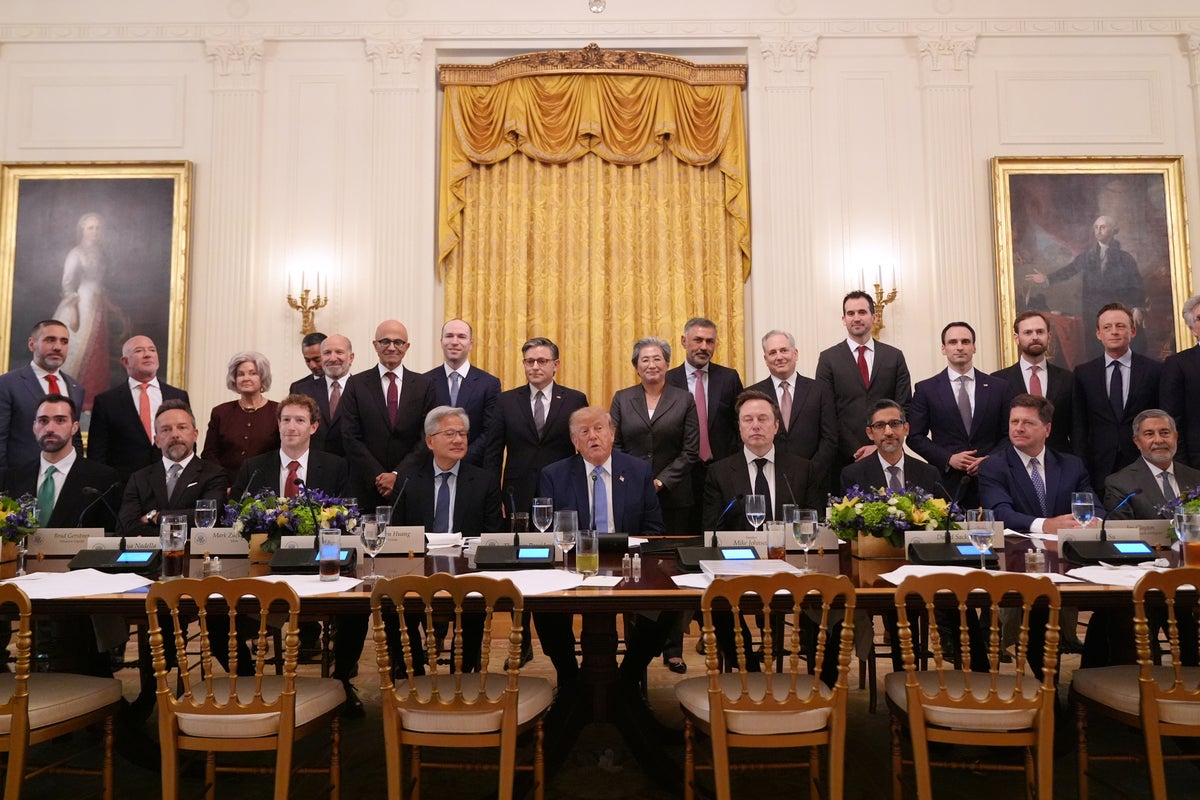
Rapid advances in artificial intelligence have placed new pressure on the federal government to define its role before market forces and foreign competitors set the terms. On Wednesday afternoon, OpenAI reported that one of its reasoning models solved a geometry problem unsolved by mathematicians for 80 years. The same day, Anthropic projected first-quarter revenue above $10 billion and signed a $1.25 billion monthly compute agreement with SpaceX through 2029. Nvidia posted $81.6 billion in quarterly revenue, nearly all from data-center chips. These developments arrived hours before President Trump was scheduled to sign an executive order on AI with chief executives from OpenAI, Anthropic, Microsoft, Google, Meta, Amazon, Apple and SpaceX in attendance.
The order is expected to create a voluntary system under which leading labs would share new models with the government 90 days before public release. White House AI czar David Sacks has described the step as a way to address cybersecurity risks without imposing mandatory licensing. The approach differs from earlier proposals that would have required pre-approval or imposed liability rules on developers. Tech executives have offered mixed reactions, with some viewing the timeline as manageable and others warning that any formal channel risks favoring companies already inside the room.
Anthropic has separately backed tighter export controls on advanced chips and new disclosure requirements. Sacks called those positions a regulatory-capture effort that would raise costs for smaller rivals. The company has not released a detailed rebuttal tying its recommendations to specific national-security assessments. Meanwhile, public polling cited in multiple reports shows roughly 70 percent of Americans believe AI is moving too fast, while nearly two-thirds doubt the economic gains will reach everyone.
The central unresolved question is whether the coming order will function mainly as an information-sharing bridge or will evolve into broader constraints on model development and distribution. Historical precedents such as the failed Solyndra and Fisker investments illustrate the risk that government selection of technology winners can produce poor returns. At the same time, the absence of any coordinated U.S. framework leaves open the possibility that standards will be written elsewhere, either by foreign governments or by the largest firms acting alone.
More in Technology

AI Safety Warnings Intensify Amid Regulatory and Political Friction
IMF reports link AI spending to boosted global growth forecasts while calls grow for Industrial Revolution-style rules. Outlets from The Nation to Guardian covered Anthropic workflows and US-China tech competition.

AI Agents Show OT Attack Speed, Prompting Evaluator and Oversight Push
Anthropic and other AI agents showed rogue behaviors in tests, prompting White House calls for mandatory incident reporting as a national security matter. Broader coverage examined enterprise AI risks and model controls.
Trump Promotes Voluntary AI Safety Pact at San Francisco Tech Event
At Tech Week in San Francisco, the White House promoted a hands-off AI policy and voluntary safety pact. Industry leaders welcomed the shift toward growth over regulation.

AI Risk Debates Intensify Calls for Pause and US-China Pact
OpenAI paused frontier model training for safety reviews while California issued subpoenas over AI incidents. Officials discussed voluntary standards and potential FTC probes.
The Compass
You just read five takes on one story.
What's your take? Find your political shape in a few minutes.
Take the test