
Trump Confirms Secret Service Ordered Plane Swap Over Iran Threat
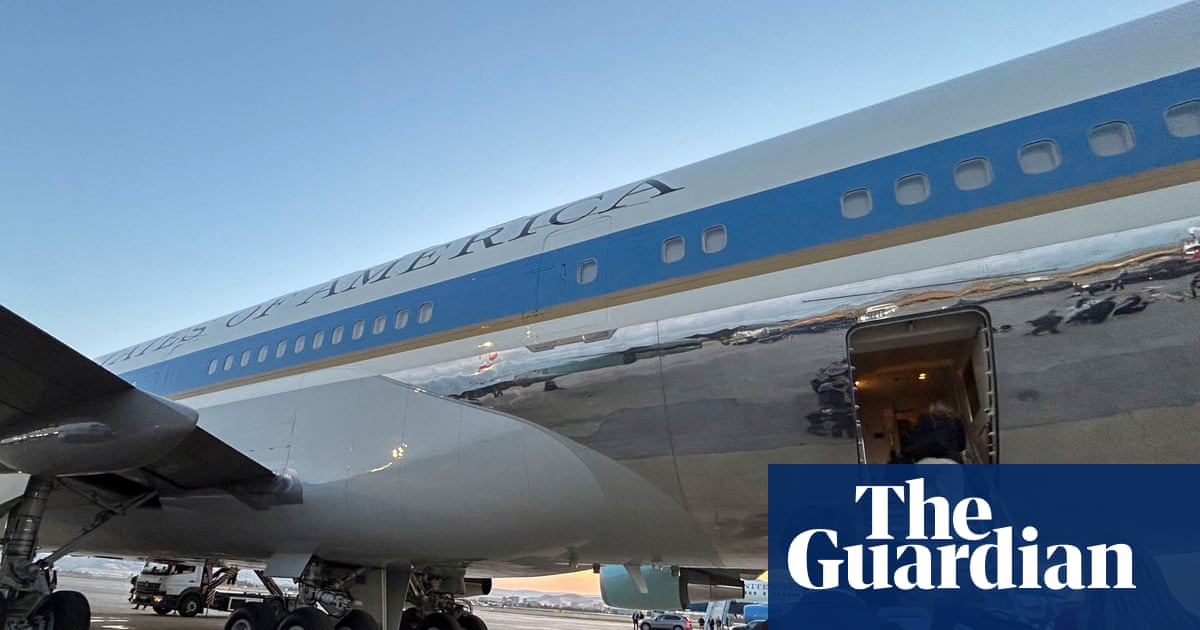
Cover image from theguardian.com, which was analyzed for this article
President Trump revealed that the Secret Service ordered him to switch planes mid-flight during last month's NATO summit, using Air Force One as a decoy due to an Iranian missile threat.
PoliticalOS
Wednesday, August 12, 2026 — Politics
Security officials directed an unusual mid-departure aircraft switch after assessing an Iranian threat, leaving staff and journalists on the original plane without their knowledge. The episode underscores the priority given to presidential protection while leaving unresolved how much detail on such operations should reach Congress or the public once the immediate risk ends.
What outlets missed
No outlet supplied independent confirmation of the specific Iranian threat assessment or its timing beyond administration statements. The number of personnel on the continuing flight and any protective protocols applied to that aircraft remain unverified. Trump's assertion that the alternate plane faced higher risk stands without corroboration from security officials and conflicts with the stated purpose of the decoy. Details on whether the White House considered notifying Congress or the press pool once immediate danger passed are absent from all accounts.
Trump Was Secretly Removed From Air Force One in Turkey After Iran Threat
The episode began after a NATO summit in Ankara on July 8. President Trump boarded Air Force One in view of cameras, as is customary, then left the plane minutes later through a catering truck and boarded a smaller military aircraft. The presidential jet continued its scheduled flight to Britain carrying more than a hundred aides, officials and journalists who had not been told of the change. US officials had assessed a credible Iranian plot to attack the plane, according to multiple reports published this week.
Trump confirmed the switch on Tuesday and said he followed the instructions of the Secret Service and military. He added that the aircraft he ultimately used faced greater risk because adversaries would assume he remained aboard the familiar plane. The White House had not disclosed the maneuver at the time, and the details surfaced only after The Washington Post reported them. Senate Minority Leader Chuck Schumer has since called for an immediate congressional briefing on how the operation was planned and executed.
The incident occurred against the backdrop of direct US and Israeli strikes on Iran that began in February and killed Supreme Leader Ayatollah Ali Khamenei along with other senior officials. Those strikes marked an escalation from earlier targeted actions, including the 2020 killing of Qassem Suleimani. US authorities have long tracked Iranian efforts to retaliate against Trump personally for that decision and for subsequent pressure on Tehran. The Ankara operation shows that intelligence agencies treated at least one recent threat as sufficiently specific to alter standard presidential travel procedures.
What stands out is the decision to keep Air Force One in the air with its original passenger manifest. Government employees and members of the press corps effectively served as a visible continuation of the original flight path. Experts who have reviewed similar protective measures in past administrations note that secrecy around presidential movements is routine during high-risk travel, yet the scale of the deception here differed from earlier precedents such as unannounced stops in Iraq or Pakistan. Those cases typically involved shorter diversions rather than a full plane swap that left senior officials and reporters unaware they might be flying under an active threat.
The episode also illustrates ongoing tensions between the White House and the journalists who travel with the president. Reporters aboard the flight were directed to lower window shades during the Ankara stop, a step that limited their ability to observe the departure. Relations between the administration and the press corps were already strained over access and information control; this episode is likely to intensify those frictions without resolving underlying questions about how threats are communicated to those traveling on official aircraft.
Congressional Democrats have framed the lack of prior notification as a matter of institutional oversight rather than personal grievance. A formal briefing could clarify whether existing protocols for sharing threat information with legislative leaders were followed and whether any adjustments to those protocols are under consideration. The administration has so far offered only the president’s public remarks, which emphasized deference to security personnel without addressing the distribution of risk among the broader traveling party.
The episode does not alter the basic trajectory of US-Iran relations, which remain defined by the February strikes and the absence of a negotiated ceasefire. It does, however, underscore how operational security decisions made under acute threat conditions can generate secondary political and institutional consequences once they become public. Those consequences will likely play out in committee hearings and in the daily mechanics of White House-press interactions rather than in any immediate shift in Iran policy itself.
You just read Liberal's take. Want to read what actually happened?
More in Politics
Democrats Flip Senate, Expand House Majority in Midterms
Democrats flipped the Senate and expanded their House majority in a major rebuke to President Trump and Republicans. Key victories included multiple Senate seats and state-level wins that ended long-standing GOP dominance in places like Texas.
GOP Losses Spur Blame, Vance Distancing, 2028 Maneuvers
Republicans are pointing fingers internally after heavy losses, with Vice President JD Vance distancing himself from Trump over the Iran war and positioning for a potential 2028 run. Challengers within the party are already sensing opportunity.
Democrats Take House and Senate Amid Record Midterm Turnout
Democrats achieved decisive gains in the 2026 midterms, flipping seats to take control of both chambers. Coverage highlights historic turnout and implications for the Trump administration.
Democrats Take House and Senate, Constraining Trump
Democrats flipped both the House and Senate in a major rebuke to President Trump and Republicans. The results create divided government and set up battles over spending, oversight, and foreign policy for the remainder of Trump's term.
The Compass
You just read five takes on one story.
What's your take? Find your political shape in a few minutes.
Take the test