
Trump Confirms Secret Service Ordered Plane Swap Over Iran Threat
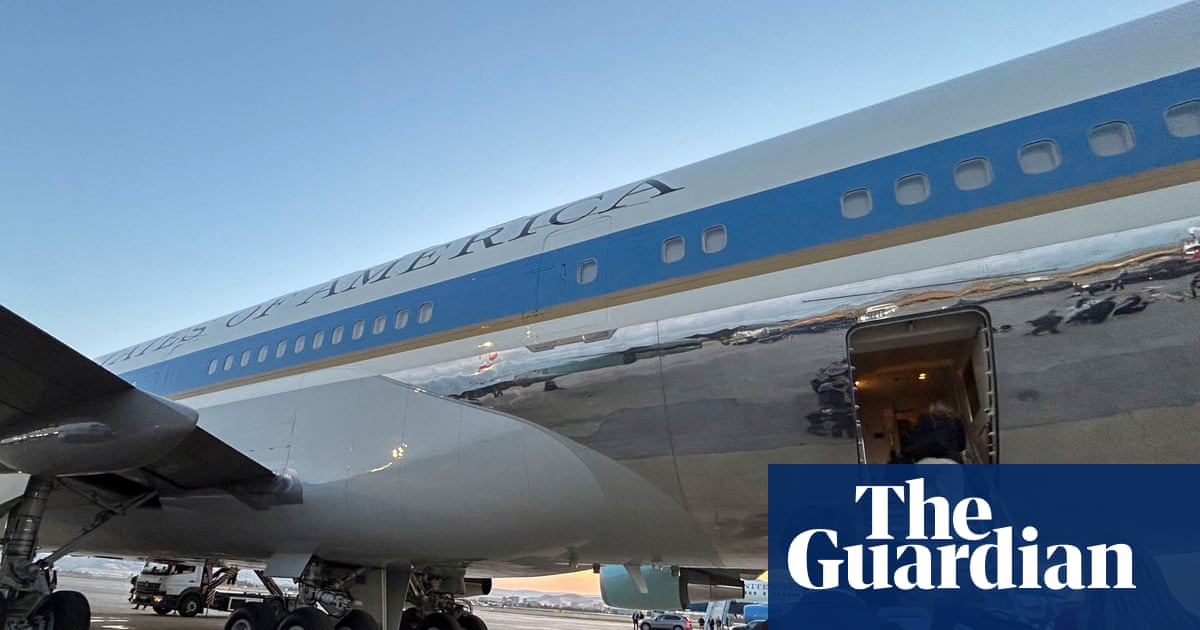
Cover image from theguardian.com, which was analyzed for this article
President Trump revealed that the Secret Service ordered him to switch planes mid-flight during last month's NATO summit, using Air Force One as a decoy due to an Iranian missile threat.
PoliticalOS
Wednesday, August 12, 2026 — Politics
Security officials directed an unusual mid-departure aircraft switch after assessing an Iranian threat, leaving staff and journalists on the original plane without their knowledge. The episode underscores the priority given to presidential protection while leaving unresolved how much detail on such operations should reach Congress or the public once the immediate risk ends.
What outlets missed
No outlet supplied independent confirmation of the specific Iranian threat assessment or its timing beyond administration statements. The number of personnel on the continuing flight and any protective protocols applied to that aircraft remain unverified. Trump's assertion that the alternate plane faced higher risk stands without corroboration from security officials and conflicts with the stated purpose of the decoy. Details on whether the White House considered notifying Congress or the press pool once immediate danger passed are absent from all accounts.
Trump's Plane Swap Exposed Aides and Reporters to Iranian Threat While Shielding Only the President
Democrats are demanding a full congressional briefing after revelations that Donald Trump was secretly removed from Air Force One in a catering truck during a July NATO summit in Turkey, leaving more than 100 staff members, officials and journalists aboard the jet as unwitting decoys amid a reported Iranian assassination plot. The maneuver, confirmed this week by multiple outlets including The Washington Post and The New York Times, underscores the depth of security concerns tied to the ongoing U.S.-Israel conflict with Iran but has drawn sharp criticism for shifting potential danger onto others.
The episode unfolded on July 8 after Trump attended the summit in Ankara. U.S. intelligence had flagged a credible threat that Iran might target the presidential aircraft in retaliation for joint strikes earlier this year that killed Iran's supreme leader and other senior officials. Rather than ground the flight or alter the route openly, security officials directed Trump to board Air Force One in full view of cameras before slipping out minutes later via a catering vehicle typically used for loading meals. He then transferred to a smaller military plane for the journey to Britain, while the original jet continued with passengers unaware of the switch.
Steven Cash, a former CIA officer and executive director of the nonprofit Steady State, described the tactic bluntly. It appeared designed to reduce risk to the president by offering up roughly 100 people as potential targets, he said. Among those left on board were Secretary of State Marco Rubio, Treasury Secretary Scott Bessent and senior aides Stephen Miller and Steven Cheung, along with members of the White House press corps who had been instructed to lower their window shades.
Trump defended the operation in remarks to reporters this week, insisting he followed orders from the Secret Service and military. He claimed the plane he ultimately flew on faced greater risk because adversaries would assume it carried the president. "I go by Secret Service and the military," he said. "They wanted me to go in a different flight, different plane. I just have to do what they say." He added that he receives many threats and does not always seek details.
The explanation has done little to quiet concerns. Senate Minority Leader Chuck Schumer called the lack of prior notification to Congress unacceptable and demanded immediate briefings on how the mission was planned and executed. Experts have noted the unusual nature of the ruse. Colin P. Clarke of The Soufan Center said the lengths taken to protect Trump while exposing others risked making him appear weak, especially given his administration's history with Iran, including the 2020 strike that killed Qassem Soleimani.
Such threats are not new. U.S. officials have long accused Iran of plotting against Trump for his role in Soleimani's death. Manhattan prosecutors in 2024 charged an operative with planning an attack on the then-candidate. Analysts say a ceasefire or peace deal would not necessarily end Tehran's interest in targeting him.
The episode has fueled memes and questions about the administration's transparency, particularly as the White House kept the swap secret for weeks. It also highlights ongoing tensions between the Trump team and the press, with reporters effectively used as part of the deception. While officials maintain the priority was presidential safety, the decision to fly the jet anyway has left lingering unease about whose lives were deemed expendable in the process.
You just read Progressive's take. Want to read what actually happened?
More in Politics
Democrats Flip Senate, Expand House Majority in Midterms
Democrats flipped the Senate and expanded their House majority in a major rebuke to President Trump and Republicans. Key victories included multiple Senate seats and state-level wins that ended long-standing GOP dominance in places like Texas.
GOP Losses Spur Blame, Vance Distancing, 2028 Maneuvers
Republicans are pointing fingers internally after heavy losses, with Vice President JD Vance distancing himself from Trump over the Iran war and positioning for a potential 2028 run. Challengers within the party are already sensing opportunity.
Democrats Take House and Senate Amid Record Midterm Turnout
Democrats achieved decisive gains in the 2026 midterms, flipping seats to take control of both chambers. Coverage highlights historic turnout and implications for the Trump administration.
Democrats Take House and Senate, Constraining Trump
Democrats flipped both the House and Senate in a major rebuke to President Trump and Republicans. The results create divided government and set up battles over spending, oversight, and foreign policy for the remainder of Trump's term.
The Compass
You just read five takes on one story.
What's your take? Find your political shape in a few minutes.
Take the test