
Trump Claims Iran Talks Underway, Tehran Denies Direct Contact
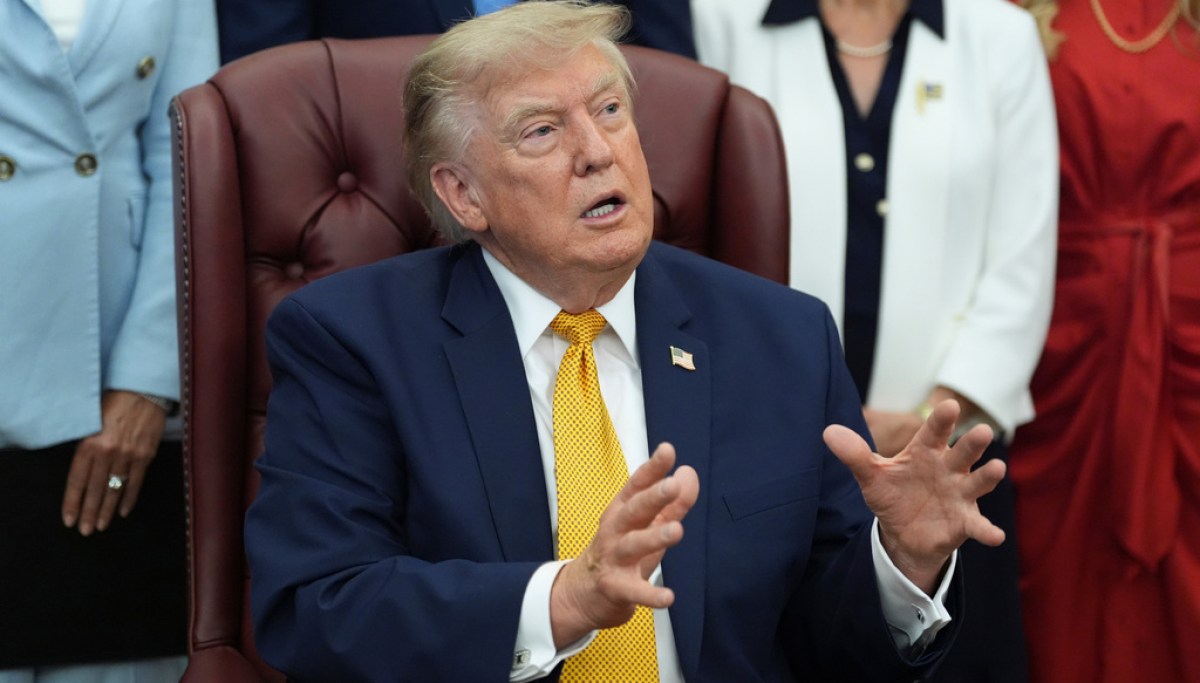
Cover image from washingtonexaminer.com, which was analyzed for this article
President Trump calls ongoing talks with Iran a 'last chance' before potential military action, while expressing optimism about reopening the Strait of Hormuz amid reports of near-deals involving service fees.
PoliticalOS
Tuesday, August 4, 2026 — Politics
The core unresolved issue remains whether direct U.S.-Iran negotiations exist or whether contacts stay confined to Oman on Hormuz routing and fees, with shipping attacks continuing and no independent confirmation resolving the conflicting accounts from both governments.
What outlets missed
Multiple outlets omitted the documented June 2026 creation of an Iran-Oman joint working group on Hormuz navigation and fees, which provides concrete basis for Tehran's claim of bilateral talks rather than simple denial. Pre-war shipping lanes already divided the strait into a northern Iranian route and southern Omani route, a geographic fact that frames proposed changes as adjustments rather than new control regimes. Iranian strikes on vessels in the period before April deadlines, confirmed by maritime tracking and insurance data, preceded U.S. Hormuz warnings but received little coverage. Oil price movements showed Brent closing down 3.79 percent on August 4 in some records, contradicting reports of a 2.7 percent rise tied directly to diplomacy.
Iran Oman Advance on Hormuz Shipping Fees While US Iran Talks Remain Disputed
Iran and Oman are advancing toward a temporary arrangement that would route commercial traffic through the Strait of Hormuz under their joint oversight and extract a service fee from vessels. The proposed setup would direct inbound ships from the Indian Ocean through Iranian territorial waters and outbound ships along Oman's southern coast. Iranian officials described the measure as lasting one to three months and asserted that Iran would hold dominant control over the passage, which normally carries roughly one fifth of global oil shipments in peacetime.
The arrangement aims to address environmental and security costs, according to statements from Iran's Foreign Ministry. A member of Tehran's negotiating team told state media that the legal regime governing the strait should not revert to its pre conflict status in which no single state exercised primary authority. Omani participation would allow both nations to collect fees while restoring limited traffic after months of severe restrictions.
US President Donald Trump stated that direct negotiations with Iran are underway at Tehran's request and represent a final opportunity to settle terms for reopening the waterway. He described Iranian leaders as duplicitous for publicly denying talks even while engaging in them through intermediaries. Trump noted that discussions cover the strait's operation and warned that failure to reach an accord would leave few remaining options.
Iranian spokesmen rejected claims of bilateral talks with Washington and insisted that contacts are limited to Oman. Qatari officials confirmed that their diplomats along with those from Pakistan and Oman are exchanging drafts between the two sides. This indirect channel has produced mixed market signals. Brent crude prices rose more than 2 percent on Tuesday after reports of another cargo ship attack near the Omani coast, then eased as confirmation of ongoing mediation spread.
The five month conflict has already reduced Hormuz traffic to a small fraction of normal volumes. The proposed service fees would add direct costs to shippers already facing higher insurance rates and longer alternative routes. Historical patterns show that attempts to impose tolls on strategic chokepoints often generate disputes over enforcement and revenue sharing rather than stable access.
Trump has issued repeated deadlines for Iranian concessions on the strait, each time followed by extensions or revised demands. Iranian officials continue to frame their Oman talks as an independent effort to manage the waterway without conceding broader political points. The gap between public denials and reported back channel activity underscores the difficulty of verifying commitments when both sides face domestic pressures to appear unyielding.
Global energy markets remain sensitive to any sign that traffic will resume or face further disruption. The addition of user fees by Iran and Oman would represent a new layer of expense layered on top of existing security risks. Observers note that such arrangements rarely eliminate underlying incentives for one party to restrict access when leverage appears available.
You just read Conservative's take. Want to read what actually happened?
More in Politics
Democrats Flip Senate, Expand House Majority in Midterms
Democrats flipped the Senate and expanded their House majority in a major rebuke to President Trump and Republicans. Key victories included multiple Senate seats and state-level wins that ended long-standing GOP dominance in places like Texas.
GOP Losses Spur Blame, Vance Distancing, 2028 Maneuvers
Republicans are pointing fingers internally after heavy losses, with Vice President JD Vance distancing himself from Trump over the Iran war and positioning for a potential 2028 run. Challengers within the party are already sensing opportunity.
Democrats Take House and Senate Amid Record Midterm Turnout
Democrats achieved decisive gains in the 2026 midterms, flipping seats to take control of both chambers. Coverage highlights historic turnout and implications for the Trump administration.
Democrats Take House and Senate, Constraining Trump
Democrats flipped both the House and Senate in a major rebuke to President Trump and Republicans. The results create divided government and set up battles over spending, oversight, and foreign policy for the remainder of Trump's term.
The Compass
You just read five takes on one story.
What's your take? Find your political shape in a few minutes.
Take the test