
Trump Claims Iran Talks Underway, Tehran Denies Direct Contact
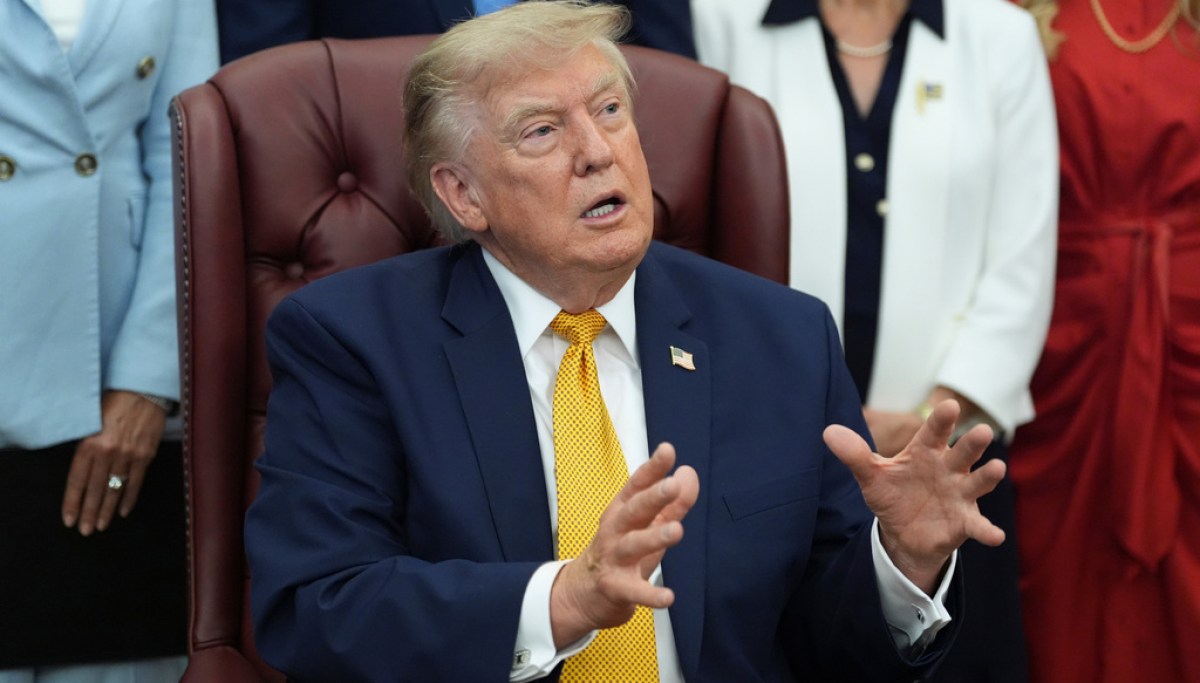
Cover image from washingtonexaminer.com, which was analyzed for this article
President Trump calls ongoing talks with Iran a 'last chance' before potential military action, while expressing optimism about reopening the Strait of Hormuz amid reports of near-deals involving service fees.
PoliticalOS
Tuesday, August 4, 2026 — Politics
The core unresolved issue remains whether direct U.S.-Iran negotiations exist or whether contacts stay confined to Oman on Hormuz routing and fees, with shipping attacks continuing and no independent confirmation resolving the conflicting accounts from both governments.
What outlets missed
Multiple outlets omitted the documented June 2026 creation of an Iran-Oman joint working group on Hormuz navigation and fees, which provides concrete basis for Tehran's claim of bilateral talks rather than simple denial. Pre-war shipping lanes already divided the strait into a northern Iranian route and southern Omani route, a geographic fact that frames proposed changes as adjustments rather than new control regimes. Iranian strikes on vessels in the period before April deadlines, confirmed by maritime tracking and insurance data, preceded U.S. Hormuz warnings but received little coverage. Oil price movements showed Brent closing down 3.79 percent on August 4 in some records, contradicting reports of a 2.7 percent rise tied directly to diplomacy.
Iran and Oman Advance Temporary Shipping Plan for Strait of Hormuz
Iran and Oman are nearing an agreement to establish a temporary shipping route through the Strait of Hormuz that would allow both nations to collect service fees for environmental and security costs. The arrangement would route inbound vessels from the Indian Ocean through Iranian territorial waters and outbound ships along Oman's southern coast, according to Iranian officials and reports from multiple diplomatic sources.
The proposal comes as the five-month conflict between Iran and a US-led coalition has reduced traffic through the waterway, which normally carries about one-fifth of global oil shipments. Iranian Foreign Ministry statements describe the route as lasting one to three months under a framework where Iran maintains operational dominance. Saeed Ajorlu, a member of Tehran's negotiating team, said the plan departs from the pre-war arrangement in which no single state controlled passage.
US President Donald Trump has described ongoing talks with Iran as a final opportunity to resolve the conflict, stating that discussions focus on reopening the strait and that Iran initiated the contacts. Trump has accused Iranian leaders of duplicity for publicly denying direct negotiations while pursuing them privately. Iranian Foreign Ministry spokesperson Esmail Baghaei has repeatedly stated that no talks with the United States are occurring and that discussions are limited to Oman.
Qatari officials confirmed that their diplomats, along with counterparts from Pakistan and Oman, are facilitating exchanges of proposals between Washington and Tehran. This mediation structure has allowed drafts to move without formal bilateral meetings, though the lack of public acknowledgment has created conflicting accounts on both sides. Oil prices rose more than 2 percent on Tuesday amid uncertainty over whether the diplomatic channel would produce results.
A separate incident involving an attack on a cargo vessel near Oman's coast added to market volatility. The UK Maritime Trade Operations Center reported the event, which occurred while traffic through the strait remained far below normal levels. Iranian President Masoud Pezeshkian said Tehran would continue to defend its borders without seeking broader escalation.
The proposed route through Iranian waters represents a shift from longstanding international practice that treated the strait as an open international waterway. Iranian officials have argued that any long-term reopening must reflect changed realities on the ground rather than a return to prior conditions. US officials have not confirmed details of the service fee component or the precise routing.
The involvement of Oman and Qatar as intermediaries follows a pattern in which Gulf states have sought to manage tensions without direct confrontation. These efforts have produced limited pauses in hostilities but have not yet yielded a comprehensive agreement to end the war. The current talks center narrowly on maritime access rather than broader issues such as sanctions relief or regional security guarantees.
You just read Liberal's take. Want to read what actually happened?
More in Politics
Democrats Flip Senate, Expand House Majority in Midterms
Democrats flipped the Senate and expanded their House majority in a major rebuke to President Trump and Republicans. Key victories included multiple Senate seats and state-level wins that ended long-standing GOP dominance in places like Texas.
GOP Losses Spur Blame, Vance Distancing, 2028 Maneuvers
Republicans are pointing fingers internally after heavy losses, with Vice President JD Vance distancing himself from Trump over the Iran war and positioning for a potential 2028 run. Challengers within the party are already sensing opportunity.
Democrats Take House and Senate Amid Record Midterm Turnout
Democrats achieved decisive gains in the 2026 midterms, flipping seats to take control of both chambers. Coverage highlights historic turnout and implications for the Trump administration.
Democrats Take House and Senate, Constraining Trump
Democrats flipped both the House and Senate in a major rebuke to President Trump and Republicans. The results create divided government and set up battles over spending, oversight, and foreign policy for the remainder of Trump's term.
The Compass
You just read five takes on one story.
What's your take? Find your political shape in a few minutes.
Take the test