
Trump Administration Appeals USPS Mail Rules to Supreme Court
Cover image from thefederalist.com, which was analyzed for this article
White House seeks to lift block on USPS mail ballot restrictions as North Carolina begins mailing ballots. Critics warn of voting access issues ahead of midterms.
PoliticalOS
Friday, September 4, 2026 — Politics
The core dispute is whether the Postal Service may impose new tracking and verification rules on election mail that states have chosen to use, with the Supreme Court now asked to decide the timing and scope of those rules before November. Voters in North Carolina and other states can still request and return mail ballots while litigation continues.
What outlets missed
Neither outlet supplied the precise text of the USPS rules under appeal or the administration’s evidence of noncitizen voting attempts that prompted the executive order. Both omitted any comparison of rejection rates before and after the regional-hub postmarking change across multiple states. The Federalist article did not address North Carolina’s specific implementation timeline or voter confusion data; the Independent article did not examine Florida’s counting-speed results or the Ballots by Election Day Act’s provisions.
North Carolina began mailing ballots Friday for midterm elections that will decide congressional control for the rest of President Donald Trump’s term, even as the administration asked the Supreme Court to lift a lower-court block on new U.S. Postal Service requirements for those ballots. The rules, drawn from a March executive order, include barcode tracking, voter-list checks, and other steps the administration says will prevent noncitizens from voting. Democratic state officials and voting-rights groups argue the changes arrived too late in the cycle and risk rejecting valid ballots.
The administration’s Thursday filing contends that regulating the mail itself is constitutional and that states cannot exempt election mail from Postal Service authority once they choose to use it. A federal district judge had issued a temporary restraining order; the Supreme Court had already vacated one earlier injunction in the same dispute. North Carolina election officials, including the Republican-led State Board of Elections, said they submitted envelopes for review and received approval while withholding voter data pending further litigation.
Election administrators in Mecklenburg and Wake counties reported processing thousands of absentee requests and preparing mailings that include ballots, instructions, and photo-ID information. They told voters the process remains available and urged early return of ballots. A whistleblower cited in congressional testimony warned that an untested Postal Service portal could produce errors leading to millions of rejections; the Postal Service declined to comment on pending litigation.
Separately, Rep. Laurel Lee, R-Fla., introduced the Ballots by Election Day Act, which would require federal mail ballots to arrive by the close of polls. Florida counted roughly 85 percent of its 3.3 million primary ballots in 45 minutes under a similar deadline. Fourteen states and the District of Columbia currently accept postmarked ballots after Election Day. The bill’s prospects remain uncertain, as Senate Democrats have blocked the related SAVE America Act.
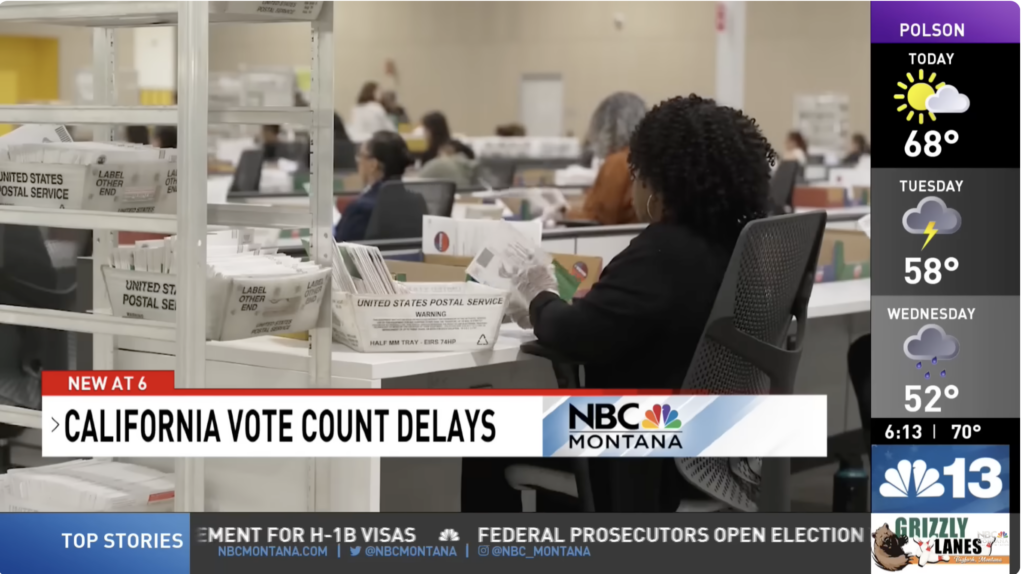
In California’s June primary, nearly 150,000 mail ballots went uncounted, largely because of late postmarks after the Postal Service shifted processing to regional hubs. Washington state reported a 32 percent rise in rejected primary ballots this August compared with two years earlier. Officials in both states advised voters to request hand-stamped postmarks at local post offices. The League of Women Voters of North Carolina issued parallel guidance against waiting until the final days.
The Supreme Court’s earlier 5-4 decision in Watson v. RNC upheld Mississippi’s five-day grace period, with Justice Amy Coney Barrett writing for the majority that election-day statutes do not address receipt deadlines. Justice Samuel Alito’s dissent, joined by three colleagues, warned that late ballots create opportunities for fraud and undermine public confidence. No data on actual fraud rates tied to grace periods appear in either the administration’s filing or the opposing court papers reviewed so far.
More in Politics
Trump Bars CNN, MSNBC, Politico; Outlets Sue Over Access
President Trump barred CNN, MS NOW, and Politico from White House access over disputed coverage, prompting the outlets to notify the administration of a planned First Amendment lawsuit. Multiple outlets across the spectrum reported on the escalating conflict between the administration and major media organizations.

ICE Shoots Venezuelan DoorDash Driver in Austin Traffic Stop
An ICE officer shot and wounded a Venezuelan man during an enforcement operation in Austin amid ongoing protests against deportation policies. Coverage highlighted the incident as part of intensified immigration enforcement under the Trump administration.

Tight Midterm Races Test Party Control With 43 Days Left
Democrats and Republicans are locked in tight contests for Senate control with 43 days until the midterms, as candidates navigate Trump-era issues and voter fatigue with past election claims. Fundraising, candidate quality, and state-level dynamics are shaping the battle for Congress.

Trump, Xi to Consider AI Safety Alerts and Trade Truce Extension
President Trump is set to host Chinese leader Xi Jinping this week amid ongoing trade, tariff, and security discussions, including signals on non-strategic goods and farm purchases. The meeting comes as both sides manage broader geopolitical tensions.
The Compass
You just read five takes on one story.
What's your take? Find your political shape in a few minutes.
Take the test