
Trump Administration Appeals USPS Mail Rules to Supreme Court
Cover image from thefederalist.com, which was analyzed for this article
White House seeks to lift block on USPS mail ballot restrictions as North Carolina begins mailing ballots. Critics warn of voting access issues ahead of midterms.
PoliticalOS
Friday, September 4, 2026 — Politics
The core dispute is whether the Postal Service may impose new tracking and verification rules on election mail that states have chosen to use, with the Supreme Court now asked to decide the timing and scope of those rules before November. Voters in North Carolina and other states can still request and return mail ballots while litigation continues.
What outlets missed
Neither outlet supplied the precise text of the USPS rules under appeal or the administration’s evidence of noncitizen voting attempts that prompted the executive order. Both omitted any comparison of rejection rates before and after the regional-hub postmarking change across multiple states. The Federalist article did not address North Carolina’s specific implementation timeline or voter confusion data; the Independent article did not examine Florida’s counting-speed results or the Ballots by Election Day Act’s provisions.
Efforts Advance to Require Mail Ballots Arrive by Election Day
North Carolina began distributing mail ballots statewide on Friday for midterm elections that will shape congressional control during the remainder of President Donald Trump's term. The rollout occurs against ongoing litigation over administration attempts to impose tighter standards on mail voting and a new congressional proposal aimed at ending the acceptance of ballots days after polls close.
Trump signed an executive order in March directing new requirements such as updated voter lists, ballot tracking codes, and adjustments to Postal Service handling. Courts have slowed implementation of several measures, though the Supreme Court issued a procedural decision last week that aligned with the administration's position. Another appeal reached the high court on Thursday. Election officials in affected states continue to assure voters that mail options remain available despite the disputes.
Rep. Laurel Lee, a Florida Republican and former state elections chief, introduced the Ballots by Election Day Act to establish a uniform national rule. The measure would require federal election ballots to reach officials by the close of polls on Election Day. Late arrivals would not count. Lee stated that voters deserve certainty once polls shut, allowing officials to proceed without extended uncertainty.
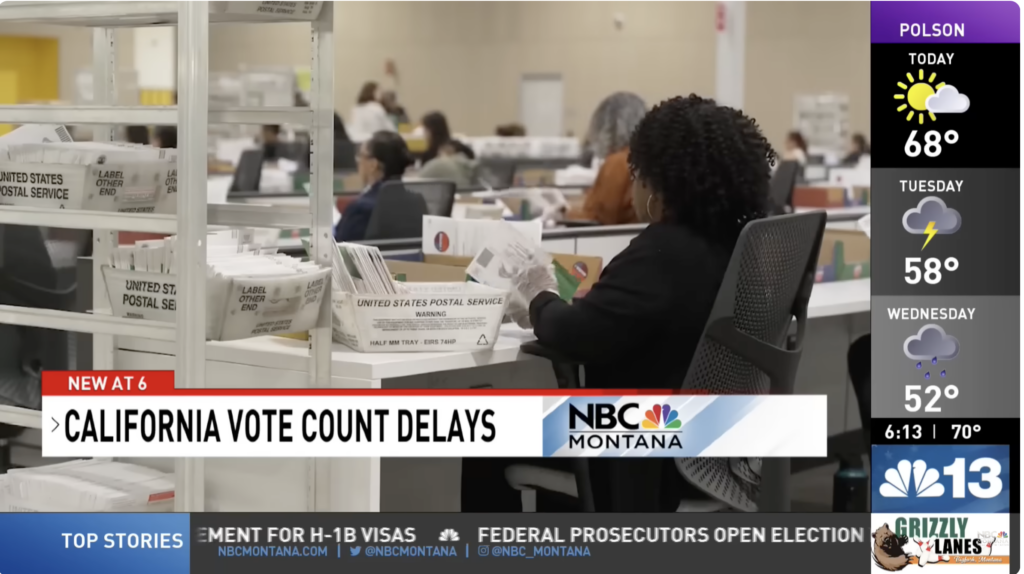
States that accept ballots postmarked by Election Day but received later have produced prolonged counting periods. California, for instance, tallied votes for days after its June primary, with some races still unresolved well after initial results. Similar patterns in prior cycles have drawn criticism for delaying final outcomes and complicating public confidence in the process.
Election administrators report that coverage of the legal fights has left some voters unsure whether mail options still exist. Mecklenburg County elections director Michael Dickerson noted repeated questions from residents about whether changes would block mail participation. Officials have responded by confirming that current procedures continue unless courts order otherwise.
Proponents of stricter deadlines argue that open-ended receipt periods invite administrative strain and reduce transparency. Data from multiple states shows higher rejection rates for mail ballots compared with in-person votes, often tied to signature mismatches or late arrivals. These patterns have fueled arguments that clear cutoff rules protect the integrity of results without restricting access for those who follow established timelines.
The Supreme Court case centers on whether the executive order's provisions can take effect before the midterms. Lower courts have issued mixed rulings, leaving states to prepare under existing statutes while appeals proceed. North Carolina's early distribution underscores that mail voting proceeds for now, even as federal efforts seek to narrow the window for acceptance.
Advocates for the Lee bill emphasize that Election Day should mark the practical end of voting rather than the start of an indefinite counting phase. They point to examples where incremental ballot arrivals shifted outcomes long after initial tallies, creating perceptions of instability. Opponents of the restrictions maintain that extended deadlines accommodate legitimate delays in mail delivery, particularly in rural or high-volume areas.
The debate reflects broader tensions over how to balance convenience with verifiable procedures. Historical voting relied on in-person participation or strict deadlines that limited opportunities for post-election adjustments. Recent expansions of mail options coincided with documented rises in rejected ballots and extended canvassing times in several jurisdictions. Lawmakers backing the new legislation seek to reestablish a common endpoint that applies uniformly across states.
As litigation continues, election offices in North Carolina and elsewhere stress that voters should follow current instructions while monitoring updates from official sources. The outcome of the Supreme Court proceedings and the fate of the Ballots by Election Day Act will determine whether tighter federal standards take hold before the midterms conclude.
You just read Conservative's take. Want to read what actually happened?
More in Politics
Democrats Flip Senate, Expand House Majority in Midterms
Democrats flipped the Senate and expanded their House majority in a major rebuke to President Trump and Republicans. Key victories included multiple Senate seats and state-level wins that ended long-standing GOP dominance in places like Texas.
GOP Losses Spur Blame, Vance Distancing, 2028 Maneuvers
Republicans are pointing fingers internally after heavy losses, with Vice President JD Vance distancing himself from Trump over the Iran war and positioning for a potential 2028 run. Challengers within the party are already sensing opportunity.
Democrats Take House and Senate Amid Record Midterm Turnout
Democrats achieved decisive gains in the 2026 midterms, flipping seats to take control of both chambers. Coverage highlights historic turnout and implications for the Trump administration.
Democrats Take House and Senate, Constraining Trump
Democrats flipped both the House and Senate in a major rebuke to President Trump and Republicans. The results create divided government and set up battles over spending, oversight, and foreign policy for the remainder of Trump's term.
The Compass
You just read five takes on one story.
What's your take? Find your political shape in a few minutes.
Take the test