
Trump Administration Appeals USPS Mail Rules to Supreme Court
Cover image from thefederalist.com, which was analyzed for this article
White House seeks to lift block on USPS mail ballot restrictions as North Carolina begins mailing ballots. Critics warn of voting access issues ahead of midterms.
PoliticalOS
Friday, September 4, 2026 — Politics
The core dispute is whether the Postal Service may impose new tracking and verification rules on election mail that states have chosen to use, with the Supreme Court now asked to decide the timing and scope of those rules before November. Voters in North Carolina and other states can still request and return mail ballots while litigation continues.
What outlets missed
Neither outlet supplied the precise text of the USPS rules under appeal or the administration’s evidence of noncitizen voting attempts that prompted the executive order. Both omitted any comparison of rejection rates before and after the regional-hub postmarking change across multiple states. The Federalist article did not address North Carolina’s specific implementation timeline or voter confusion data; the Independent article did not examine Florida’s counting-speed results or the Ballots by Election Day Act’s provisions.
Mail Voting Battle Heads to Supreme Court as New Bill Seeks to End Post Election Day Chaos
North Carolina began distributing mail ballots Friday for the midterm elections that will decide control of Congress for the rest of President Donald Trump's term. The move comes as the administration's push to tighten mail voting rules reaches the Supreme Court and a new House bill aims to restore a basic standard that ballots must arrive by the close of polls on Election Day.
Trump signed an executive order in March directing changes such as voter list verification, ballot tracking codes and stricter Postal Service handling. The order followed years of criticism from the president that mail voting opened doors to fraud and delays. Courts have slowed some provisions, but the Supreme Court issued a procedural win for the administration last week. Another appeal landed at the high court Thursday.
Election officials in North Carolina say voting will move forward as scheduled even as lawsuits continue. Local administrators report that heavy media coverage of the legal fights has left many voters unsure whether mail ballots remain an option. Mecklenburg County elections director Michael Dickerson told reporters the main problem has been confusion over whether the practice is still allowed at all.
A separate effort in Congress seeks to cut through that uncertainty by imposing a uniform national deadline. Florida Rep. Laurel Lee introduced the Ballots by Election Day Act, which would require all mail ballots in federal races to reach election offices by the time polls close. Lee described the measure as a return to common sense, arguing that voters deserve to know results are not subject to ballots trickling in days later.
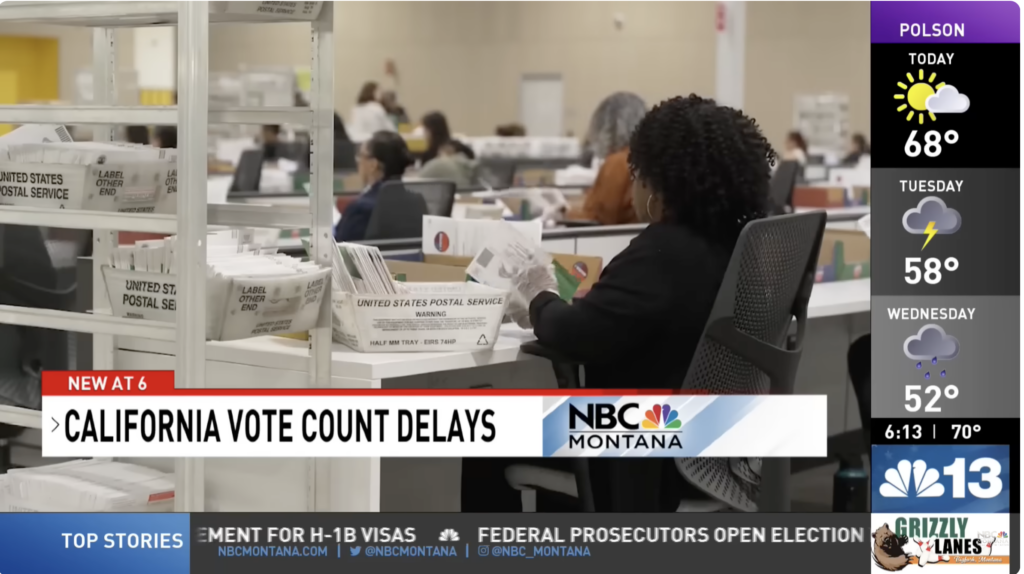
States that already accept late-arriving ballots have shown the practical problems. California continues to count votes well after Election Day, with its June primary producing another extended tally that stretched several days past the June 2 contests. In Los Angeles, late mail ballots shifted the outcome in a closely watched mayoral race, allowing a radical leftist candidate to overtake a more conservative rival after initial results had pointed the other way.
Critics of expanded mail voting note that Trump himself has cast ballots by mail in the past, yet he has consistently warned that the practice without strict safeguards invites abuse and erodes public confidence. The new legislation would apply the same arrival deadline nationwide, giving election workers a clear cutoff and reducing the spectacle of results changing long after voters have gone home.
Administration officials maintain that the executive order targets real vulnerabilities without blocking legitimate mail participation. They point to requirements for accurate voter rolls and better tracking as basic protections rather than barriers. Meanwhile, the Supreme Court litigation centers on whether the president has authority to set those federal standards or whether states retain broader control.
Voters in North Carolina and elsewhere can still request and return mail ballots under current rules, though the legal outcome and the Lee bill could alter deadlines in future cycles. The core dispute remains whether election rules should favor speed and flexibility or insist on verifiable finality when the polls close.
You just read America First's take. Want to read what actually happened?
More in Politics
Democrats Flip Senate, Expand House Majority in Midterms
Democrats flipped the Senate and expanded their House majority in a major rebuke to President Trump and Republicans. Key victories included multiple Senate seats and state-level wins that ended long-standing GOP dominance in places like Texas.
GOP Losses Spur Blame, Vance Distancing, 2028 Maneuvers
Republicans are pointing fingers internally after heavy losses, with Vice President JD Vance distancing himself from Trump over the Iran war and positioning for a potential 2028 run. Challengers within the party are already sensing opportunity.
Democrats Take House and Senate Amid Record Midterm Turnout
Democrats achieved decisive gains in the 2026 midterms, flipping seats to take control of both chambers. Coverage highlights historic turnout and implications for the Trump administration.
Democrats Take House and Senate, Constraining Trump
Democrats flipped both the House and Senate in a major rebuke to President Trump and Republicans. The results create divided government and set up battles over spending, oversight, and foreign policy for the remainder of Trump's term.
The Compass
You just read five takes on one story.
What's your take? Find your political shape in a few minutes.
Take the test