
Trump Rallies for Senate Edge as Midterms Near
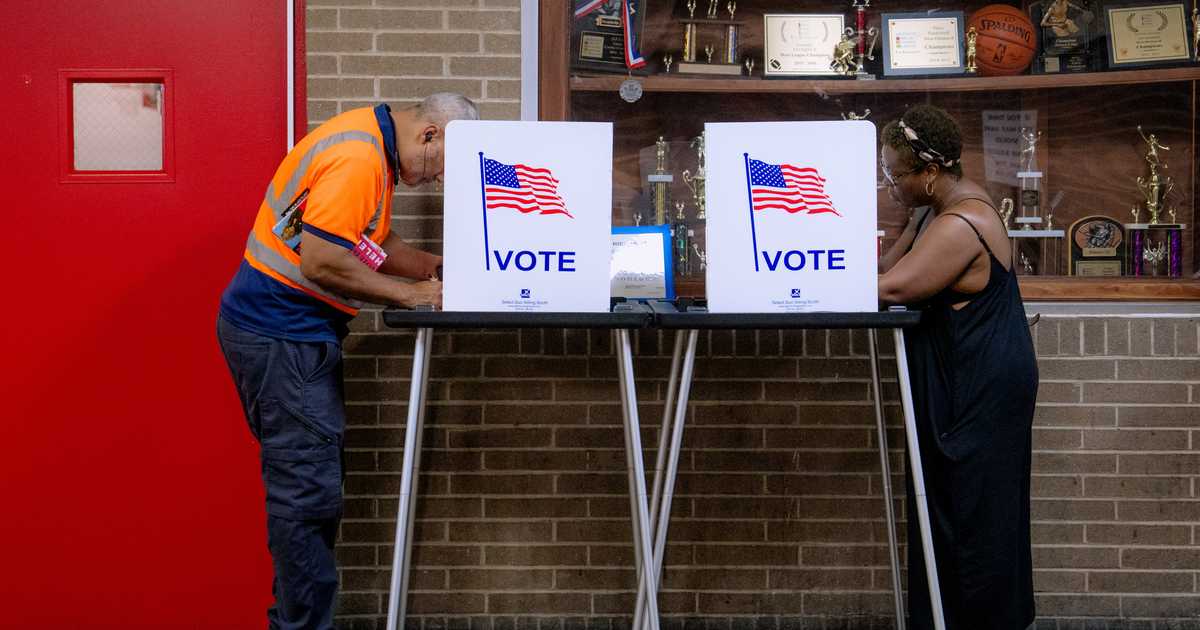
Cover image from townhall.com, which was analyzed for this article
President Trump held rallies and made schedule changes for key Senate races while engaging in personal attacks on Democratic candidates. Coverage highlights competing appearances with Democrats and questions over campaign strategies days before the midterms.
PoliticalOS
Saturday, October 31, 2026 — Politics
The 2026 midterms will determine whether Republicans keep the majorities required to advance the current policy agenda or face divided government. Turnout among prior Trump supporters remains the pivotal variable in close Senate races, yet verified details on final-week campaign tactics and their measurable effects are limited across available reporting.
What outlets missed
Most coverage omitted direct reporting on Trump's adjusted rally schedule and specific personal attacks on Democratic candidates in the final week. No outlet provided verified attendance figures or contemporaneous accounts of competing Democratic events in the same states. Details on turnout trends among 2024 Trump voters and their potential impact on close races were absent or unverified. The articles also did not address documented policy outcomes or election administration data that would ground claims about stakes.
Trump Administration Ends Support for Johannesburg HIV Clinic
The Engage Men’s Health Clinic in Johannesburg closed its doors within hours of the second Trump administration taking office in early 2025. The facility had operated as a hub for HIV testing, treatment, and prevention services including PrEP distribution, along with gender-affirming care, on a site supported by PEPFAR and USAID funding. A replacement volunteer operation now opens only four hours each week and offers no medications for treatment or prevention.
South Africa carries roughly one-fifth of the world’s HIV cases, with about 8 million people infected in a population of 64 million. PEPFAR, launched in 2003, has directed tens of billions of dollars toward antiretroviral access and prevention across Africa. Official records show South Africa received the largest share of that assistance over two decades. Infection rates, however, have remained elevated, with new cases concentrated among younger adults and certain high-risk groups.
Critics of sustained foreign aid programs point to persistent behavioral and cultural patterns that funding alone has not altered. Historical data from other African nations indicate sharper declines in transmission when policies stressed partner reduction and delayed sexual debut rather than relying primarily on pharmaceutical distribution. South African health statistics continue to reflect high rates of multiple concurrent partners and inconsistent condom use in key demographics, factors that predate recent U.S. policy shifts.
The clinic’s location near seven universities positioned it to reach students early. Former staff described serving individuals before their first sexual experiences. Its emphasis extended beyond standard HIV services to include gender-related medical interventions, an approach that drew resources away from core treatment scale-up in some analyses of PEPFAR allocation. Once the U.S. support ended, the site lost its full-time professional staff and medication stock.
Broader reviews of development assistance have documented frequent mismatches between donor priorities and local governance capacity. South African authorities have managed domestic health budgets exceeding $5 billion annually in recent years, yet administrative shortfalls and corruption scandals have repeatedly surfaced in official audits. External grants can mask these internal constraints rather than resolve them.
The abrupt cutoff follows a pattern seen in other aid-dependent initiatives when donor governments reassess returns on investment. Past evaluations by independent researchers have questioned whether large-scale PrEP rollout in generalized epidemics produces population-level impact commensurate with costs. Clinics focused on narrow behavioral interventions showed stronger results in earlier controlled studies conducted in Uganda and elsewhere.
Local replacement services remain limited. The volunteer clinic operating in the same building can perform basic tests but lacks capacity for ongoing prescriptions or follow-up regimens. Patients previously reliant on the site must now navigate public facilities already strained by demand.
Data from the South African Department of Health indicate that while antiretroviral coverage has expanded, adherence rates and retention in care vary widely by region and age group. These outcomes suggest that structural funding alone does not address underlying drivers of transmission. Policy shifts in Washington have redirected attention toward measurable results and reduced emphasis on ancillary services layered onto HIV programs.
You just read Conservative's take. Want to read what actually happened?
More in Politics
Democrats Flip Senate, Expand House Majority in Midterms
Democrats flipped the Senate and expanded their House majority in a major rebuke to President Trump and Republicans. Key victories included multiple Senate seats and state-level wins that ended long-standing GOP dominance in places like Texas.
GOP Losses Spur Blame, Vance Distancing, 2028 Maneuvers
Republicans are pointing fingers internally after heavy losses, with Vice President JD Vance distancing himself from Trump over the Iran war and positioning for a potential 2028 run. Challengers within the party are already sensing opportunity.
Democrats Take House and Senate Amid Record Midterm Turnout
Democrats achieved decisive gains in the 2026 midterms, flipping seats to take control of both chambers. Coverage highlights historic turnout and implications for the Trump administration.
Democrats Take House and Senate, Constraining Trump
Democrats flipped both the House and Senate in a major rebuke to President Trump and Republicans. The results create divided government and set up battles over spending, oversight, and foreign policy for the remainder of Trump's term.
The Compass
You just read five takes on one story.
What's your take? Find your political shape in a few minutes.
Take the test