
Trump Rallies in Iowa, Kansas as Tight Senate Races Loom
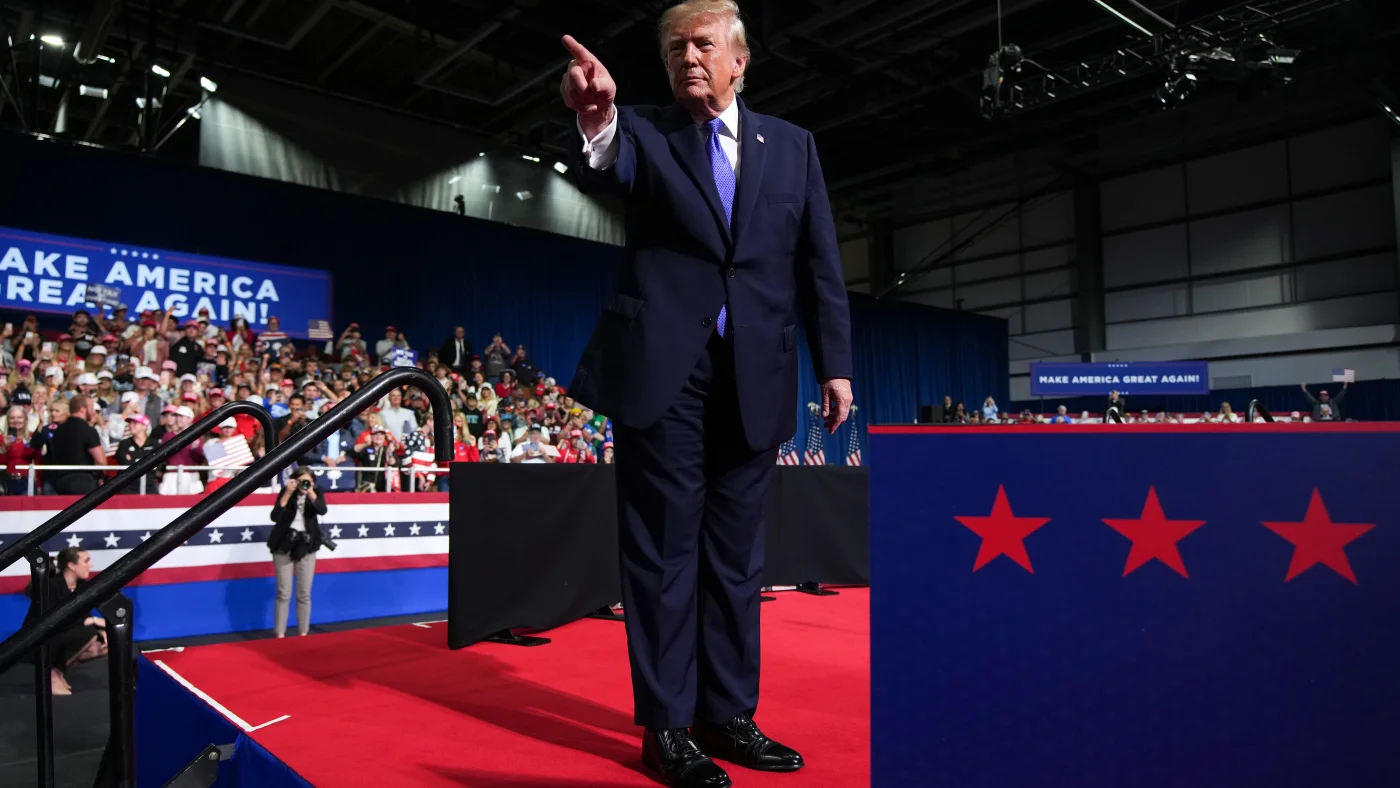
Cover image from npr.org, which was analyzed for this article
President Trump held in-person rallies to boost GOP turnout in key Senate and House races ahead of the November 3 midterms. Polls show some races tighter than expected in the Farm Belt.
PoliticalOS
Sunday, November 1, 2026 — Politics
The Iowa and Kansas Senate races remain among the most competitive on the map, with Trump’s final appearances aimed at narrowing polling deficits driven by voter concerns over prices and foreign policy. National trends favor Democrats, yet state-level margins are narrow enough that small shifts in participation could alter Senate control.
What outlets missed
No outlet supplied verified attendance figures or fundraising totals specific to the Iowa and Kansas events. Early-vote data broken down by party registration in those two states was absent. The precise content of Trump’s planned remarks for Sunday remained undisclosed beyond general scheduling announcements. Historical turnout patterns in Kansas Senate races since 1932 were referenced only in passing without updated demographic shifts among farm households.
Midterm Polls Favor Democrats Ahead of Key Senate Races
Polls conducted in late October show Democrats holding a national lead of roughly eight points over Republicans as voters prepare to decide control of Congress in Tuesday's midterm elections. RealClearPolling averages place the Democratic share at 51.5 percent compared with 43.1 percent for Republicans, with separate surveys from THP/MM and Emerson College recording double-digit Democratic advantages. Analysts attribute the gap to voter dissatisfaction with inflation and the president's personal standing.
President Trump has conducted more than 25 rallies this month, including stops in South Carolina, Kansas, and Iowa. At events in Rock Hill and Park City he described his campaign appearances as unmatched in scale and expressed doubt that similar spectacles would recur. He urged supporters to treat the contests as a referendum on his agenda, while backing Senate candidates such as Darline Graham and Michael Whatley who trail in several surveys.
Economic pressures dominate voter concerns. A cost-of-living squeeze has intensified following tariff increases and the costs tied to U.S. involvement in the conflict with Iran. National surveys indicate that households continue to report difficulty meeting everyday expenses, a pattern consistent with price data released in recent months. Economists note that broad tariffs function as a tax on imported goods, raising input costs for domestic producers and ultimately passing those increases to consumers.
Midterm polling has historically tracked actual results more closely than presidential-year surveys, reducing the margin for large surprises. Democrats have also prevailed in most off-year and special elections held during the current cycle. These patterns suggest that Republican turnout efforts, while energetic, face measurable headwinds in translating rally attendance into votes.
Several Senate contests remain competitive. Outcomes in North Carolina, South Carolina, and Michigan could determine which party organizes the upper chamber. Democratic candidate Abdul El-Sayed has drawn crowds in Michigan despite facing pointed attacks, while Republican incumbents and nominees in rural states struggle to expand their coalitions beyond core supporters.
Policy choices on trade and foreign engagements carry predictable trade-offs. Tariffs intended to protect select industries have coincided with higher prices across supply chains, illustrating how interventions meant to achieve one goal often produce offsetting effects elsewhere. Voters appear to weigh these results against promises of restored prosperity, as reflected in the current polling margins.
The coming days will test whether last-minute campaigning can alter the trajectory set by economic conditions and prior performance. Both parties continue to focus resources on the narrow list of battleground seats that will decide congressional control.
You just read Conservative's take. Want to read what actually happened?
More in Politics
Democrats Flip Senate, Expand House Majority in Midterms
Democrats flipped the Senate and expanded their House majority in a major rebuke to President Trump and Republicans. Key victories included multiple Senate seats and state-level wins that ended long-standing GOP dominance in places like Texas.
GOP Losses Spur Blame, Vance Distancing, 2028 Maneuvers
Republicans are pointing fingers internally after heavy losses, with Vice President JD Vance distancing himself from Trump over the Iran war and positioning for a potential 2028 run. Challengers within the party are already sensing opportunity.
Democrats Take House and Senate Amid Record Midterm Turnout
Democrats achieved decisive gains in the 2026 midterms, flipping seats to take control of both chambers. Coverage highlights historic turnout and implications for the Trump administration.
Democrats Take House and Senate, Constraining Trump
Democrats flipped both the House and Senate in a major rebuke to President Trump and Republicans. The results create divided government and set up battles over spending, oversight, and foreign policy for the remainder of Trump's term.
The Compass
You just read five takes on one story.
What's your take? Find your political shape in a few minutes.
Take the test