
Trump Used Decoy Plane in Turkey Over Iran Threat Reports
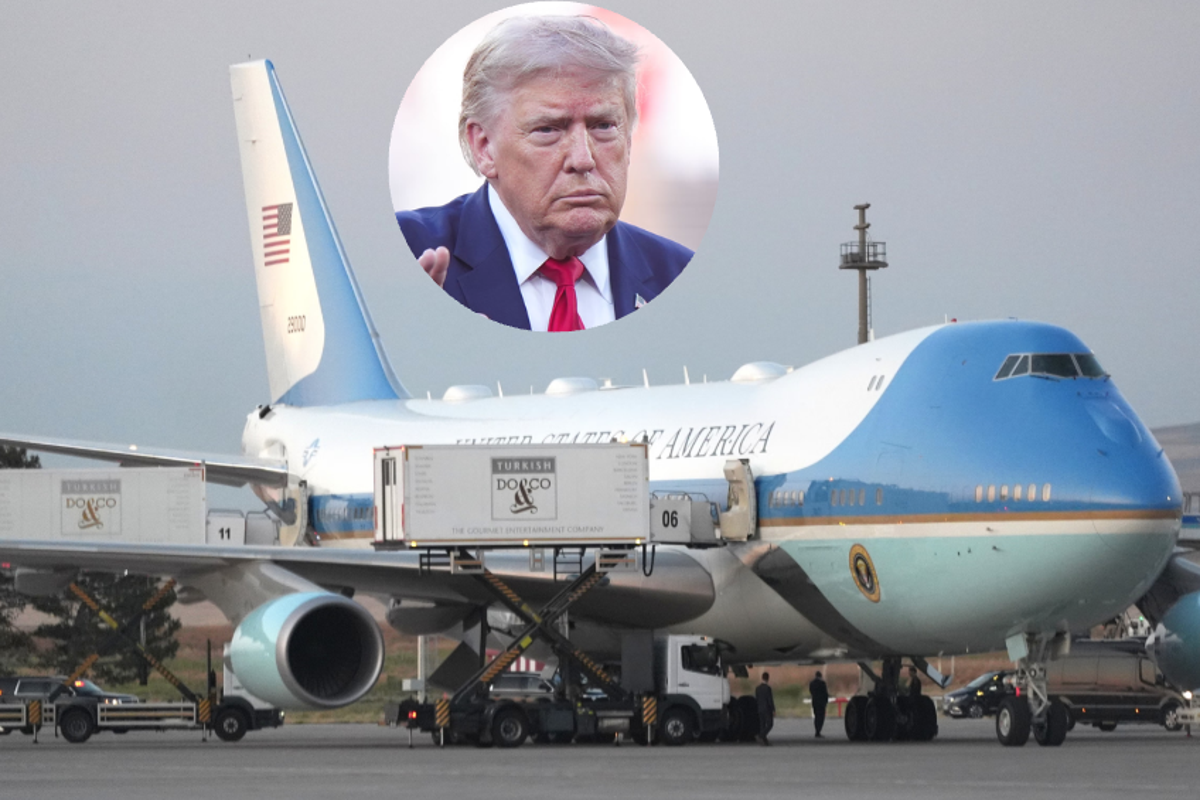
Cover image from independent.co.uk, which was analyzed for this article
Reports detail President Trump using a decoy plane and hiding in a catering cart during a secret swap in Turkey due to Iranian assassination threats, as diplomacy stalls over the Strait of Hormuz.
PoliticalOS
Tuesday, August 11, 2026 — Politics
The episode illustrates the lengths U.S. officials reportedly took to protect the president during active conflict with Iran, yet the core details remain based on a single Washington Post account that other outlets could not independently verify. Readers should weigh the documented threat reporting against the absence of official confirmation and the potential impact of leaked protective tactics.
What outlets missed
Most accounts omitted that the new Qatar-donated plane was still undergoing security retrofits at the time, a factor cited by the Secret Service in advising against its use for the return leg. CBS News alone specified that U.S. intelligence had detected a plot to fire a missile at the departing aircraft rather than a general threat. Few outlets noted administration officials’ concern that public disclosure of the tactics could limit future protective operations. The 2000 Clinton precedent for a decoy flight into Pakistan received almost no mention despite its direct parallel.
Trump Used Catering Truck for Covert Plane Switch in Turkey Over Iran Threat
President Donald Trump was secretly moved from Air Force One to a smaller military aircraft using an airport catering truck last month as he left a NATO summit in Ankara, according to multiple news organizations citing U.S. officials. The maneuver came after American intelligence detected a credible Iranian threat to target the plane carrying the president, prompting what officials described as a deception operation to protect him during heightened tensions with Tehran.
The episode unfolded on July 8, a day after the United States renewed military strikes on Iran following the collapse of talks aimed at halting the conflict. Trump had arrived in Turkey aboard a newer Boeing 747-8 that Qatar had provided as a gift. He publicly announced plans to depart on an older model of Air Force One for the return journey, citing a desire to give U.S. personnel at a British refueling stop a chance to see the updated aircraft. Television footage captured him boarding the legacy jet in full view of cameras.
Once aboard, however, Trump was transferred via the elevated catering vehicle to a C-32A, a modified Boeing 757 often used by the vice president. Defense Secretary Pete Hegseth boarded the smaller plane separately using external stairs. Journalists and some White House staff members who remained on the larger aircraft were directed to keep their window shades closed, and they were unaware that the president was no longer with them. Air Force One proceeded as a decoy while Trump flew on the alternate plane to the United Kingdom.
The Washington Post first detailed the operation, drawing on accounts from a U.S. official and corroborating material. The New York Times and CBS News later confirmed key elements with their own sources. Officials told CBS News that U.S. intelligence had identified a specific plot involving a missile strike from Iran or its proxies. Trump had already described himself during the summit as Iran’s “number one target,” reflecting the personal risks tied to the ongoing military exchanges.
The switch highlighted the layered security considerations that accompany presidential travel during active conflicts. By routing Trump onto the less conspicuous aircraft, planners aimed to reduce the window of vulnerability while maintaining the appearance of routine movement. The decision to use the older Air Force One as a decoy also allowed the newer Qatari jet to depart earlier without drawing attention to the change in plans.
Administration officials expressed irritation over the disclosures, noting that details of protective tactics could constrain similar operations in the future. The episode occurred against a backdrop of questions about the cost and security vetting of the Qatari aircraft, which had only recently entered service for presidential travel. Trump’s public explanation for the plane change masked the operational adjustments driven by the intelligence assessment.
The reporting leaves some operational details unresolved, including the precise moment Trump rejoined the main party after landing. What remains clear is that the episode reflected the administration’s efforts to manage risk in real time as the United States conducted strikes and negotiated with an adversary that had already signaled direct interest in targeting senior American leadership.
You just read Liberal's take. Want to read what actually happened?
More in Politics
Democrats Flip Senate, Expand House Majority in Midterms
Democrats flipped the Senate and expanded their House majority in a major rebuke to President Trump and Republicans. Key victories included multiple Senate seats and state-level wins that ended long-standing GOP dominance in places like Texas.
GOP Losses Spur Blame, Vance Distancing, 2028 Maneuvers
Republicans are pointing fingers internally after heavy losses, with Vice President JD Vance distancing himself from Trump over the Iran war and positioning for a potential 2028 run. Challengers within the party are already sensing opportunity.
Democrats Take House and Senate Amid Record Midterm Turnout
Democrats achieved decisive gains in the 2026 midterms, flipping seats to take control of both chambers. Coverage highlights historic turnout and implications for the Trump administration.
Democrats Take House and Senate, Constraining Trump
Democrats flipped both the House and Senate in a major rebuke to President Trump and Republicans. The results create divided government and set up battles over spending, oversight, and foreign policy for the remainder of Trump's term.
The Compass
You just read five takes on one story.
What's your take? Find your political shape in a few minutes.
Take the test