
Trump orders Pentagon to cut back South Korea military drills
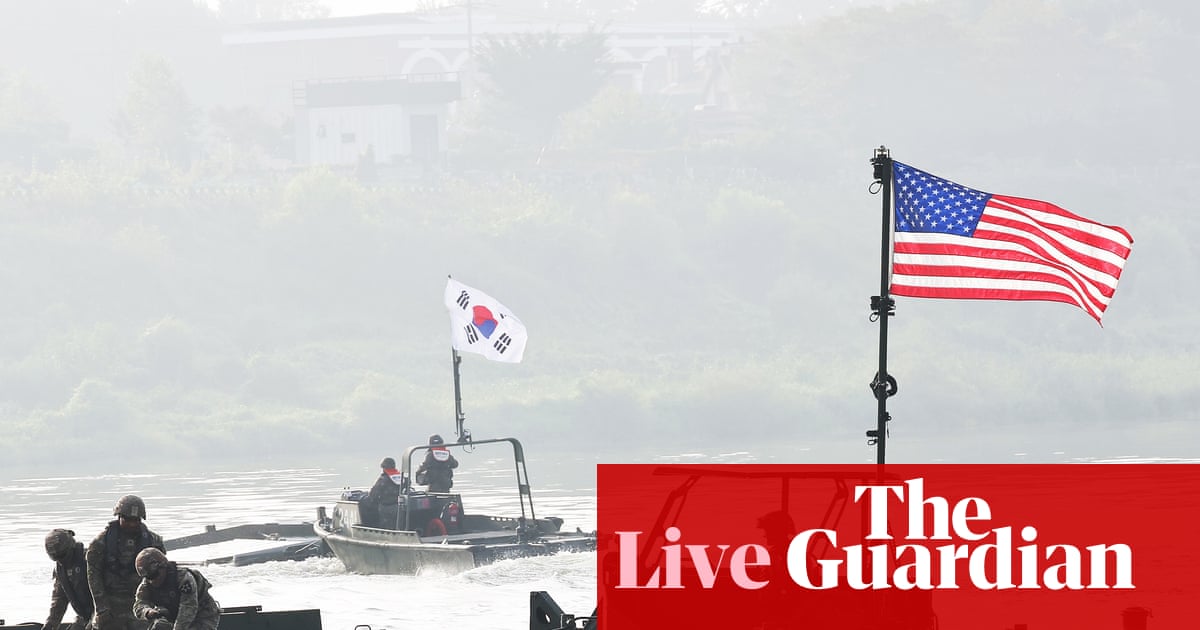
Cover image from theguardian.com, which was analyzed for this article
President Trump directed the Pentagon to substantially reduce joint exercises with South Korea, citing his relationship with Kim Jong Un and Seoul's stance on Iran. The move drew criticism for projecting weakness in the Pacific.
PoliticalOS
Monday, August 17, 2026 — Politics
The order reflects Trump's long-standing preference for personal diplomacy with Kim over sustained high-level exercises, yet South Korea reports the drills began on schedule with coordination continuing. The practical scope of reductions and any effect on deterrence remain unclear pending Pentagon implementation.
What outlets missed
Several outlets omitted South Korea's explicit confirmation that drills proceeded as scheduled and its ongoing discussions of potential Iran-related contributions. Few detailed the two North Korean ballistic missile launches in the week before the announcement or the shift of exercises toward computer simulations in recent years. Coverage also underplayed the $350 billion investment commitment tied to last year's trade deal and the specific economic disputes involving U.S. firms like Coupang.
Trump Orders Pentagon to Slash Joint Drills With South Korea Over Costs and Kim Ties
President Donald Trump directed the Pentagon on Sunday to substantially reduce the scope of annual joint military exercises with South Korea, pointing to the high expense borne by American taxpayers and his personal rapport with North Korean leader Kim Jong Un. The move comes hours before the Ulchi Freedom Shield drills were set to begin, involving roughly 18,000 South Korean troops alongside U.S. forces and personnel from other United Nations Command nations.
In a post on his Truth Social platform, Trump stated he was not happy with U.S. participation in the exercises because of the relationship he has maintained with Kim. He described the drills as sending an inappropriate and hostile signal to a country that has remained unthreatening and respectful during his presidency. Trump noted it was too late to cancel the 11-day event outright and instructed Defense Secretary Pete Hegseth to scale them back significantly. He also mentioned asking South Korea to join U.S. efforts on denuclearizing Iran, only for Seoul to decline.
The exercises, one of two major annual events between the allies, focus on readiness against North Korean threats through field maneuvers and command simulations. South Korean officials confirmed the drills started on schedule Monday despite the directive, though they said they are reviewing the full implications. Seoul's presidential office expressed hope that the leaders' relationship could open doors to dialogue on the Korean Peninsula while continuing coordination on defense matters.
Trump has long criticized the financial burden these joint activities place on the United States, often noting that much of the cost falls to American taxpayers even as allies like South Korea maintain their own robust economies. The decision aligns with his approach of prioritizing direct engagement over routine shows of force that risk unnecessary escalation. North Korea conducted banned ballistic missile tests earlier this month, yet Trump has emphasized that personal diplomacy under his watch has kept tensions lower than in previous administrations.
Critics within some foreign policy circles argue the reduction weakens deterrence at a time when North Korea continues advancing its nuclear and missile programs. Others point out that scaling back provocative drills could create space for renewed talks without conceding ground on core security needs. Trump has previously met Kim multiple times, shifting from 2017 tensions to summit diplomacy, though progress stalled after initial meetings.
South Korea's refusal to assist with Iran-related efforts adds another layer, underscoring that alliances do not always translate into mutual support when American interests extend beyond the peninsula. Trump framed the Iran request as somewhat separate from the drills but highlighted the pattern of one-sided expectations. Pentagon officials have not detailed the exact reductions yet, but the instruction focuses on trimming the overall footprint rather than full cancellation.
This adjustment reflects a broader preference for measured engagement that avoids signaling permanent hostility where direct channels exist. American forces remain positioned to respond if threats materialize, but the emphasis rests on efficiency and avoiding expenditures that yield little strategic return. Observers in Seoul and Washington will watch whether further adjustments follow in coming months.
You just read America First's take. Want to read what actually happened?
More in Politics
Democrats Flip Senate, Expand House Majority in Midterms
Democrats flipped the Senate and expanded their House majority in a major rebuke to President Trump and Republicans. Key victories included multiple Senate seats and state-level wins that ended long-standing GOP dominance in places like Texas.
GOP Losses Spur Blame, Vance Distancing, 2028 Maneuvers
Republicans are pointing fingers internally after heavy losses, with Vice President JD Vance distancing himself from Trump over the Iran war and positioning for a potential 2028 run. Challengers within the party are already sensing opportunity.
Democrats Take House and Senate Amid Record Midterm Turnout
Democrats achieved decisive gains in the 2026 midterms, flipping seats to take control of both chambers. Coverage highlights historic turnout and implications for the Trump administration.
Democrats Take House and Senate, Constraining Trump
Democrats flipped both the House and Senate in a major rebuke to President Trump and Republicans. The results create divided government and set up battles over spending, oversight, and foreign policy for the remainder of Trump's term.
The Compass
You just read five takes on one story.
What's your take? Find your political shape in a few minutes.
Take the test