
Trump orders Pentagon to cut back South Korea military drills
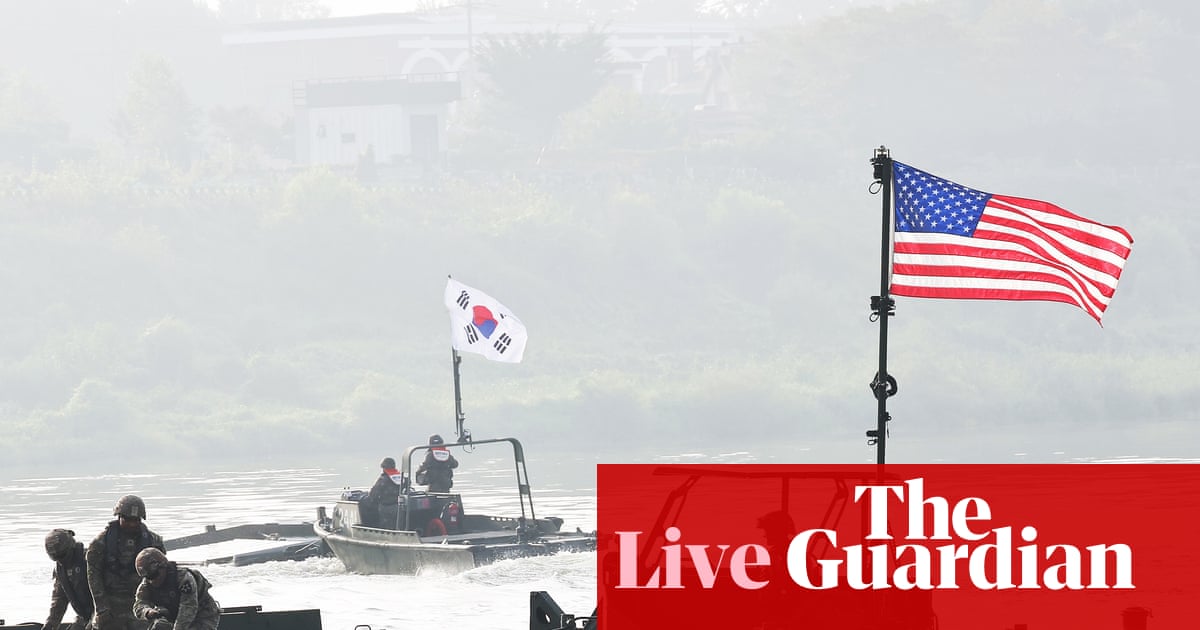
Cover image from theguardian.com, which was analyzed for this article
President Trump directed the Pentagon to substantially reduce joint exercises with South Korea, citing his relationship with Kim Jong Un and Seoul's stance on Iran. The move drew criticism for projecting weakness in the Pacific.
PoliticalOS
Monday, August 17, 2026 — Politics
The order reflects Trump's long-standing preference for personal diplomacy with Kim over sustained high-level exercises, yet South Korea reports the drills began on schedule with coordination continuing. The practical scope of reductions and any effect on deterrence remain unclear pending Pentagon implementation.
What outlets missed
Several outlets omitted South Korea's explicit confirmation that drills proceeded as scheduled and its ongoing discussions of potential Iran-related contributions. Few detailed the two North Korean ballistic missile launches in the week before the announcement or the shift of exercises toward computer simulations in recent years. Coverage also underplayed the $350 billion investment commitment tied to last year's trade deal and the specific economic disputes involving U.S. firms like Coupang.
Trump Instructs Pentagon to Reduce Joint Military Exercises With South Korea
President Donald Trump directed the Pentagon on Sunday to substantially scale back the annual Ulchi Freedom Shield exercises with South Korea, hours before the drills were set to begin. In a Truth Social post, Trump cited his personal relationship with North Korean leader Kim Jong Un and described the training as unnecessarily costly and provocative toward a regime he portrayed as unthreatening during his presidency.
The exercises, one of two major annual events between the allies, involve roughly 18,000 South Korean troops along with U.S. forces and personnel from several United Nations Command members. They focus on command-post simulations, field maneuvers and civil defense preparations intended to maintain readiness against North Korean threats. South Korean officials confirmed the drills began Monday as scheduled and said they would continue coordination with Washington on combined defense posture.
Trump stated it was too late to cancel the event outright and therefore ordered Defense Secretary Pete Hegseth to reduce its scope. He also noted that South Korea had declined a recent U.S. request to participate in efforts aimed at denuclearizing Iran, though he described that matter as somewhat unrelated to the decision on exercises. The annual cost of such training and the signal it sends to Pyongyang formed the core of his objections.
Seoul’s presidential office said it was reviewing the announcement and expressed hope that improved personal ties between the U.S. and North Korean leaders could produce meaningful dialogue on Korean Peninsula stability. Officials added that they would continue discussing military cooperation, including potential contributions related to the Strait of Hormuz. North Korea has not yet responded publicly.
Analysts note that previous reductions in joint training during Trump’s first term were followed by expanded North Korean missile testing and a more entrenched nuclear posture in Pyongyang. Military exercises serve both operational and signaling functions: they allow allied forces to practice interoperability and logistics under realistic conditions while demonstrating resolve to deter aggression. Scaling them back on the basis of personal rapport with an adversary risks eroding that deterrent effect at a moment when North Korea has deepened military ties with Russia and continues to refine its capabilities.
South Korean participation in the drills reflects a long-standing alliance structure in which Washington provides extended deterrence in exchange for host-nation support and regional stability. Abrupt changes to that arrangement without prior consultation can complicate planning for both countries and raise questions among other U.S. partners about the predictability of American commitments. Experts at Seoul-based research institutions have warned that further unilateral moves could affect troop levels or alliance cohesion if additional summits with Kim occur.
The episode illustrates the tension between personal diplomacy and institutional mechanisms for managing security competition. While direct engagement with North Korea produced brief periods of reduced tension in the past, it has not altered the regime’s strategic pursuit of survivable nuclear forces. Maintaining allied readiness through regular, visible training remains a core tool for shaping adversary calculations in a region where multiple nuclear powers coexist.
You just read Liberal's take. Want to read what actually happened?
More in Politics
Democrats Flip Senate, Expand House Majority in Midterms
Democrats flipped the Senate and expanded their House majority in a major rebuke to President Trump and Republicans. Key victories included multiple Senate seats and state-level wins that ended long-standing GOP dominance in places like Texas.
GOP Losses Spur Blame, Vance Distancing, 2028 Maneuvers
Republicans are pointing fingers internally after heavy losses, with Vice President JD Vance distancing himself from Trump over the Iran war and positioning for a potential 2028 run. Challengers within the party are already sensing opportunity.
Democrats Take House and Senate Amid Record Midterm Turnout
Democrats achieved decisive gains in the 2026 midterms, flipping seats to take control of both chambers. Coverage highlights historic turnout and implications for the Trump administration.
Democrats Take House and Senate, Constraining Trump
Democrats flipped both the House and Senate in a major rebuke to President Trump and Republicans. The results create divided government and set up battles over spending, oversight, and foreign policy for the remainder of Trump's term.
The Compass
You just read five takes on one story.
What's your take? Find your political shape in a few minutes.
Take the test