
Trump to Address UN on Iran, Gaza, Ukraine Amid Diplomatic Push
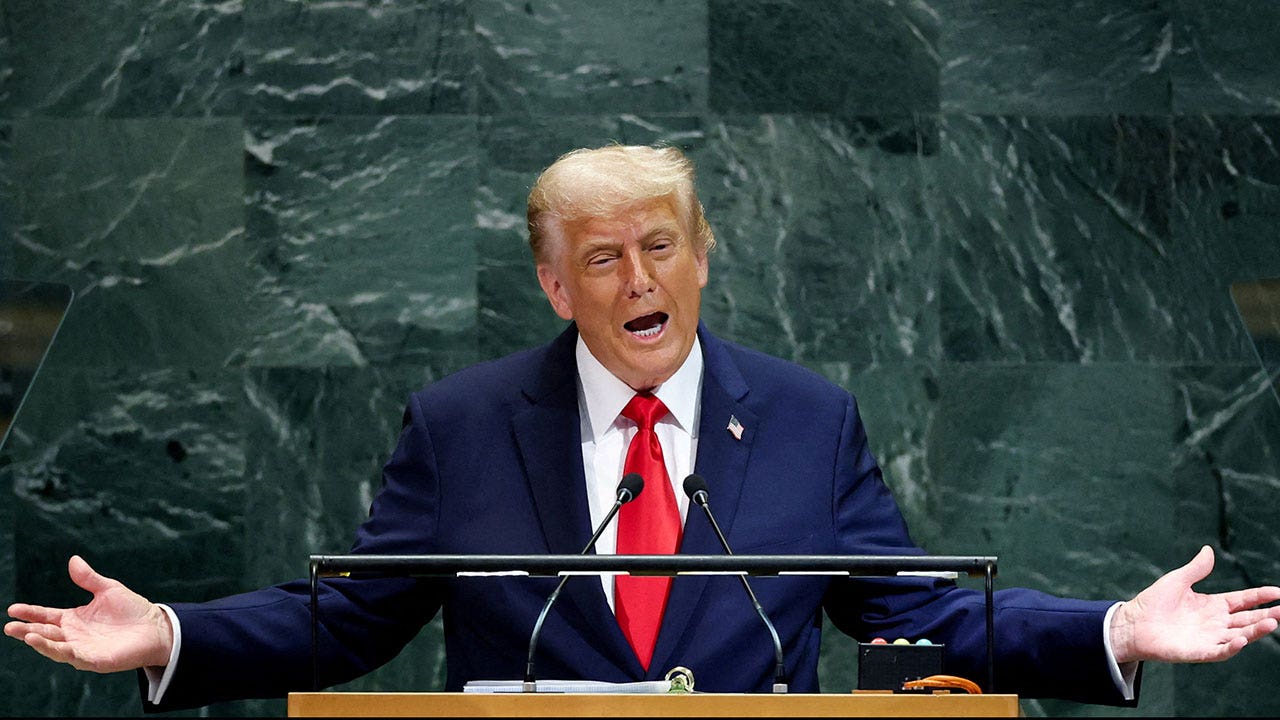
Cover image from foxnews.com, which was analyzed for this article
President Trump spoke at the UNGA focusing on Iran nuclear issues, Gaza plans, Ukraine and potential UN reforms while holding bilateral meetings with Gulf allies and others.
PoliticalOS
Tuesday, September 22, 2026 — Politics
Trump's UN appearance centers on stated priorities of blocking an Iranian nuclear weapon, advancing a Gaza plan and pursuing UN reforms, set against multiple ongoing conflicts and a separate media access dispute. The week's diplomacy will largely occur in bilateral meetings rather than the General Assembly hall itself. Readers should track whether announced initiatives produce measurable movement on any of the listed fronts.
What outlets missed
Most coverage omitted any discussion of artificial intelligence safeguards, a topic a UN panel had recently raised and that several leaders planned to address. Few outlets examined the specific mechanics of the proposed Greenland security agreement or its relation to prior U.S. demands for territorial control. Reactions from named foreign officials beyond scheduled meetings received little attention, leaving the diplomatic reception largely unexamined. Details on the scale of U.S. sanctions enforcement against Iran or its measurable economic effects were absent from most previews.
Trump Arrives at United Nations Seeking to Project Strength on Iran and Global Conflicts
President Trump will address the United Nations General Assembly on Tuesday, using the platform to portray his administration as one that confronts long-standing foreign policy problems rather than deferring them. The speech comes after several weeks of political and legal difficulties at home, including approval ratings below 40 percent tied in part to the economic effects of the ongoing war with Iran.
White House officials said the president plans to emphasize peace agreements reached in other regions, an update on a proposed Gaza settlement, and the need to prevent Iran from acquiring nuclear weapons. Ambassador to the United Nations Mike Waltz previewed the remarks as highlighting actions taken against challenges that prior administrations had left unresolved. The address will be followed by a series of bilateral meetings with leaders including British Prime Minister Andy Burnham, Ukrainian President Volodymyr Zelenskyy, and representatives from Gulf states.
The timing places the speech against the backdrop of a war with Iran that entered its seventh month with no clear resolution. Iranian retaliation has struck U.S. facilities and infrastructure in the region, while Tehran’s restrictions on shipping through the Strait of Hormuz have disrupted energy exports for several Gulf nations. Treasury and State Department officials are expected to use side meetings to warn countries against continued economic ties with Iran, citing potential consequences for those that do not comply.
Trump is also scheduled to discuss a security agreement with Denmark and Greenland that would expand the U.S. military footprint in the territory. That step follows earlier tensions over American demands for greater control of the island. Additional sessions are planned with the interim Venezuelan leader and other counterparts from four continents.
Domestic constraints add pressure to the diplomatic schedule. Several major news organizations remain barred from White House access after the administration restricted their entry, prompting lawsuits from the affected outlets. The restrictions have led some television networks to limit live coverage of the president. With midterm elections approaching, the White House has framed the United Nations appearance as an opportunity to demonstrate foreign policy momentum before hosting Chinese President Xi Jinping later in the week.
Critics, including some U.S. allies, have questioned whether the administration’s approach to Iran has produced the stability it claims. A recent United Nations Human Rights Council report cited evidence of possible war crimes in U.S. strikes on Iranian civilian areas earlier this year. Gulf partners have simultaneously reassessed reliance on American security guarantees after sustaining damage from Iranian responses.
Trump’s previous address to the General Assembly drew attention for its length and for technical disruptions that interrupted delivery. This year’s remarks are expected to return to familiar themes of institutional reform at the United Nations and skepticism toward multilateral climate and migration policies. How those arguments land will depend in part on whether the president can point to concrete progress on the conflicts that continue to shape the week’s agenda.
You just read Liberal's take. Want to read what actually happened?
More in Politics
Democrats Flip Senate, Expand House Majority in Midterms
Democrats flipped the Senate and expanded their House majority in a major rebuke to President Trump and Republicans. Key victories included multiple Senate seats and state-level wins that ended long-standing GOP dominance in places like Texas.
GOP Losses Spur Blame, Vance Distancing, 2028 Maneuvers
Republicans are pointing fingers internally after heavy losses, with Vice President JD Vance distancing himself from Trump over the Iran war and positioning for a potential 2028 run. Challengers within the party are already sensing opportunity.
Democrats Take House and Senate Amid Record Midterm Turnout
Democrats achieved decisive gains in the 2026 midterms, flipping seats to take control of both chambers. Coverage highlights historic turnout and implications for the Trump administration.
Democrats Take House and Senate, Constraining Trump
Democrats flipped both the House and Senate in a major rebuke to President Trump and Republicans. The results create divided government and set up battles over spending, oversight, and foreign policy for the remainder of Trump's term.
The Compass
You just read five takes on one story.
What's your take? Find your political shape in a few minutes.
Take the test