
Trump Order Revises Childhood Vaccine Recommendations
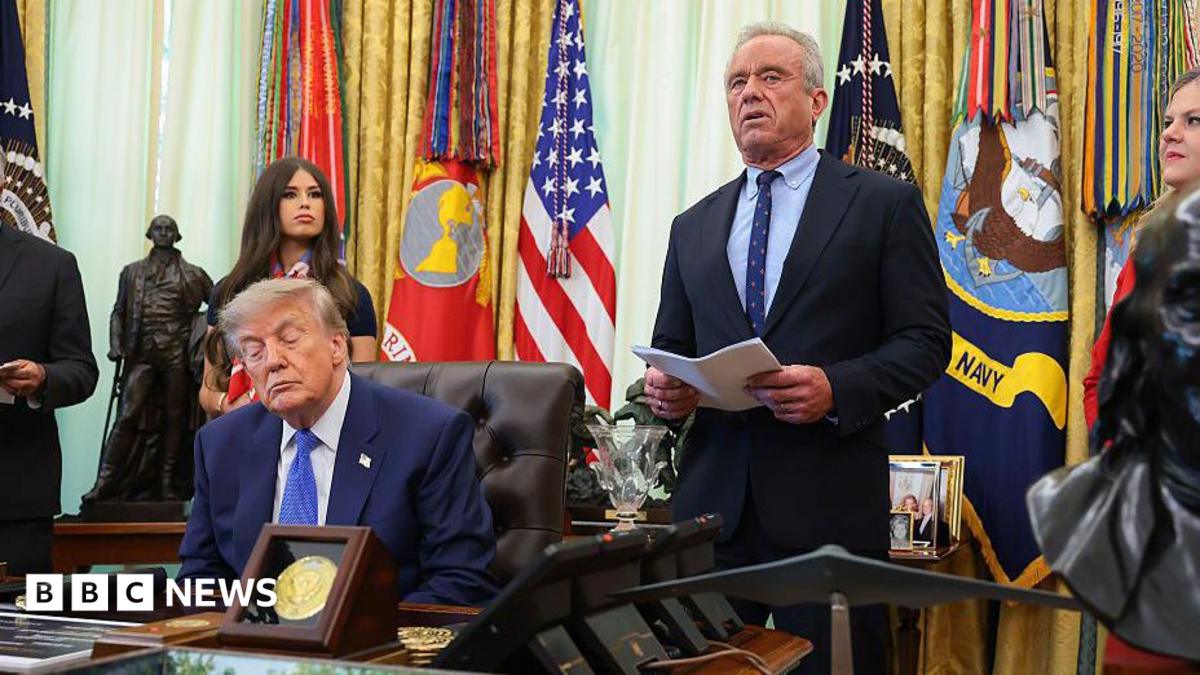
Cover image from bbc.co.uk, which was analyzed for this article
The president issued an order altering recommended childhood vaccine schedules, including splitting the MMR shot, drawing criticism that it prioritizes feelings over science.
PoliticalOS
Tuesday, August 11, 2026 — Politics
Federal recommendations on childhood vaccines have narrowed, yet state school rules and actual product availability determine what changes reach families. Large studies continue to show no MMR-autism link, while implementation details remain unresolved.
What outlets missed
The order’s legal effect is limited to federal recommendations and does not override state school mandates, a distinction mentioned only in passing by most outlets. No outlet independently verified whether single-antigen MMR products could be produced within the stated timeline or quantified the added cost and visit burden for low-income families. The White House fact sheet’s comparative data with other countries received little scrutiny against actual CDC historical schedules. Potential insurer responses to the narrowed recommendations were not addressed.
Trump Signs Order to Reduce Childhood Vaccines and Split MMR Shots
President Donald Trump signed an executive order Monday directing federal health agencies to cut the recommended childhood vaccine schedule from 18 doses down to 11 and to administer the measles, mumps and rubella vaccine as three separate shots rather than one combined injection. The move follows years of public statements from Trump questioning whether the rapid expansion of the vaccine calendar has contributed to rising rates of chronic childhood conditions.
The order lists the remaining recommended immunizations as measles, mumps, rubella, diphtheria, tetanus, pertussis, polio, Haemophilus influenzae type B, pneumococcal disease, human papillomavirus and varicella. Trump said children decades ago received far fewer shots yet appeared healthier overall, noting that widespread autism diagnoses were not recorded at current levels when the schedule was shorter. He argued that bundling multiple antigens into single visits places an unnecessary burden on young immune systems and compared the combined MMR dose to overloading a child with too much at once.
The president directed that, wherever possible, remaining shots should be spaced across separate doctor visits instead of given together. He described the combined MMR product as potentially more problematic when administered as a single jab, citing reports from parents and some physicians who have raised similar concerns. When pressed for supporting data, Trump pointed to observations shared with him rather than new clinical trials.
Federal guidance under the order does not override state laws that set school vaccination requirements, leaving final decisions on mandates to legislatures and health departments closer to parents. Supporters of the change say this preserves local control and gives families more room to discuss timing with their own doctors instead of following a rigid national checklist.
Medical organizations have warned that fewer recommended doses and a split MMR schedule could lower overall coverage and increase outbreaks of preventable diseases. Public health agencies continue to cite large population studies, including a 2019 Danish review of more than 650,000 children and a recent American analysis covering millions more, that found no statistical link between the MMR vaccine and autism. The Institute of Medicine reached a similar conclusion in 2013 after examining the full schedule.
The White House fact sheet accompanying the order highlighted how the number of recommended doses has grown sharply since 1980, when children typically received far fewer injections. Trump and Health Secretary Robert F. Kennedy Jr. have both referenced parental reports of developmental issues following clustered vaccinations, arguing that official dismissals have not fully addressed those accounts. The order stops short of banning any existing product but signals a shift toward fewer simultaneous exposures.
State officials now face decisions on whether to align their school-entry rules with the new federal recommendations or maintain the longer schedule. Some lawmakers have already signaled interest in reviewing requirements, while others plan to keep existing policies in place. The practical effect will depend on how many states adopt the reduced list and whether insurers and pediatric practices adjust their standard visit protocols accordingly.
You just read America First's take. Want to read what actually happened?
More in Politics
Democrats Flip Senate, Expand House Majority in Midterms
Democrats flipped the Senate and expanded their House majority in a major rebuke to President Trump and Republicans. Key victories included multiple Senate seats and state-level wins that ended long-standing GOP dominance in places like Texas.
GOP Losses Spur Blame, Vance Distancing, 2028 Maneuvers
Republicans are pointing fingers internally after heavy losses, with Vice President JD Vance distancing himself from Trump over the Iran war and positioning for a potential 2028 run. Challengers within the party are already sensing opportunity.
Democrats Take House and Senate Amid Record Midterm Turnout
Democrats achieved decisive gains in the 2026 midterms, flipping seats to take control of both chambers. Coverage highlights historic turnout and implications for the Trump administration.
Democrats Take House and Senate, Constraining Trump
Democrats flipped both the House and Senate in a major rebuke to President Trump and Republicans. The results create divided government and set up battles over spending, oversight, and foreign policy for the remainder of Trump's term.
The Compass
You just read five takes on one story.
What's your take? Find your political shape in a few minutes.
Take the test