
Trump Order Revises Childhood Vaccine Recommendations
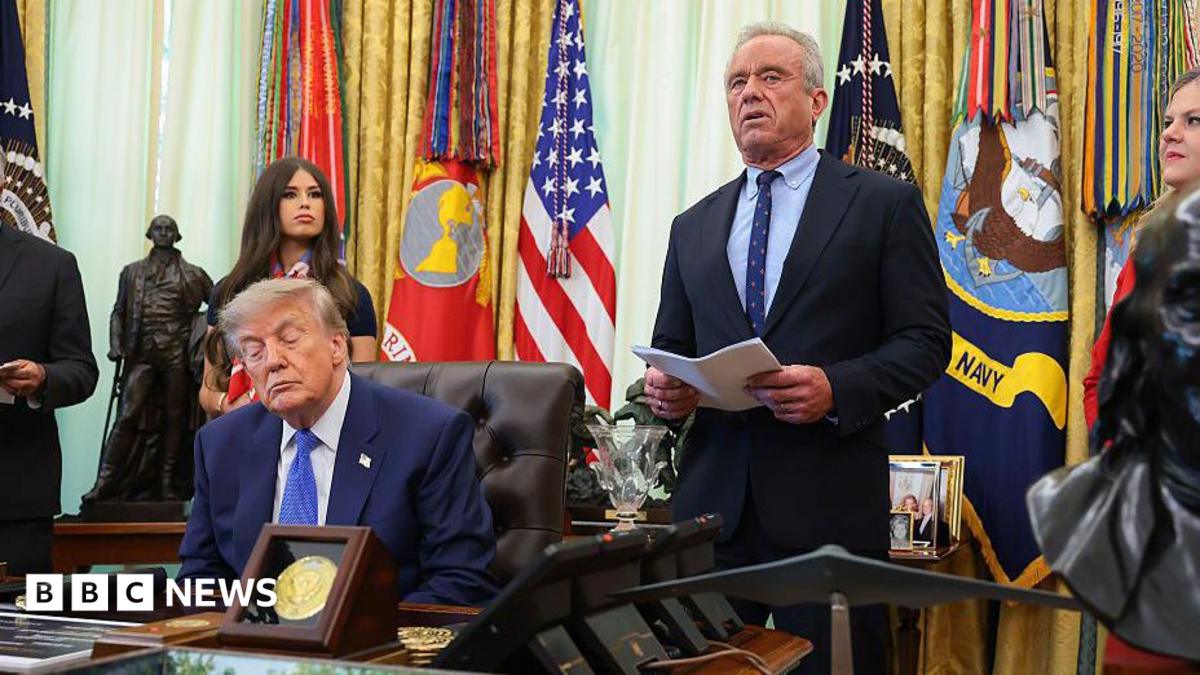
Cover image from bbc.co.uk, which was analyzed for this article
The president issued an order altering recommended childhood vaccine schedules, including splitting the MMR shot, drawing criticism that it prioritizes feelings over science.
PoliticalOS
Tuesday, August 11, 2026 — Politics
Federal recommendations on childhood vaccines have narrowed, yet state school rules and actual product availability determine what changes reach families. Large studies continue to show no MMR-autism link, while implementation details remain unresolved.
What outlets missed
The order’s legal effect is limited to federal recommendations and does not override state school mandates, a distinction mentioned only in passing by most outlets. No outlet independently verified whether single-antigen MMR products could be produced within the stated timeline or quantified the added cost and visit burden for low-income families. The White House fact sheet’s comparative data with other countries received little scrutiny against actual CDC historical schedules. Potential insurer responses to the narrowed recommendations were not addressed.
Trump Signs Order Reducing Recommended Childhood Vaccines
President Donald Trump signed an executive order Monday that directs federal agencies to cut the number of recommended childhood vaccines from 18 to 11 and to separate the combined measles, mumps and rubella shot into three distinct doses. The move follows years of statements from Trump questioning vaccine safety and timing, though the order functions only as guidance for agencies and leaves school requirements under state control.
The order lists 11 immunizations for children under its schedule: measles, mumps, rubella, diphtheria, tetanus, pertussis, polio, Haemophilus influenzae type B, pneumococcal disease, human papillomavirus and varicella. It instructs that vaccines be given across more separate doctor visits rather than in combinations. Trump described the combined MMR dose as potentially overwhelming for young immune systems, comparing it to pouring an entire soda bottle into a child at once, and said the change would reduce overall shots while spreading them out.
Administration statements point to the growth in recommended doses over decades, noting that children today face far more than the seven shots advised in 1980. Trump has linked higher vaccination numbers to rising autism diagnoses, a connection rejected by large-scale studies including a 2019 analysis of more than 657,000 Danish children and a review of 2.56 million American children that found no association between the MMR vaccine and autism rates.
Medical organizations including the American Academy of Pediatrics have warned that lowering the schedule and separating shots could reduce timely coverage and increase exposure to preventable diseases. The Institute of Medicine examined the full childhood schedule in 2013 and identified no safety concerns with the existing timing or combinations. Spacing doses lengthens periods when children remain unprotected, an outcome that public health data link to higher outbreak risks in communities with falling immunization levels.
Because states set school mandates, the federal order will not directly alter requirements. Its practical effect may appear through shifts in provider recommendations, insurance coverage guidance and parental decisions. Past episodes of vaccine hesitancy tied to similar claims have corresponded with localized drops in coverage and subsequent measles clusters, according to Centers for Disease Control and Prevention surveillance.
Health Secretary Robert F. Kennedy Jr. has supported the changes alongside Trump. The administration’s framing emphasizes parental choice and reduced medical interventions, yet the evidence cited for spacing or limiting vaccines rests primarily on comparisons of historical schedules rather than new safety data. Federal agencies now face the task of implementing the directive within existing research on immunization effectiveness and disease incidence.
You just read Liberal's take. Want to read what actually happened?
More in Politics
Democrats Flip Senate, Expand House Majority in Midterms
Democrats flipped the Senate and expanded their House majority in a major rebuke to President Trump and Republicans. Key victories included multiple Senate seats and state-level wins that ended long-standing GOP dominance in places like Texas.
GOP Losses Spur Blame, Vance Distancing, 2028 Maneuvers
Republicans are pointing fingers internally after heavy losses, with Vice President JD Vance distancing himself from Trump over the Iran war and positioning for a potential 2028 run. Challengers within the party are already sensing opportunity.
Democrats Take House and Senate Amid Record Midterm Turnout
Democrats achieved decisive gains in the 2026 midterms, flipping seats to take control of both chambers. Coverage highlights historic turnout and implications for the Trump administration.
Democrats Take House and Senate, Constraining Trump
Democrats flipped both the House and Senate in a major rebuke to President Trump and Republicans. The results create divided government and set up battles over spending, oversight, and foreign policy for the remainder of Trump's term.
The Compass
You just read five takes on one story.
What's your take? Find your political shape in a few minutes.
Take the test