
Trump Order Directs Review of Childhood Vaccine Schedule
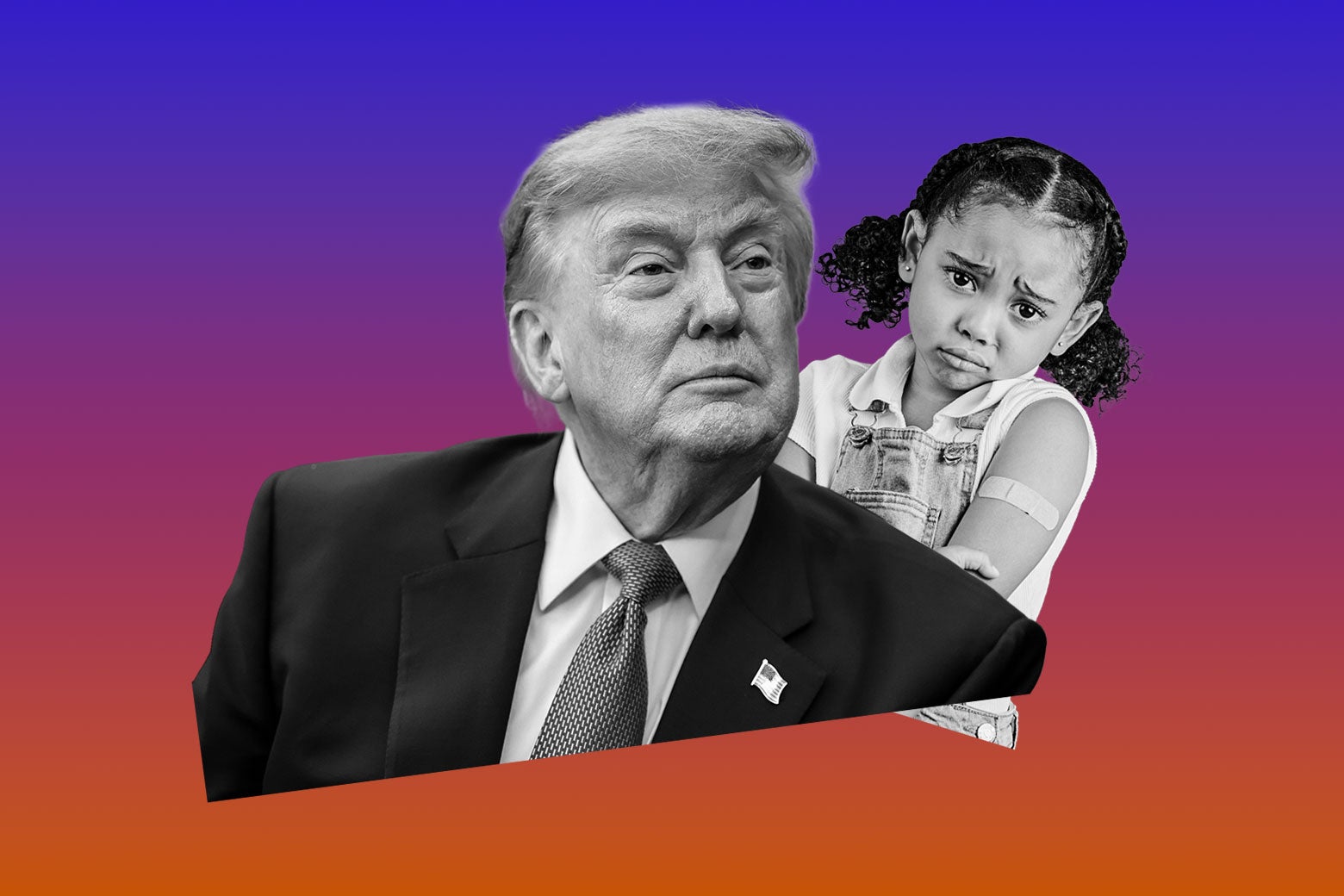
Cover image from slate.com, which was analyzed for this article
President Trump signed an order aiming to cut the number of recommended childhood vaccines, drawing criticism from left-leaning outlets over public health risks and confusion. Right-leaning sources highlight administration concerns about irreversible risks from certain procedures.
PoliticalOS
Thursday, August 13, 2026 — Politics
The executive order offers non-binding guidance that leaves CDC recommendations and state mandates intact for now, yet its directives on vaccine categorization and dosing create a new compliance process for HHS within 90 days. Parents should distinguish between announced intent and actual legal effect when deciding on vaccination timing.
What outlets missed
Most outlets omitted the order’s explicit 90-day timeline for HHS to produce new recommendations and its re-categorization of select vaccines as non-universal. They also left out references to the Vaccine Injury Compensation Program payout history and comparative schedules used in other high-income countries that the administration cited as supporting evidence. The non-binding nature of the guidance and the continued authority of states over school requirements received inconsistent attention, leaving readers without a clear map of where policy change could actually occur.
Trump Executive Order on Vaccines Risks Heightening Confusion and Endangering Children
Donald Trump's latest executive order on childhood vaccines has left public health experts warning of increased confusion among families and potential rises in preventable illnesses, even as the order itself leaves federal recommendations unchanged. The move, issued this week, attempts to revive earlier efforts by Health and Human Services Secretary Robert F. Kennedy Jr. to alter vaccine schedules, steps that a federal judge had previously blocked.
The order directs agencies to review vaccine policies but carries no legal force to shift CDC guidance or state laws. Recommendations for routine childhood immunizations against diseases such as measles, hepatitis B and polio remain in place. Public health professor Noele Nelson at Cornell University noted that nothing in the science or official schedules has shifted. The main outcome, she said, is added confusion that erodes trust without new evidence against the shots.
Pediatrician Vincent Iannelli, who runs the Vaxopedia resource, echoed that concern. He said the president's statements on vaccine risks, including long-disproven links to autism, carry significant weight with the public. Families hearing about the order may delay or skip shots for their children, raising the odds of outbreaks. Such hesitation, Iannelli added, will make it harder for doctors to follow evidence-based protocols.
Wendy Parmet, who co-directs the Center for Health Policy and Law at Northeastern University, pointed to Trump's platform as a key factor. When the president speaks, she said, many assume real policy change is underway even if the order offers only guidance. This dynamic risks amplifying doubt at a time when vaccination rates in some communities already lag.
The order stems from Trump's alignment with Kennedy, a longtime critic of vaccines who has pushed for broader restrictions. Earlier attempts to implement those views through agency rules were halted in court. The executive action revives the push without overriding legal barriers, yet its messaging alone has drawn scrutiny from medical groups.
Experts tracking immunization trends fear downstream effects. Lower uptake could lead to more cases of diseases once controlled, with young children and immunocompromised patients facing the greatest exposure. Historical data shows that dips in coverage during periods of public skepticism have produced measurable spikes in hospitalizations and deaths.
The administration has not detailed next steps beyond the order's call for reviews. CDC officials continue to post standard schedules online, but the mixed signals from the White House have already prompted questions from parents and providers. Health law specialists say the episode illustrates the limits of executive power on technical medical guidance while underscoring its reach in shaping perceptions.
Public health advocates stress that clear, consistent communication from federal leaders remains essential to maintaining high vaccination levels. Without it, they warn, the burden falls on pediatricians and state health departments to counter misinformation one family at a time.
You just read Progressive's take. Want to read what actually happened?
More in Politics
Democrats Flip Senate, Expand House Majority in Midterms
Democrats flipped the Senate and expanded their House majority in a major rebuke to President Trump and Republicans. Key victories included multiple Senate seats and state-level wins that ended long-standing GOP dominance in places like Texas.
GOP Losses Spur Blame, Vance Distancing, 2028 Maneuvers
Republicans are pointing fingers internally after heavy losses, with Vice President JD Vance distancing himself from Trump over the Iran war and positioning for a potential 2028 run. Challengers within the party are already sensing opportunity.
Democrats Take House and Senate Amid Record Midterm Turnout
Democrats achieved decisive gains in the 2026 midterms, flipping seats to take control of both chambers. Coverage highlights historic turnout and implications for the Trump administration.
Democrats Take House and Senate, Constraining Trump
Democrats flipped both the House and Senate in a major rebuke to President Trump and Republicans. The results create divided government and set up battles over spending, oversight, and foreign policy for the remainder of Trump's term.
The Compass
You just read five takes on one story.
What's your take? Find your political shape in a few minutes.
Take the test