
Trump Bars CNN, MSNBC, Politico; Outlets Sue Over Access
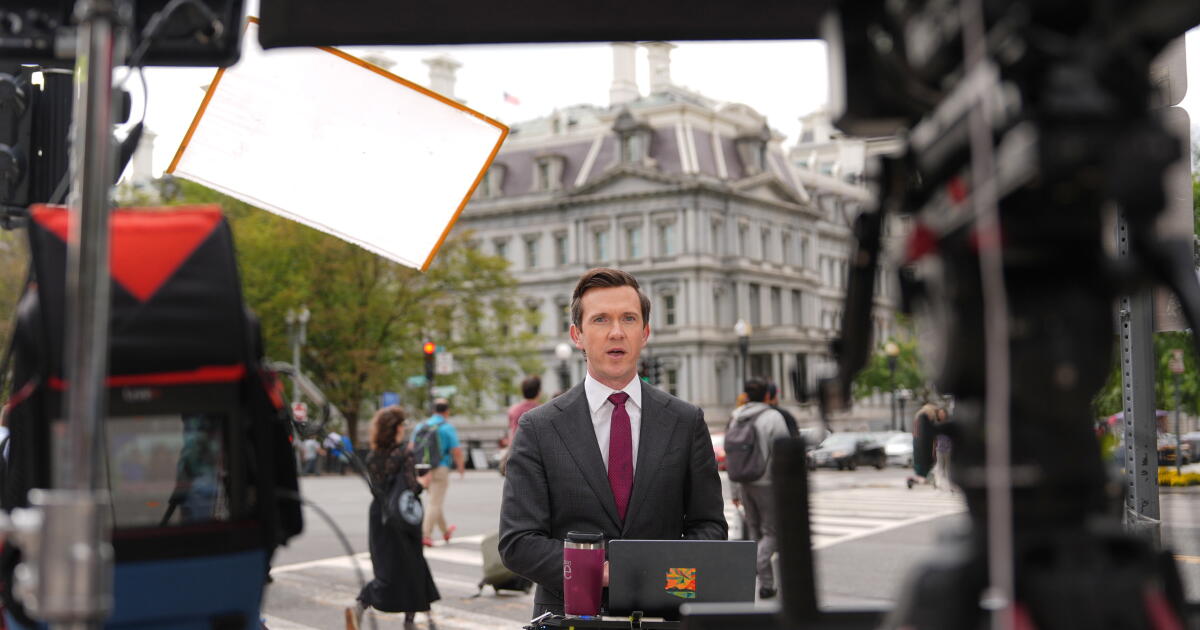
Cover image from latimes.com, which was analyzed for this article
President Trump barred CNN, MS NOW, and Politico from White House access over disputed coverage, prompting the outlets to notify the administration of a planned First Amendment lawsuit. Multiple outlets across the spectrum reported on the escalating conflict between the administration and major media organizations.
PoliticalOS
Monday, September 21, 2026 — Politics
The core unresolved question is whether White House press credentials remain subject to executive administrative control, including viewpoint considerations in restricted areas, or whether recent court rulings now require content-neutral procedures. The lawsuit will test the limits of that authority against the backdrop of the still-pending AP litigation.
What outlets missed
Most coverage omitted the D.C. Circuit's June 2025 ruling in the AP case that explicitly permitted viewpoint discrimination in restricted presidential spaces such as the Oval Office and Air Force One. Few articles detailed the administrative process for issuing or revoking hard passes or noted that credentials have long been subject to executive discretion rather than judicially protected entitlements. Corporate affiliations, such as CNBC's shared ownership with MS NOW, received minimal or buried disclosure. No outlet supplied examples of the specific reporting Trump called cumulative fiction and lies.
Media Outlets Sue Trump Over White House Access Ban
Three major news organizations announced Monday they will sue the Trump administration to regain entry to the White House after President Trump barred their reporters from the grounds. CNN, MS NOW and Politico said in a joint statement they notified the government of the federal court filing in Washington seeking a temporary restraining order to restore their journalists' credentials immediately.
The outlets claim the ban violates the First Amendment by retaliating against their reporting. They described the action as punishing unfavorable coverage without notice or due process and warned it threatens press freedom and the public's access to independent journalism. The suit names President Trump along with top aides including Chief of Staff Susie Wiles, Communications Director Steven Cheung and Secret Service Director Sean Curran. It points to a 1977 court ruling that the White House cannot arbitrarily restrict press credentials based on viewpoint discrimination.
President Trump announced the ban Friday on Truth Social, labeling the three outlets as purveyors of fake news and fiction. He stated the decision was effective immediately and suggested more outlets could face similar restrictions. In Oval Office remarks later that day, Trump described the move as the result of cumulative stories over the past two years rather than any single report. "You get sick of it," he said, adding he did not want the reporters in his office or on the premises. Reporters from the outlets were turned away Saturday when their credentials were revoked or deactivated.
The three organizations have maintained a consistent adversarial stance toward the Trump administration, producing coverage that frequently highlights controversies and negative angles while downplaying policy achievements. Trump has long argued such outlets operate with a built-in bias that distorts public understanding of events. The lawsuit filing comes as the outlets seek to force continued physical access despite that history of strained relations.
White House officials have not issued a detailed response to the suit, though the president's earlier comments framed the ban as a response to repeated misleading reporting. Legal observers note that White House press access has always been a privilege granted by the executive branch rather than an absolute right, with past administrations of both parties exercising discretion over who receives credentials. The outlets now ask the court to intervene and declare the restrictions unconstitutional.
The development highlights ongoing tensions between the administration and legacy media organizations that have positioned themselves as watchdogs. Trump has repeatedly stated that media outlets should not be permitted to publish falsehoods about the presidency without consequence. The case is expected to test how far courts will go in compelling access for journalists whose work the president views as persistently inaccurate.
You just read America First's take. Want to read what actually happened?
More in Politics
Democrats Flip Senate, Expand House Majority in Midterms
Democrats flipped the Senate and expanded their House majority in a major rebuke to President Trump and Republicans. Key victories included multiple Senate seats and state-level wins that ended long-standing GOP dominance in places like Texas.
GOP Losses Spur Blame, Vance Distancing, 2028 Maneuvers
Republicans are pointing fingers internally after heavy losses, with Vice President JD Vance distancing himself from Trump over the Iran war and positioning for a potential 2028 run. Challengers within the party are already sensing opportunity.
Democrats Take House and Senate Amid Record Midterm Turnout
Democrats achieved decisive gains in the 2026 midterms, flipping seats to take control of both chambers. Coverage highlights historic turnout and implications for the Trump administration.
Democrats Take House and Senate, Constraining Trump
Democrats flipped both the House and Senate in a major rebuke to President Trump and Republicans. The results create divided government and set up battles over spending, oversight, and foreign policy for the remainder of Trump's term.
The Compass
You just read five takes on one story.
What's your take? Find your political shape in a few minutes.
Take the test