
Trump Bars CNN, MSNBC, Politico; Outlets Sue Over Access
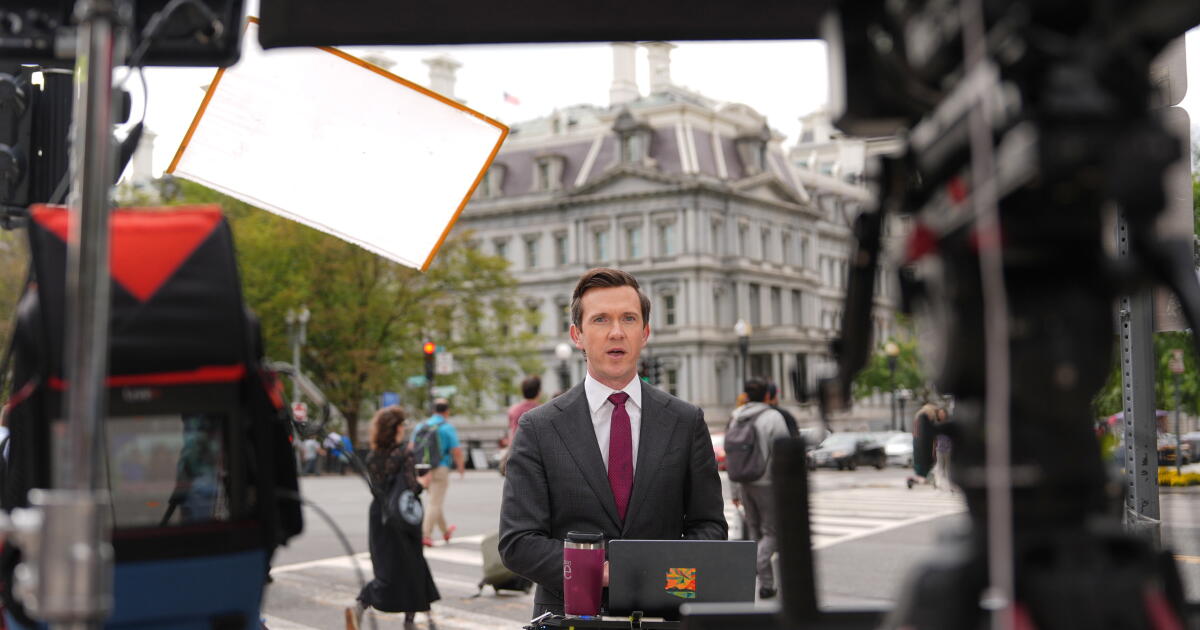
Cover image from latimes.com, which was analyzed for this article
President Trump barred CNN, MS NOW, and Politico from White House access over disputed coverage, prompting the outlets to notify the administration of a planned First Amendment lawsuit. Multiple outlets across the spectrum reported on the escalating conflict between the administration and major media organizations.
PoliticalOS
Monday, September 21, 2026 — Politics
The core unresolved question is whether White House press credentials remain subject to executive administrative control, including viewpoint considerations in restricted areas, or whether recent court rulings now require content-neutral procedures. The lawsuit will test the limits of that authority against the backdrop of the still-pending AP litigation.
What outlets missed
Most coverage omitted the D.C. Circuit's June 2025 ruling in the AP case that explicitly permitted viewpoint discrimination in restricted presidential spaces such as the Oval Office and Air Force One. Few articles detailed the administrative process for issuing or revoking hard passes or noted that credentials have long been subject to executive discretion rather than judicially protected entitlements. Corporate affiliations, such as CNBC's shared ownership with MS NOW, received minimal or buried disclosure. No outlet supplied examples of the specific reporting Trump called cumulative fiction and lies.
Three News Outlets Challenge Trump White House Ban in Federal Court
CNN, MSNBC and Politico filed a federal lawsuit Monday seeking to overturn President Donald Trump's sudden ban on their reporters from White House grounds, arguing the move amounts to unconstitutional retaliation against critical coverage.
The three organizations notified the Justice Department that they would seek a temporary restraining order in U.S. District Court in Washington to restore immediate access while the case proceeds. Their joint statement described the action as a direct assault on the First Amendment, noting that the White House revoked credentials without notice or any stated process after objecting to their reporting. Trump announced the ban Friday on Truth Social, labeling the outlets purveyors of "fiction and lies" and declaring the restrictions effective immediately. He later told reporters the decision stemmed from cumulative stories over the last few years that had left him fed up.
Reporters from each outlet were turned away Saturday when they arrived for work. CNN's Betsy Klein, MSNBC's Akayla Gardner and Politico's Cheyenne Haslett all had their press badges deactivated by Secret Service agents. The outlets, which have long participated in the White House press pool, now find their workspaces empty and their ability to cover daily events sharply curtailed. The lawsuit names Trump along with Chief of Staff Susie Wiles, Communications Director Steven Cheung and Secret Service Director Sean Curran as defendants.
Legal filings emphasize that presidents have long complained about press coverage yet have never unilaterally stripped credentials in this manner. The complaint cites a 1977 precedent holding that the White House cannot arbitrarily restrict access on grounds of viewpoint discrimination. It argues the ban violates both the First Amendment by punishing protected newsgathering and the Fifth Amendment by depriving the outlets of liberty and property interests without due process. The plaintiffs seek a declaration that the exclusion is unconstitutional along with an injunction halting its enforcement.
White House officials have not detailed any specific stories that triggered the action. Trump has signaled the ban could expand, telling reporters that other outlets he considers "fake news," including the New York Times and Washington Post, might face similar treatment. The White House Correspondents' Association condemned the move as unconstitutional, and legal experts have noted that such exclusions risk setting a precedent for future administrations to sideline unfavorable voices.
The case arrives at a moment when Trump's second term has already featured repeated clashes with news organizations over access and framing. By moving quickly to court, the three outlets are testing whether judges will treat credential revocation as ordinary presidential discretion or as impermissible government interference in the public's right to independent reporting. Hearings on the emergency request could come as soon as this week.
You just read Progressive's take. Want to read what actually happened?
More in Politics
Democrats Flip Senate, Expand House Majority in Midterms
Democrats flipped the Senate and expanded their House majority in a major rebuke to President Trump and Republicans. Key victories included multiple Senate seats and state-level wins that ended long-standing GOP dominance in places like Texas.
GOP Losses Spur Blame, Vance Distancing, 2028 Maneuvers
Republicans are pointing fingers internally after heavy losses, with Vice President JD Vance distancing himself from Trump over the Iran war and positioning for a potential 2028 run. Challengers within the party are already sensing opportunity.
Democrats Take House and Senate Amid Record Midterm Turnout
Democrats achieved decisive gains in the 2026 midterms, flipping seats to take control of both chambers. Coverage highlights historic turnout and implications for the Trump administration.
Democrats Take House and Senate, Constraining Trump
Democrats flipped both the House and Senate in a major rebuke to President Trump and Republicans. The results create divided government and set up battles over spending, oversight, and foreign policy for the remainder of Trump's term.
The Compass
You just read five takes on one story.
What's your take? Find your political shape in a few minutes.
Take the test