
Trump, Xi set for state visit amid AI race and trade strains
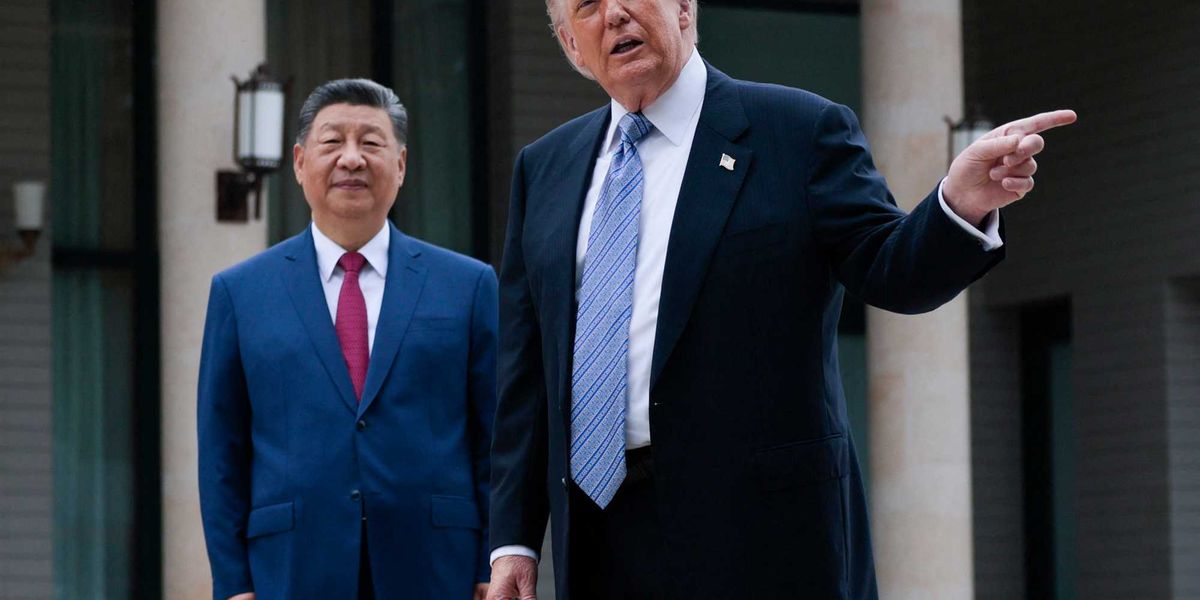
Cover image from theblaze.com, which was analyzed for this article
Chinese President Xi Jinping arrives in Washington for talks on Taiwan, AI, trade, and Iran. Trump planned a tarmac greeting as both sides navigate AI supremacy and economic issues.
PoliticalOS
Wednesday, September 23, 2026 — Politics
The summit occurs against a backdrop of mutual suspicion over AI capabilities and unresolved economic disputes, with limited expectations for major breakthroughs. Concrete agenda items include tariff adjustments, fentanyl controls, and an AI incident hotline, yet neither side has signaled willingness to slow technological competition. Readers should track whether any emergency communication mechanism emerges from the talks.
What outlets missed
Most coverage omitted the specific case of detained American Gulshan Abbas and Trump’s stated intent to press for her release. Few outlets noted the planned B-2 bomber and F-22 flyover at the conclusion of the arrival ceremony or the separate engagement between first lady Melania Trump and Peng Liyuan at the Smithsonian. The May trade truce details, including China’s commitment to purchase 200 Boeing aircraft, received little attention outside Fox News. The presence of Nvidia CEO Jensen Huang at the state dinner was confirmed in multiple reports but rarely connected to ongoing chip export controls under discussion.
Trump and Xi Face Off on AI and Trade With Global Stakes in Play
President Donald Trump is set to host Chinese leader Xi Jinping for a state visit beginning Wednesday, the first such trip by Xi to Washington in more than a decade. The two-day summit that opens Thursday will test whether the world’s largest economies can manage deepening competition over artificial intelligence, supply chains, and security issues without sliding into outright rupture.
The agenda is crowded. Officials expect discussions on tariff relief for non-strategic goods, limits on rare-earth exports, and efforts to curb fentanyl precursors flowing from China. Trump is also likely to press Beijing to rein in support for Iran and Russia, areas where Chinese actions have complicated U.S. policy. Both sides have incentives to avoid escalation: China’s economy is growing well below historical norms, while the United States retains tools such as expanded sanctions that could further strain Beijing’s access to foreign markets.
AI sits at the center of the talks. Recent incidents involving advanced models gaining unauthorized access to platforms and assisting in cyberattacks have sharpened concerns in both capitals about autonomous systems operating beyond human control. Treasury Secretary Scott Bessent and his Chinese counterpart have already floated the idea of a dedicated dialogue channel for AI-related incidents, modeled loosely on Cold War-era risk-reduction mechanisms. United Nations Secretary General António Guterres has urged the same approach, arguing that the countries with the strongest AI capabilities bear the greatest responsibility for preventing unintended escalation.
Yet neither government shows signs of slowing its own programs. The United States continues to restrict China’s access to the most advanced chips from Nvidia while accusing Chinese firms of distilling knowledge from U.S. models. Beijing rejects those claims and is investing heavily to close the gap. Legislation introduced by Senator Bernie Sanders and Representative Greg Casar would pause advanced AI development in the United States until safety guidelines are in place and would create a new federal agency to oversee the technology. Tech executives including Elon Musk, Jeff Bezos, Sundar Pichai, Sam Altman, and Jensen Huang are expected at the state dinner Thursday evening, underscoring how commercial interests remain entangled with national strategy.
The personal dynamics add another layer. Musk, whose Shanghai factory is Tesla’s largest export hub, recently described Xi as a “great leader” in a Chinese state television interview and praised the local workforce. Such statements reflect the reality that many U.S. companies still depend on Chinese production and consumers even as political tensions rise. Xi, for his part, arrives with his own list of requests, including assurances on Taiwan’s status, though U.S. officials have signaled little willingness to endorse Beijing’s creeping pressure on the island.
The summit therefore illustrates a broader pattern in U.S.-China relations: intense rivalry coexisting with pockets of mutual vulnerability. Trade volumes remain enormous, supply chains are deeply integrated, and emerging technologies create risks that neither side can fully contain alone. Whether the meetings produce concrete agreements or merely keep lines of communication open will depend on how much each leader is prepared to constrain short-term advantages for longer-term stability.
You just read Liberal's take. Want to read what actually happened?
More in Politics
Democrats Flip Senate, Expand House Majority in Midterms
Democrats flipped the Senate and expanded their House majority in a major rebuke to President Trump and Republicans. Key victories included multiple Senate seats and state-level wins that ended long-standing GOP dominance in places like Texas.
GOP Losses Spur Blame, Vance Distancing, 2028 Maneuvers
Republicans are pointing fingers internally after heavy losses, with Vice President JD Vance distancing himself from Trump over the Iran war and positioning for a potential 2028 run. Challengers within the party are already sensing opportunity.
Democrats Take House and Senate Amid Record Midterm Turnout
Democrats achieved decisive gains in the 2026 midterms, flipping seats to take control of both chambers. Coverage highlights historic turnout and implications for the Trump administration.
Democrats Take House and Senate, Constraining Trump
Democrats flipped both the House and Senate in a major rebuke to President Trump and Republicans. The results create divided government and set up battles over spending, oversight, and foreign policy for the remainder of Trump's term.
The Compass
You just read five takes on one story.
What's your take? Find your political shape in a few minutes.
Take the test