
Trump Hosts Xi for State Dinner Focused on Pageantry Amid Trade and AI Strains
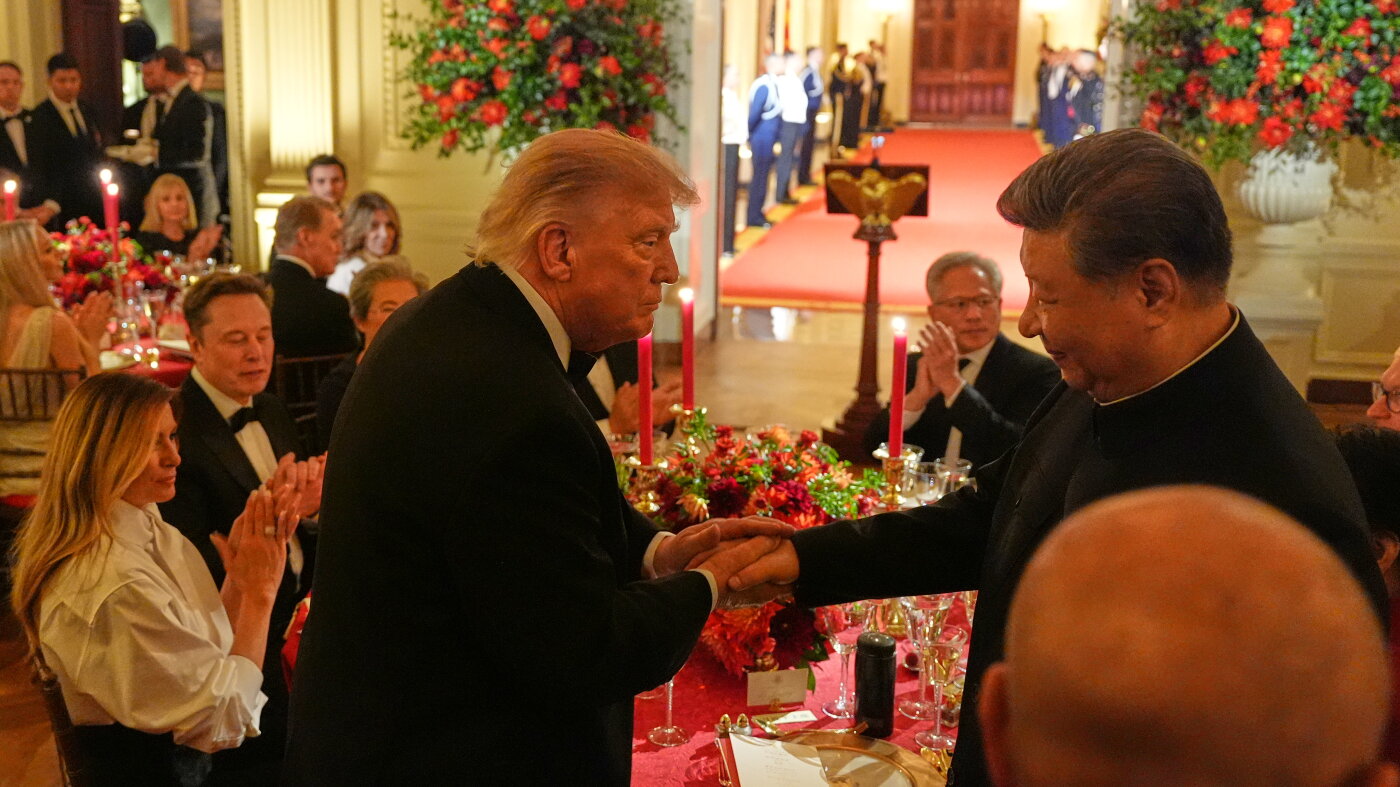
Cover image from npr.org, which was analyzed for this article
President Trump welcomed Chinese President Xi Jinping for high-profile talks on trade, tariffs, AI, and bilateral rivalry, featuring a White House tour and state dinner with tech executives. Coverage highlighted symbolic pomp over major breakthroughs, with both sides maintaining a cordial tone amid persistent tensions.
PoliticalOS
Friday, September 25, 2026 — Politics
The state dinner displayed continued personal engagement between the two leaders and the presence of American technology executives, yet the absence of Chinese business leaders and the lack of announced agreements underscore the deeper structural barriers created by years of reciprocal trade and technology restrictions.
What outlets missed
Most coverage omitted the documented sequence of U.S. entity-list designations and tariff actions from 2018 onward that directly affected which Chinese firms could participate in U.S. events. Outlets also gave limited attention to the specific Chinese retaliatory measures on rare-earth exports and the resulting supply-chain effects on U.S. manufacturers. No reporting included on-record reactions from congressional leaders or trade associations beyond a single expert quote. The lack of any announced commercial deals was noted but not placed against the prior expectation, reported by two sources, that a business delegation might still attend.
Trump's White House Dinner for Xi Puts Tech Billionaires at the Center of Diplomacy
President Donald Trump hosted Chinese leader Xi Jinping for a state dinner at the White House on Thursday evening, drawing a guest list heavy on American tech executives while excluding prominent Chinese business figures. The event unfolded in the East Room and State Dining Room, where attendees including Elon Musk, Sam Altman, Jensen Huang and Jeff Bezos mingled with political leaders under red linens and floral arrangements chosen to evoke warmth toward China.
The three-course menu emphasized American ingredients with touches of Chinese influence, beginning with yellow squash velouté and wild mushroom fricassee, followed by sesame-crusted sea bass with baby bok choy and ending with vanilla crémeux paired with White House honey ice cream. Diners toasted with Schramsberg sparkling wine, the same California label used during Richard Nixon's 1972 visit to Beijing. The White House described the choices as a bridge between culinary traditions, though the gathering occurred against a backdrop of unresolved disputes over trade, Taiwan and artificial intelligence.
Trump used his remarks to highlight personal rapport with Xi, saying the two leaders represent different systems yet share ties that promote prosperity. He invited guests to view construction on a new White House ballroom, departing from prepared notes to showcase ongoing renovations. The display of pageantry aligned with Trump's preference for high-profile hosting, yet the evening also featured discussions on sensitive topics during daytime meetings.
A notable absence marked the occasion. Unlike Xi's 2015 state visit, when Chinese executives from companies such as Alibaba joined the delegation, no major Chinese business leaders attended this dinner. Analysts described the shift as evidence of how commercial relations have deteriorated over the past decade, with fewer opportunities for direct deal-making between the two economies. American chief executives appeared in force, underscoring the one-sided nature of elite access at the event.
The concentration of influence among technology leaders drew attention inside the room. Figures central to AI development sat alongside the presidents, raising questions about whose interests shape policy on emerging technologies amid warnings of broader societal risks. The guest list reflected Trump's approach to blending corporate power with official diplomacy, even as midterm election rhetoric from his allies targets domestic political opponents.
Press access issues continued to simmer outside the formal proceedings. An ongoing dispute over White House coverage limited some reporting on the summit, while the dinner itself projected an image of stability. Observers noted that the opulent setting and selective invitations illustrated how high-level engagement between Washington and Beijing now operates with narrower economic participation than in previous years.
The evening's focus remained on personal gestures and shared toasts rather than concrete announcements on commercial ties. With tensions persisting over security and technology competition, the dinner served as a reminder of how elite networks in both capitals have adjusted to a more constrained bilateral relationship.
You just read Progressive's take. Want to read what actually happened?
More in Politics
Democrats Flip Senate, Expand House Majority in Midterms
Democrats flipped the Senate and expanded their House majority in a major rebuke to President Trump and Republicans. Key victories included multiple Senate seats and state-level wins that ended long-standing GOP dominance in places like Texas.
GOP Losses Spur Blame, Vance Distancing, 2028 Maneuvers
Republicans are pointing fingers internally after heavy losses, with Vice President JD Vance distancing himself from Trump over the Iran war and positioning for a potential 2028 run. Challengers within the party are already sensing opportunity.
Democrats Take House and Senate Amid Record Midterm Turnout
Democrats achieved decisive gains in the 2026 midterms, flipping seats to take control of both chambers. Coverage highlights historic turnout and implications for the Trump administration.
Democrats Take House and Senate, Constraining Trump
Democrats flipped both the House and Senate in a major rebuke to President Trump and Republicans. The results create divided government and set up battles over spending, oversight, and foreign policy for the remainder of Trump's term.
The Compass
You just read five takes on one story.
What's your take? Find your political shape in a few minutes.
Take the test