
Trump Media Sells Fast Truth Social Feed to Traders for $100,000 a Month
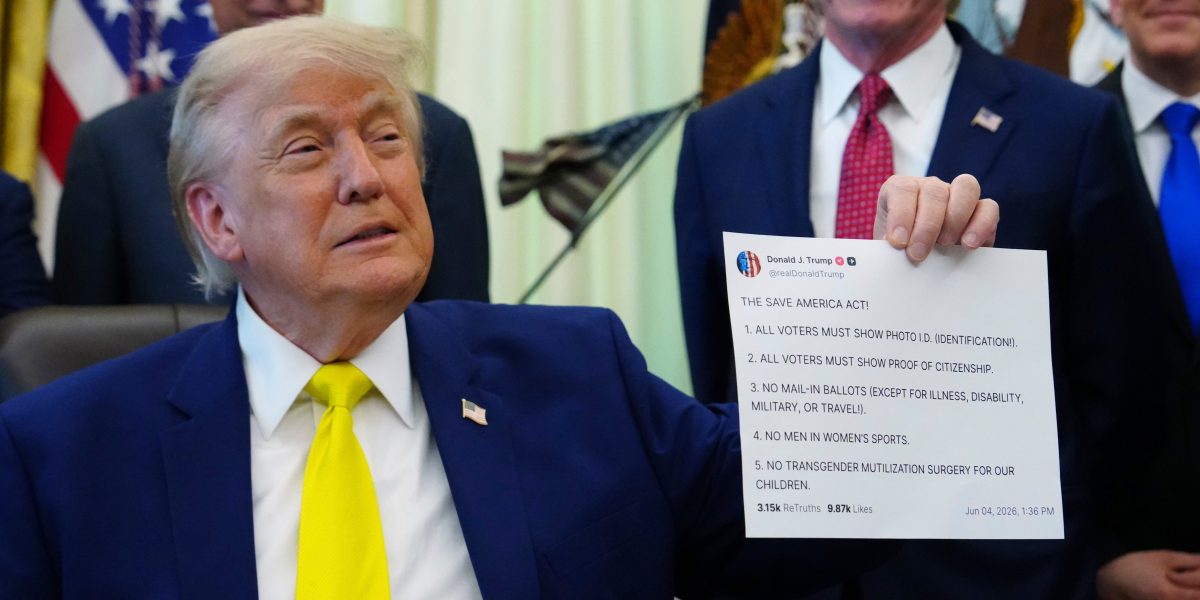
Cover image from theintercept.com, which was analyzed for this article
Early access to Trump’s Truth Social posts is sold to investors, drawing corruption accusations from critics across the spectrum.
PoliticalOS
Saturday, August 1, 2026 — Politics
The core development is a paid high-speed feed of already-public presidential posts sold by a company in which the president holds a major stake. Lawmakers have asked regulators to examine it, yet no enforcement action has been announced and the company maintains the information remains public. Readers should weigh the commercial offering against the lack of any ruling on its legality.
What outlets missed
Neither account noted the absence of any announced SEC investigation or enforcement step as of publication. The company’s explicit claim that the API delivers only already-public posts at higher speed received limited weight against legal speculation. Trump Media’s reported annual losses exceeding $400 million and its prior failed attempts at new revenue lines were omitted, leaving the financial motive for the product unexamined. The Presidential Records Act reference appeared in one piece without documents linking it to the API launch.
Truth Social Launches Paid API for Early Post Access
President Donald Trump's media company began offering institutional investors direct early access to Truth Social posts through a new application programming interface this week. The service, called Truth API, charges up to 100000 dollars per month for expedited delivery of announcements from the president and other platform users. Trump Media and Technology Group reported that initial customers have already enrolled, targeting trading firms that rely on rapid information for high-frequency strategies.
The offering draws from a private company's decision to segment its content distribution. Social media platforms routinely sell data feeds and premium tools to businesses, a practice that generates revenue without involving taxpayer funds. In this case, the content includes statements on economic policy and international developments that can influence asset prices. Market participants have long competed for informational edges through analysts, leaks, and faster data pipelines from various outlets.
Critics in Congress, including Senators Adam Schiff and Elizabeth Warren, described the product as an abuse of office that favors wealthy insiders. They urged regulatory review by the Securities and Exchange Commission. Similar objections frame the API as merging public announcements with commercial profit. Yet government officials at multiple levels have issued market-sensitive statements through official channels for decades, often with advance notice to select reporters or allies. The difference here lies in a transparent price tag attached to one platform's delivery speed rather than informal favoritism.
Thomas Sowell has long noted that concentrated political power creates opportunities for those positioned to anticipate policy shifts. The presidency's expansive role in economic signaling amplifies the value of timely information, regardless of the delivery method. Complaints about the API overlook how regulatory complexity and frequent interventions reward those who track signals closely. Private monetization of access does not expand that power; it merely prices an existing asymmetry in a competitive market.
Wall Street executives expressed mixed reactions, with some labeling the fee structure extreme. Adoption will depend on whether the marginal advantage justifies the cost compared with alternative research methods. No evidence indicates that the service violates securities laws, which already prohibit trading on material nonpublic information obtained through breaches rather than paid subscriptions. Public posts on Truth Social remain available to all users once released, preserving equal access to the final content.
The episode highlights incentives created when elected leaders control vast policy levers. Platforms that host their commentary face pressure to innovate revenue streams while critics focus on the optics of presidential association. Free markets allocate such services through voluntary exchange, leaving participants to weigh benefits against fees. Broader reforms to limit executive discretion over markets would address root drivers more directly than targeting one company's pricing model.
You just read Conservative's take. Want to read what actually happened?
More in Politics
Democrats Flip Senate, Expand House Majority in Midterms
Democrats flipped the Senate and expanded their House majority in a major rebuke to President Trump and Republicans. Key victories included multiple Senate seats and state-level wins that ended long-standing GOP dominance in places like Texas.
GOP Losses Spur Blame, Vance Distancing, 2028 Maneuvers
Republicans are pointing fingers internally after heavy losses, with Vice President JD Vance distancing himself from Trump over the Iran war and positioning for a potential 2028 run. Challengers within the party are already sensing opportunity.
Democrats Take House and Senate Amid Record Midterm Turnout
Democrats achieved decisive gains in the 2026 midterms, flipping seats to take control of both chambers. Coverage highlights historic turnout and implications for the Trump administration.
Democrats Take House and Senate, Constraining Trump
Democrats flipped both the House and Senate in a major rebuke to President Trump and Republicans. The results create divided government and set up battles over spending, oversight, and foreign policy for the remainder of Trump's term.
The Compass
You just read five takes on one story.
What's your take? Find your political shape in a few minutes.
Take the test