
U.S., Israel Suspend Strikes on Iran for Two Weeks in Exchange for Strait of Hormuz Reopening, Trump Announces Amid Pakistani Mediation
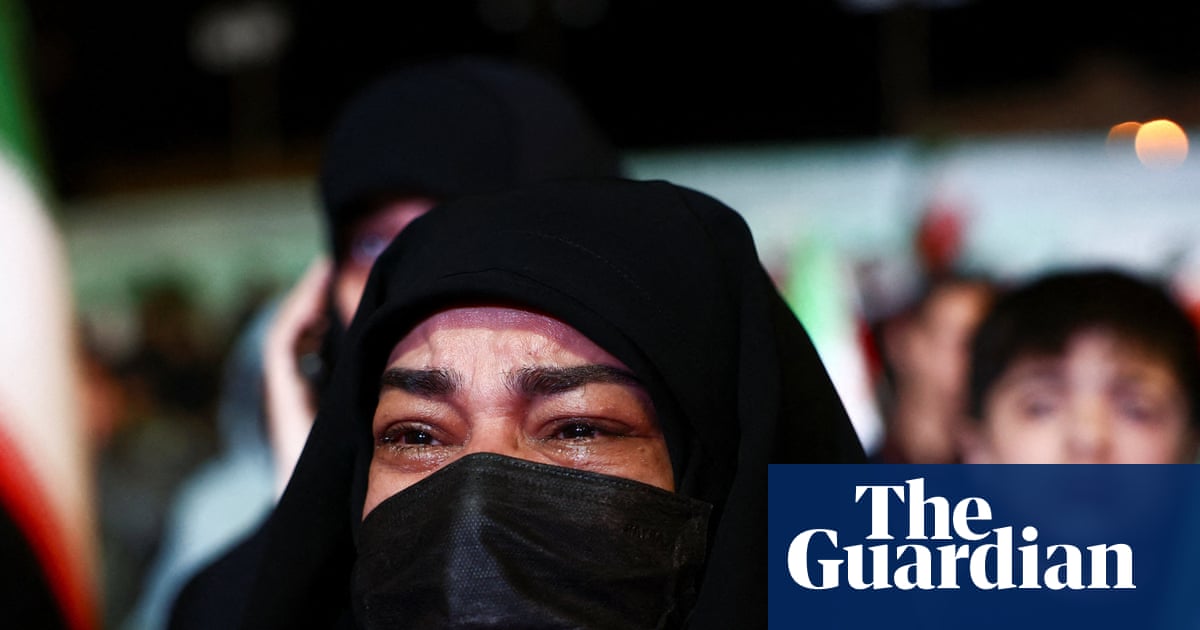
Cover image from theguardian.com, which was analyzed for this article
President Trump announced a two-week suspension of US and Israeli bombing campaigns in exchange for Iran reopening the Strait of Hormuz to commercial shipping, averting further escalation just before his deadline. Negotiations are slated to begin in Islamabad, with both sides claiming victory amid skepticism about the deal's durability. Oil prices plunged and markets rallied in response.
PoliticalOS
Wednesday, April 8, 2026 — Politics
The ceasefire temporarily reopens the Strait of Hormuz via mutual suspensions, achieving short-term de-escalation and market relief, but leaves nuclear, regime, and regional issues unresolved pending Islamabad talks. U.S. claims full military objectives met contrast Iranian assertions of retained control, with skepticism from experts on both sides. Readers should cross-reference official statements and IAEA updates for verification amid disputed facts.
What outlets missed
Most outlets downplayed U.S. officials' explicit claims of achieving all military objectives, such as Defense Secretary Pete Hegseth's 'decisive military victory' statement reported by ABC7. They omitted detailed war origins, including the February 28 U.S.-Israeli preemptive strikes on nuclear sites prompting Iran's blockade, per Al Jazeera and Wikipedia timelines. Casualty breakdowns and market specifics like fertilizer/helium resumption were inconsistently detailed, understating economic stakes. Israeli-Lebanon exclusion from the ceasefire was noted but not contextualized with recent Hezbollah attacks.
President Donald Trump announced on April 7, 2026, at 6:32 p.m. Eastern Time, a two-week suspension of U.S. and Israeli bombing campaigns against Iran, contingent on Iran reopening the Strait of Hormuz to commercial shipping. The deal, mediated by Pakistan, averts escalation hours before Trump's self-imposed nightfall deadline for strikes on Iranian energy and transportation infrastructure. Trump stated on Truth Social that the U.S. had 'met and exceeded' military objectives, providing a basis for negotiations starting in Islamabad on Iran's proposed 10-point plan.
The conflict began on February 28, 2026, when U.S. and Israeli forces launched airstrikes on Iranian nuclear sites, military targets, and leadership, killing Supreme Leader Ayatollah Ali Khamenei, according to timelines reported by Wikipedia's '2026 Iran war' entry, Britannica, Al Jazeera, and FactCheck.org. Iran retaliated within 48 hours by blockading the Strait of Hormuz, halting over 90% of commercial traffic through the 21-mile chokepoint that carries one-fifth of global oil supplies, per Al Jazeera reporting on April 5, 2026, and Reuters on April 6, 2026.
Over the following five weeks, the U.S. conducted hundreds of strikes, including over 800 on April 7 alone, according to New York Times reporting on April 8, 2026; a higher figure of 13,000 total targeted strikes cited in the same article remains unverified by independent sources like IAEA reports or Pentagon briefings. Israel conducted parallel operations, including strikes on over 100 Hezbollah sites in Lebanon on April 7, as noted by BBC and Al Jazeera live updates. Iran's responses included missile and drone attacks on Gulf allies, cyber operations against U.S. infrastructure, and human chains to protect power plants, per CBS News live coverage.
On April 7 at 8:06 a.m. ET, Trump issued an ultimatum on Truth Social, warning that unless Iran opened the strait by nightfall, 'a whole civilization will die tonight, never to be brought back again.' This followed earlier threats to bomb Iran 'into the Stone Ages' and demands for 'unconditional surrender,' as documented in White House transcripts and social media archives cited across outlets including ABC7 and NBC News.
Pakistan's intervention, delivering Iran's 10-point plan, led to the agreement. Iranian Foreign Minister Abbas Araghchi stated that shipping would resume 'under the control of Iran's Armed Forces,' determining passage, per his statement quoted in the New York Times on April 8, 2026. Trump described the plan as 'a workable basis on which to negotiate,' despite its calls for U.S. troop withdrawal, sanctions relief, reparations, and recognition of Iran's uranium enrichment rights, as analyzed by Richard Fontaine, CEO of the Center for a New American Security, in the same Times article.
U.S. officials claimed victory. Defense Secretary Pete Hegseth called it a 'decisive military victory' meeting three objectives: degrading Iran's military, denying nuclear weapons capability, and reopening the strait, per ABC7 live updates on April 8, 2026. Joint Chiefs Vice Chairman Gen. Dan Caine confirmed objectives achieved, according to the same report. Iran disputed nuclear gains, noting its stockpile of approximately 970 pounds of 60% enriched uranium remains in place, as flagged by Fontaine; IAEA verification is pending.
Markets reacted positively: oil prices plunged 13-16% to below $100 per barrel, and U.S. stock futures rallied in after-hours trading, per CNBC on April 7, 2026, and CBS News. Fertilizer and helium flows are expected to resume, stabilizing global supply chains disrupted since late February, according to the New York Times.
Casualties include 13 U.S. service members, dozens of Israelis, and thousands of Iranian civilians (over 3,400 per Human Rights Activists News Agency, cited by NBC News), with Iran's military significantly degraded but proxies like Houthis and Hezbollah active. The ceasefire excludes Lebanon, per Israeli Prime Minister Benjamin Netanyahu's statement on April 8, 2026, supporting the deal but continuing anti-Hezbollah operations.
Negotiations are set for Islamabad over two weeks, with both sides claiming success. Iran's new leadership under Supreme Leader Mojtaba Khamenei, reportedly injured in strikes killing his father, portrays the deal as affirming its strait control, per Araghchi. U.S. intelligence doubts the regime's moderation, per unnamed agencies referenced in the New York Times; Trump called leaders 'different, smarter, and less radicalized.'
Skepticism persists. Fontaine warned of a 'materially worse outcome' if Iran retains indefinite strait control, and noted the 10-point plan resembles a 'Tehran wish list.' Joe Kent, former Trump counterterrorism adviser, argued military actions strengthened the regime, per Washington Post on April 8, 2026. No permanent nuclear limits or missile arsenal caps are agreed, disputed facts including uranium disposition flagged as unverified without IAEA inspection.
Congressional reactions mixed: Democrats like Sen. Chuck Schumer welcomed de-escalation but criticized 'ridiculous bluster' without authorization (New York Times, April 8); Republicans like Sen. Lindsey Graham conditioned support on uranium removal (same). GOP leaders were largely silent during a scheduled recess, per reporting. White House Press Secretary Karoline Leavitt framed it as leveraging a 4-6 week operation for diplomacy.
Gulf allies reeled from strikes on Dubai skyscrapers and Kuwait desalination plants, spiking U.S. gas prices, per New York Times. Trump's base fractured, with critics like Rep. Marjorie Taylor Greene calling threats 'evil' and Tucker Carlson a 'moral crime' (Washington Post). Supporters like Charlie Kirk host Andrew Kolvet praised control (same). Pope Leo XIV condemned rhetoric as 'unacceptable.'
The deal resolves immediate strait closure but leaves Iran's nuclear program, regional influence, and regime intact. Compared to the 2015 JCPOA—where Iran reduced centrifuges and capped stockpiles at 300kg without a verified 97% export, per Arms Control Association and State Department—outcomes remain preliminary. Durability is questioned amid wide gaps; talks under hostilities' shadow echo failed past efforts.
Coverage ranges from overt skepticism framing Trump as backing down from bluster (NYT, WaPo) to milder questioning of durability and costs amid partial victories (BBC, Guardian). All highlight risks and critics but vary in source balance, with left-leaning outlets stacking opposition quotes while underplaying U.S. victory claims. Neutral elements like market gains appear consistently but are overshadowed by unresolved issues emphasis.
Behind the Coverage
nytimes.com
Most biased
washingtonpost.com
theguardian.com
nytimes.com
Most biased
bbc.com
Least biased
What each outlet got wrong
nytimes.com (Trump Backs Down)
Framed the ceasefire as Trump's personal backdown with the headline 'Trump Backs Down, but Questions Remain' and stated 'Mr. Trump’s tactic of escalating his rhetoric to astronomical levels certainly helped him find an offramp he had been seeking for weeks,' while citing an unverified '13,000 targeted strikes' absorbed by Iran and a factual error claiming the JCPOA led to Iran shipping out '97 percent of its nuclear stockpile.'
Our version: The neutral version presents it as a mediated mutual agreement with both sides claiming success, notes the 13,000 strikes figure as unverified while confirming 800 strikes on April 7 from NYT reporting, and accurately contrasts with JCPOA facts like stockpile caps at 300kg without a 97% export.
washingtonpost.com
Stacked quotes from critics like Sen. Murkowski calling Trump's rhetoric 'an affront to the ideals our nation has sought to uphold' and Marjorie Taylor Greene labeling it 'evil and madness,' opened with an unverified anecdote of Trump threatening to bomb Beijing at a 2024 fundraiser, and framed the ultimatum as 'riskiest test yet' sparking 'nuclear panic' and debate on his 'sanity.'
Our version: The neutral version balances reactions with U.S. officials' victory claims like Defense Secretary Hegseth's 'decisive military victory' and includes pro-Trump voices alongside critics without leading with unverified anecdotes.
theguardian.com
Portrayed the deal as 'canceling Donald Trump’s ultimatum for Iran to surrender or face annihilation' after bombing threats that 'legal experts had said could constitute war crimes,' and claimed without evidence 'Iran released two different versions of the 10-point plan' with the Farsi version including 'acceptance of enrichment' absent in English.
Our version: The neutral version neutrally describes Trump's ultimatum and threats with direct quotes, notes the 10-point plan's contents including enrichment rights without alleging unverified discrepancies, and includes Iran's statement on resuming shipping under its forces' control.
nytimes.com (Lawmakers Greet)
Framed Republican leaders as 'mostly mum on Mr. Trump’s abrupt de-escalation' during a 'two-week congressional recess despite the war,' prioritizing Democratic quotes like Schumer's 'glad Trump backed off his threat... from his ridiculous bluster' and AOC's claim of 'threatened a genocide.'
Our version: The neutral version reports mixed congressional reactions including Schumer's criticism and Graham's conditional support without implying GOP negligence, noting the recess contextually and White House framing of diplomatic leverage.
bbc.com
Included unverified quotes from GOP lawmakers criticizing Trump, such as Rep. Austin Scott calling comments 'counter-productive' and Sen. Ron Johnson deeming bombing a 'huge mistake,' while describing Trump's threat as a 'jaw-dropping' declaration 'unlike anything a modern US president has ever levelled.'
Our version: The neutral version avoids unverified quotes, directly quotes Trump's announcement and officials like Hegseth on objectives met, and contextualizes rhetoric with prior threats documented in transcripts.
Facts outlets left out
U.S. and Israeli airstrikes launched on February 28, 2026, targeting Iranian nuclear sites, military, and leadership, killing Supreme Leader Ayatollah Ali Khamenei.
Omitted by: washingtonpost.com, theguardian.com, nytimes.com (Lawmakers Greet), bbc.com
Iran blockaded the Strait of Hormuz within 48 hours of February 28 strikes, halting over 90% of commercial traffic carrying one-fifth of global oil.
Omitted by: washingtonpost.com, nytimes.com (Lawmakers Greet), bbc.com
Defense Secretary Pete Hegseth called the outcome a 'decisive military victory' meeting three objectives; Joint Chiefs Vice Chairman Gen. Dan Caine confirmed objectives achieved.
Omitted by: nytimes.com (Trump Backs Down), theguardian.com, nytimes.com (Lawmakers Greet)
Framing tricks we caught
Loaded headline
“NYTimes.com's 'Trump Backs Down, but Questions Remain Over Iran and the Strait of Ho…' implies retreat rather than agreement.”
Neutral alternative: Neutral version uses 'US and Iran Agree to Two-Week Ceasefire on Strait of Hormuz' to reflect mutual claims of success.
Source imbalance
“NYTimes.com quotes Richard Fontaine four times critiquing as 'Tehran wish list' and 'materially worse outcome'; WaPo stacks ~60% critic quotes like Murkowski and Greene.”
Neutral alternative: Neutral version balances with U.S. officials (Hegseth, Caine), Iranian statements (Araghchi), and skeptics (Fontaine, Kent) equally.
False balance via unverified claims
“NYTimes.com cites unverified '13,000 targeted strikes'; BBC attributes unverified GOP quotes like Austin Scott's 'counter-productive'; Guardian claims unverified Farsi-English 10-point plan discrepancy.”
Neutral alternative: Neutral version flags unverified figures (e.g., 13,000 strikes) explicitly and relies on confirmed sources like NYT's 800 strikes on April 7 or IAEA-pending uranium data.
Source articles
More in Politics

Federal Agents Search Omar Home in Ongoing Immigration Probe
Homeland Security agents searched the Minnesota Democrat's DC residence in a criminal probe, prompting accusations of political intimidation from Omar and Democratic leaders. Coverage spans left-leaning outlets like NPR, BBC, and The Guardian alongside right-leaning criticism from The Federalist and Daily Wire.

Trump Diesel Import Plan Draws Pushback Over Russia Ties
The weekend agreement drew bipartisan congressional pushback and criticism from Ukraine's Zelenskyy, with analysts downplaying US fuel price impacts. Right-leaning outlets like National Review, Dispatch, and Washington Examiner questioned its legality and effectiveness.

Independents Test Voter Appetite for Middle Ground in 2026 Midterms
Nearly 200 independents are running in competitive races as voters weigh ballot measures on housing costs in states like Massachusetts. Left-leaning coverage from NYT, NPR, and Guardian highlights turnout and key races while right outlets focus on GOP strategy.

Trump Rallies in Alaska, Ohio to Bolster GOP Senate Candidates
The president rallied in Wasilla for Sen. Dan Sullivan and faced empty seats at an Ohio event amid midterm concerns. Outlets across the spectrum covered the trips as signals of GOP vulnerability weeks before Election Day.
The Compass
You just read five takes on one story.
What's your take? Find your political shape in a few minutes.
Take the test