
SCOTUS Clears Alabama Maps as Primaries Shape 2026 House Outlook
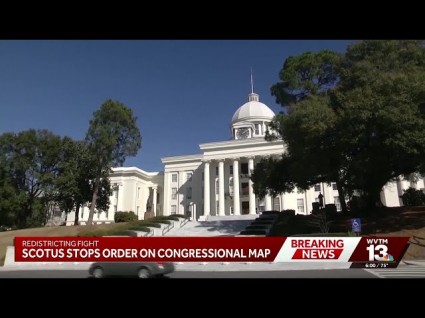
Cover image from crooksandliars.com, which was analyzed for this article
Primaries in Nebraska, West Virginia, and elsewhere set key midterm matchups, with Democrats eyeing flips. SCOTUS allows Alabama's new maps despite gerrymandering claims, aiding GOP. Debates rage on voting rights and GOP voter strategies.
PoliticalOS
Tuesday, May 12, 2026 — Politics
The 2026 House map is being adjusted through a combination of state legislation, court orders, and a Supreme Court remand that narrows the use of race in districting. Primaries this week in Nebraska and West Virginia will finalize several candidate matchups, but the durability of those lines and the national political environment will determine whether projected Republican gains materialize.
What outlets missed
Most coverage omitted that the Alabama order is a procedural remand rather than final approval of the 2023 map, leaving lower courts free to reaffirm or modify their earlier findings. Few noted the prior 2022 lawsuit by Black voters that prompted Louisiana's remedial map later struck in Callais. Outlets also underplayed parallel Democratic map adjustments in California and the absence of recent precedent for suspending primaries already underway in multiple states.
Supreme Court Ends Race-Based Redistricting in Multiple States
The Supreme Court’s recent decision in Louisiana v. Callais has opened the door for states across the South to redraw congressional districts without the race-conscious mandates that had shaped maps for years. The 6-3 ruling rejected interpretations of the Voting Rights Act that required states to engineer majority-minority districts, a practice critics long described as a form of racial gerrymandering favoring one party.
Alabama moved quickly after the ruling. The state will now use a 2023 map previously blocked by lower courts instead of the court-ordered version that created two districts designed around racial demographics. Governor Kay Ivey called a special session to align state senate lines with the same approach. Louisiana followed with new maps that reduce the number of districts drawn to guarantee outcomes based on race. Tennessee is expected to pursue similar changes.
These adjustments are projected to shift several seats toward Republicans ahead of the 2026 midterms. Estimates from analysts range from six to ten additional Republican-leaning districts when combined with actions in Florida and Virginia. In Florida, Governor Ron DeSantis signed legislation creating four more favorable districts despite a 2010 voter-approved ban on partisan gerrymandering. Virginia’s state supreme court overturned a voter-backed plan that would have added Democratic advantages.
The Court’s reasoning centered on constitutional limits. Justice Samuel Alito noted that prior applications of Section 2 had forced states into the very race-based line-drawing the Constitution prohibits. This aligns with long-standing arguments that government should not allocate political power according to skin color. Such policies, once justified as temporary remedies, had become permanent tools that insulated certain candidates from broader voter scrutiny.
Democrats and advocacy groups have framed the changes as an attack on minority representation. They point to the South’s history and claim the moves will silence Black voters. Yet the data shows these districts were constructed explicitly by race, often packing minority populations into single seats to maximize Democratic totals elsewhere. Removing that requirement does not prevent minority candidates from winning; it simply ends the guarantee that race alone determines district boundaries.
Republicans still face the core task of persuading voters rather than relying on map-drawing alone. Past cycles demonstrated that even favorable lines produce losses when candidates fail to address economic concerns, border security, and inflation. The Court’s action levels the field by rejecting engineered outcomes, but it does not shield any party from accountability at the ballot box.
Litigation continues in several states, and primaries already underway in places like Alabama have been disrupted by the shift. The practical result is a return toward districts drawn around communities of interest and geography instead of racial headcounts. This approach treats citizens as individuals rather than demographic blocs, consistent with the principle that political power flows from persuasion rather than administrative fiat.
You just read Conservative's take. Want to read what actually happened?
More in Politics

Trump at 32% Approval as Gas Prices Test GOP Midterm Hopes
NYT/Siena polling showed Trump's approval at historic lows around 32 percent with Democrats leading by double digits in key districts. Early voting has surged in battleground states.

Record Early Voting Hits Battlegrounds, Shifting Partisan Shares
AP analysis found hundreds of thousands more early ballots than in 2022 in states including Texas, Ohio, Kansas, Maine, and North Carolina, shifting partisan dynamics.

Trump Backs Marshall in Kansas Senate Race Tightened by Farm Costs
President Trump rallied in deep-red Kansas for GOP Sen. Roger Marshall in a competitive race, announcing an $8 billion farm fuel relief program amid high diesel prices. Democrats see an opening to end 94 years of GOP dominance in the state.

Trump Pauses Russia Sanctions Amid Ukraine Tensions and Missile Strikes
Trump waived sanctions on Russia and floated trilateral talks with Putin and Xi as part of ending the Ukraine war, while tensions rose with Zelenskyy over Starlink and arms. Bipartisan senators engaged Zelenskyy amid the shifts.
The Compass
You just read five takes on one story.
What's your take? Find your political shape in a few minutes.
Take the test