
SCOTUS Clears Alabama Maps as Primaries Shape 2026 House Outlook
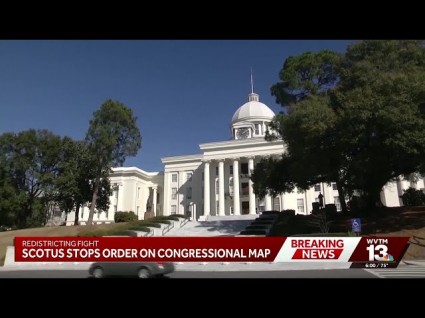
Cover image from crooksandliars.com, which was analyzed for this article
Primaries in Nebraska, West Virginia, and elsewhere set key midterm matchups, with Democrats eyeing flips. SCOTUS allows Alabama's new maps despite gerrymandering claims, aiding GOP. Debates rage on voting rights and GOP voter strategies.
PoliticalOS
Tuesday, May 12, 2026 — Politics
The 2026 House map is being adjusted through a combination of state legislation, court orders, and a Supreme Court remand that narrows the use of race in districting. Primaries this week in Nebraska and West Virginia will finalize several candidate matchups, but the durability of those lines and the national political environment will determine whether projected Republican gains materialize.
What outlets missed
Most coverage omitted that the Alabama order is a procedural remand rather than final approval of the 2023 map, leaving lower courts free to reaffirm or modify their earlier findings. Few noted the prior 2022 lawsuit by Black voters that prompted Louisiana's remedial map later struck in Callais. Outlets also underplayed parallel Democratic map adjustments in California and the absence of recent precedent for suspending primaries already underway in multiple states.
Supreme Court Paves Way for Color Blind Congressional Maps
The Supreme Court has opened the door for several Southern states to redraw congressional districts without the racial mandates that shaped maps for years. The 6-3 ruling in Louisiana v. Callais rejected lower court interpretations of the Voting Rights Act that required states to create majority-minority districts to boost Democratic prospects. States including Alabama, Louisiana, and Tennessee are now moving quickly to implement new lines ahead of the 2026 midterms.
Alabama Governor Kay Ivey called a special session after the decision cleared the use of 2023 maps previously blocked by federal judges. Those maps drop the number of majority-Black districts from two to one, aligning with the Court's view that race cannot be the predominant factor in drawing lines. Louisiana Republicans followed with proposals that could eliminate the state's sole Democratic-leaning seat. Tennessee lawmakers took similar steps to consolidate gains. Florida Governor Ron DeSantis signed legislation that stands to deliver up to four additional Republican seats despite a 2010 voter-approved ban on partisan gerrymandering.
Virginia added another layer when its state Supreme Court struck down a voter-approved redistricting plan that would have favored Democrats. Four of the seven justices, appointed during prior Republican legislative control, ruled the measure invalid. Combined, these moves could shift as many as ten House seats toward Republicans before voters cast ballots in November 2026.
Critics on the left describe the changes as an assault on minority representation and a revival of old discriminatory practices. Yet the Court majority, led by Justice Samuel Alito, noted that prior precedents had pushed states into unconstitutional race-based sorting to satisfy Section 2 claims. The decision aligns with earlier rulings that ended race preferences in college admissions and other public programs. Proponents argue the new maps treat voters as individuals rather than demographic blocs engineered for one party's advantage.
Democrats had relied on these districts to maintain influence in the South even as the region's overall electorate shifted. Black voters remain overwhelmingly Democratic in these states, but the concentration of their votes into a handful of safe seats limited broader influence. Removing the requirement for such packing allows maps that reflect population changes without forcing racial outcomes.
Republicans still face the underlying challenge of persuading voters in competitive areas. Recent polling shows persistent concerns over inflation, border security, and cultural issues that cut across district lines. Legal victories on maps do not automatically translate into turnout advantages if the party's message fails to connect with independents and working-class voters who have drifted in recent cycles.
The practical effect is a return toward maps drawn on traditional criteria such as compactness and county lines rather than engineered racial balances. States are acting within weeks of the ruling because primaries are already underway in some places. Courts have historically been reluctant to alter maps close to elections, but the Callais precedent overrode those hesitations in Alabama.
For Democrats the developments compound existing difficulties in the South. For Republicans they reduce the structural headwinds built into previous lines. The ultimate test remains whether either party can expand its coalition beyond the districts it already holds.
You just read America First's take. Want to read what actually happened?
More in Politics

Trump Defends Ramaswamy Ad Using Estranged Mother in Ohio Race
President Trump defended a GOP nominee's ad featuring a Democratic opponent's estranged mother, calling it powerful, while drawing criticism from some Republicans including Ohio Gov. Mike DeWine. The ad has sparked internal GOP tensions ahead of midterms.

Federal Raid Targets Omar Amid Unresolved Name and Marriage Allegations
Agents searched Rep. Ilhan Omar's DC residence over immigration fraud allegations; she called it bizarre. Reports and commentary questioned her birth name and past marriage details.

Supreme Court Upholds New Hampshire Student ID Voting Ban
The Supreme Court upheld New Hampshire's ban on student IDs as valid voter identification just before midterms, affecting a tight Senate race.
Early Voting Hits 21 Million as Most Trust Midterm Accuracy
Millions have already voted early as parties make final appeals amid $1.4 billion in ad spending; polls show confidence in election accuracy.
The Compass
You just read five takes on one story.
What's your take? Find your political shape in a few minutes.
Take the test