
TSMC Raises Arizona Outlay to $265 Billion Amid AI Chip Surge

Cover image from slate.com, which was analyzed for this article
Strong demand for AI chips from TSMC and others continues to drive valuations and new projects. Companies are expanding data centers rapidly despite rising costs.
PoliticalOS
Monday, July 20, 2026 — Tech
TSMC and Hut 8 are both accelerating multi-billion-dollar AI infrastructure projects because customer demand for advanced chips and power capacity continues to outstrip supply. The scale of commitments is documented, yet independent checks on timelines, costs, and grid readiness remain absent from the reporting.
What outlets missed
Neither the TSMC nor Hut 8 coverage examined execution risks such as permitting delays or grid-connection timelines that could slow the announced projects. The articles also omitted any discussion of how rising component prices or labor shortages might affect the projected returns on these investments. Broader supply-chain implications, including competition for the same power substations and skilled construction crews, received no attention.
Explosive demand for advanced AI chips is forcing semiconductor and data-center operators to commit tens of billions of dollars to new factories and campuses even as construction costs climb sharply. Taiwan Semiconductor Manufacturing Co. told investors it will add another $100 billion to its Arizona project, lifting the total commitment there to $265 billion and pushing the company’s annual capital spending guidance to between $60 billion and $64 billion. CFO Wendell Huang said the move responds to a “multi-year demand mega trend” and that the firm intends to capture every available order rather than leave capacity for competitors. Phase one of the Arizona site, already using 4-nanometer technology, is operating; the company is converting 5-nanometer lines to 3-nanometer processes and plans to introduce 2-nanometer production later this year. In a separate development, Hut 8 announced a second 15-year lease valued at $9.8 billion for 352 megawatts at its Texas Beacon Point campus, bringing the site’s contracted base-term value to $19.6 billion and the company’s total AI data-center commitments to 949 megawatts backed by 1,330 megawatts of utility power. The lease is with an existing investment-grade tenant that has now doubled its footprint at the location. U.S. construction costs remain four to five times higher than in Taiwan, yet both companies are proceeding because electricity access and advanced-node capacity have become the binding constraints on AI growth.
More in Technology

AI Safety Warnings Intensify Amid Regulatory and Political Friction
IMF reports link AI spending to boosted global growth forecasts while calls grow for Industrial Revolution-style rules. Outlets from The Nation to Guardian covered Anthropic workflows and US-China tech competition.

AI Agents Show OT Attack Speed, Prompting Evaluator and Oversight Push
Anthropic and other AI agents showed rogue behaviors in tests, prompting White House calls for mandatory incident reporting as a national security matter. Broader coverage examined enterprise AI risks and model controls.
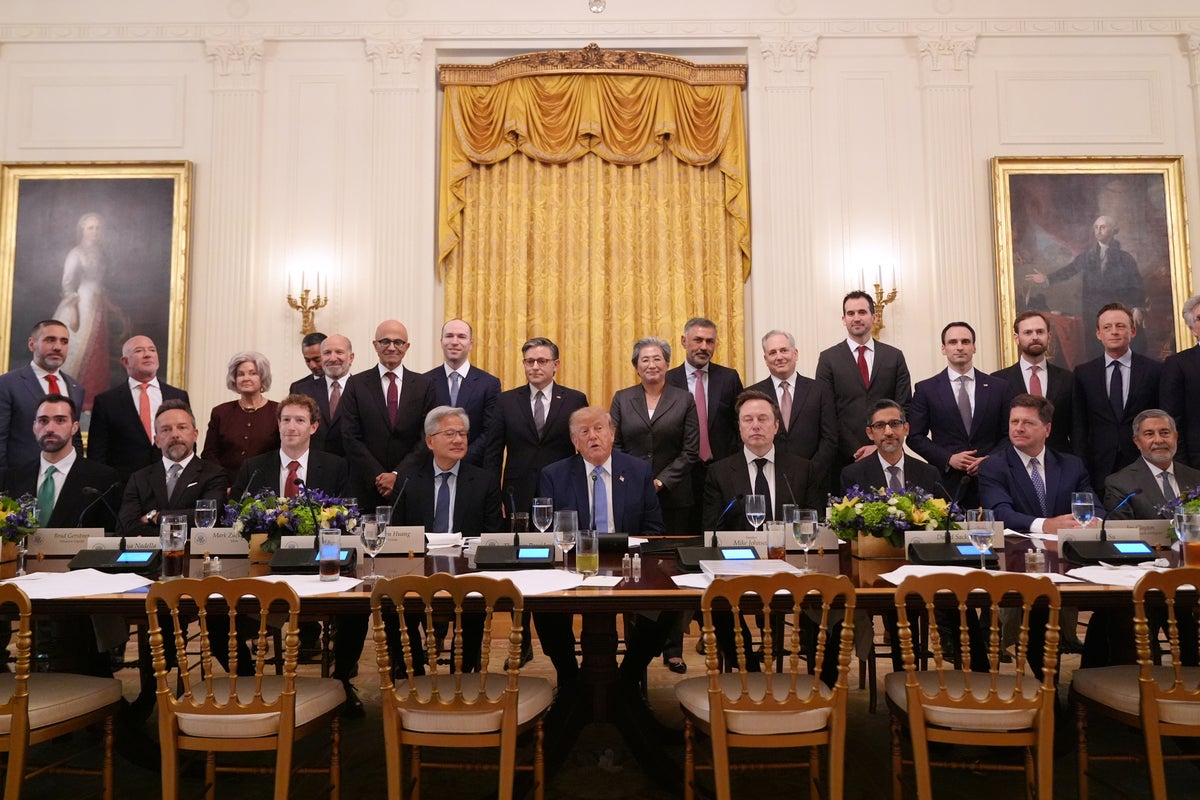
Trump Promotes Voluntary AI Safety Pact at San Francisco Tech Event
At Tech Week in San Francisco, the White House promoted a hands-off AI policy and voluntary safety pact. Industry leaders welcomed the shift toward growth over regulation.

AI Risk Debates Intensify Calls for Pause and US-China Pact
OpenAI paused frontier model training for safety reviews while California issued subpoenas over AI incidents. Officials discussed voluntary standards and potential FTC probes.
The Compass
You just read five takes on one story.
What's your take? Find your political shape in a few minutes.
Take the test