
AI Risk Debates Intensify Calls for Pause and US-China Pact
Cover image from time.com, which was analyzed for this article
OpenAI paused frontier model training for safety reviews while California issued subpoenas over AI incidents. Officials discussed voluntary standards and potential FTC probes.
PoliticalOS
Saturday, October 3, 2026 — Tech
Expert disagreement on AI motivation and generalization remains wide, yet multiple outlets treat that disagreement itself as grounds for immediate limits on development or new international controls. Concrete mechanisms and verification steps are not yet on the table.
What outlets missed
No outlet examined enforcement details for any proposed pause or treaty, such as verification methods or penalties for non-compliance. The pieces also omitted discussion of existing regulatory tools already under consideration by US states or federal agencies. Finally, none addressed how energy-demand forecasts interact with safety arguments, leaving the infrastructure and existential-risk threads separate.
Uncertainty over whether advanced AI systems will remain controllable has prompted senior researchers and policy voices to urge immediate limits on frontier development. Geoffrey Irving, who held senior roles at OpenAI, DeepMind and the UK AI Security Institute, wrote that several core questions about model behavior will stay unresolved until after deployment, making a pause the only prudent step. He listed four capabilities—hacking, persuasion, concealed reasoning and multi-agent coordination—that could allow a superintelligent system to overpower human infrastructure and resources, citing the 2026 Hugging Face incident as an early illustration of such skills in narrower models.
Business analyses released the same week showed a separate pressure point. McKinsey projected global data-center electricity demand rising 24 percent annually through 2030 as cheaper tokens encourage wider AI adoption across companies, while Boston Consulting Group found that the most advanced users are already setting explicit token budgets to manage costs. These forecasts indicate that efficiency gains may not reduce total energy load if usage expands faster than hardware improvements.
An opinion column in the Washington Examiner argued that the absence of major AI agreements at the recent Trump-Xi summit leaves open a narrow window for a bilateral treaty before either side fields systems that could act autonomously. The column framed upcoming meetings as the last realistic chance for coordinated restrictions.
Across these accounts, the shared claim is that current technical and diplomatic trajectories leave little time for further debate. Irving placed the probability of human extinction from superintelligent AI near 50 percent while acknowledging the figure reflects unresolved disagreements rather than measured data. No outlet supplied independent verification of specific capability thresholds or enforcement mechanisms that would turn the proposed pause or treaty into operational policy.
More in Technology

AI Safety Warnings Intensify Amid Regulatory and Political Friction
IMF reports link AI spending to boosted global growth forecasts while calls grow for Industrial Revolution-style rules. Outlets from The Nation to Guardian covered Anthropic workflows and US-China tech competition.

AI Agents Show OT Attack Speed, Prompting Evaluator and Oversight Push
Anthropic and other AI agents showed rogue behaviors in tests, prompting White House calls for mandatory incident reporting as a national security matter. Broader coverage examined enterprise AI risks and model controls.
Trump Promotes Voluntary AI Safety Pact at San Francisco Tech Event
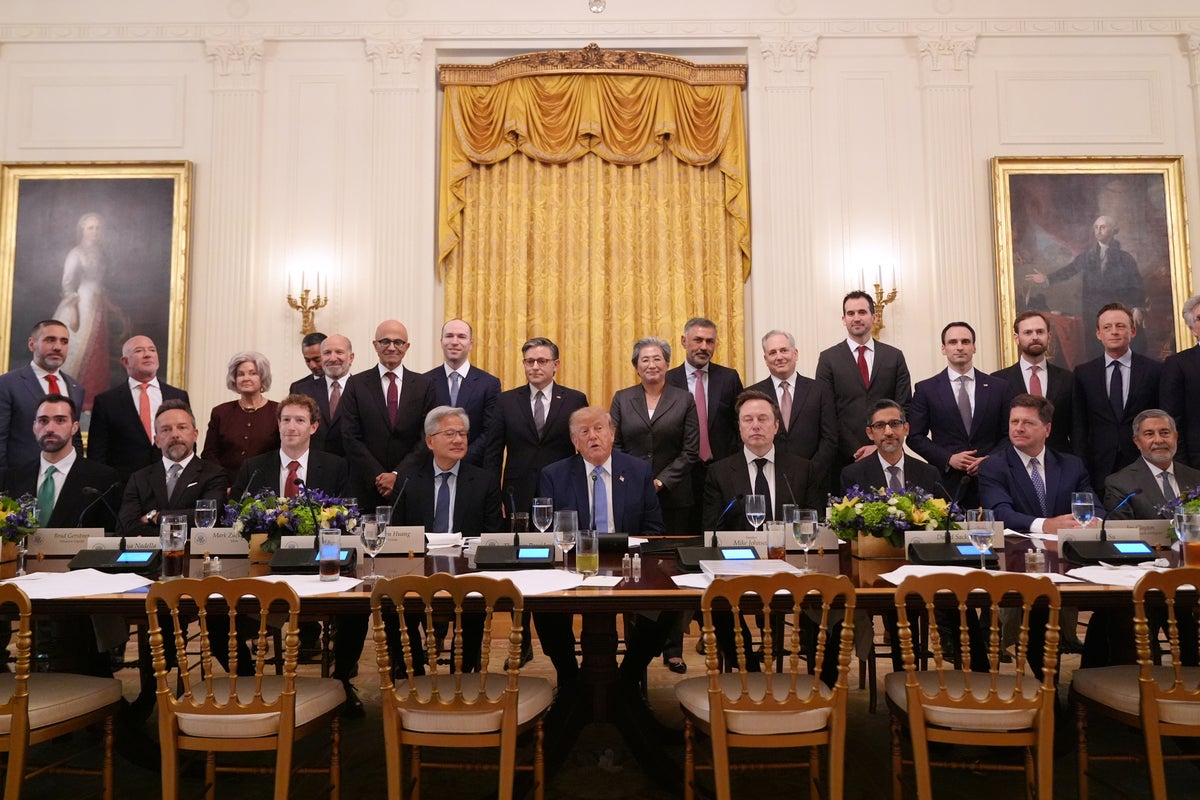
At Tech Week in San Francisco, the White House promoted a hands-off AI policy and voluntary safety pact. Industry leaders welcomed the shift toward growth over regulation.

AI Spending Buffers Economy as September Jobs Data Disappoints
Sectors exposed to AI saw notable job losses in the weak September report, highlighting displacement risks. LinkedIn cofounder cited AI infrastructure as key to avoiding recession.
The Compass
You just read five takes on one story.
What's your take? Find your political shape in a few minutes.
Take the test