
Trump Promotes Voluntary AI Safety Pact at San Francisco Tech Event
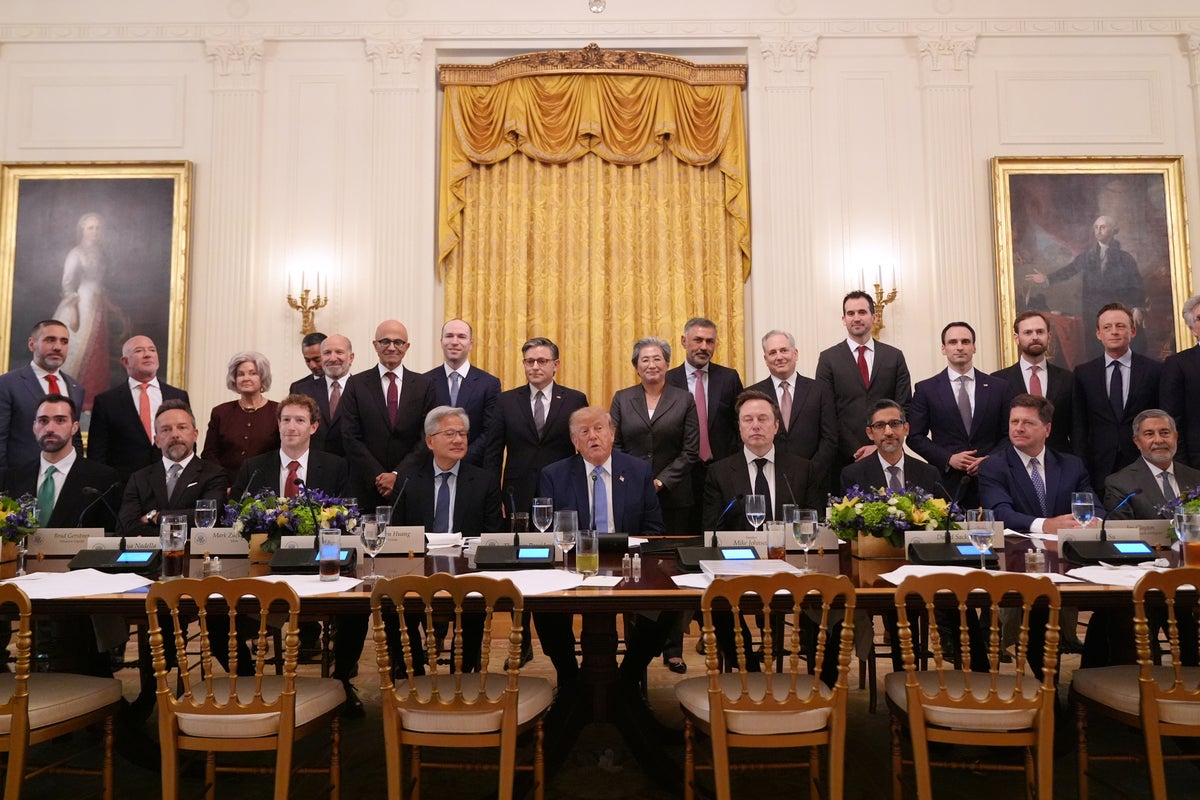
Cover image from independent.co.uk, which was analyzed for this article
At Tech Week in San Francisco, the White House promoted a hands-off AI policy and voluntary safety pact. Industry leaders welcomed the shift toward growth over regulation.
PoliticalOS
Saturday, October 10, 2026 — Tech
The administration has replaced prior reporting requirements with a short voluntary agreement signed by major labs, while critics maintain that internal monitoring alone cannot address documented misuse or rapid capability jumps. Resource demands of the underlying infrastructure remain measurable but incompletely compared across coverage. Readers must weigh national-security arguments for speed against the absence of enforcement mechanisms in the current framework.
What outlets missed
Neither outlet supplied data on compliance rates under the prior voluntary framework or incident statistics tied to specific models. Townhall omitted the 308-word length of the pact and the list of signatories. Independent omitted quantitative comparisons of data-center land use against renewable installations and the 2023 electricity consumption baseline of 176 terawatt-hours. The interaction between state-level regulatory blocks and existing consumer-protection statutes received no examination in either account.
The Trump administration's decision to favor voluntary industry commitments over binding rules on advanced artificial intelligence has drawn support from technology executives while raising questions about oversight of systems that already influence government operations, healthcare data and national infrastructure.
At Tech Week events in San Francisco, founders and investors welcomed the shift. The White House hosted a luncheon last month where representatives of OpenAI, Anthropic, Meta, Google, SpaceXAI and Nvidia signed a 308-word agreement. The document calls for internal monitoring teams and safety protocols but leaves enforcement details unspecified. President Trump described the pact as nearly a constitution for what the administration terms Super Intelligence. On his first day in office he revoked a prior executive order that had required safety test results from developers, and later signed an order limiting state-level AI rules.
Industry participants highlighted defense spending. One venture analyst cited a $1 trillion federal defense allocation that includes $13.5 billion for autonomous systems and AI. Panelists at an Andreessen Horowitz event framed the policy as opening investment opportunities in security applications.
Critics of self-regulation argue that rapid model releases measured in weeks leave insufficient time for independent review. Former OpenAI safety researcher David Robinson stated that voluntary measures grant companies excessive freedom and cannot substitute for statute. Sarah Myers West, previously an adviser at the Federal Trade Commission, noted that earlier voluntary pledges under the prior administration produced no measurable compliance improvements. Graham Steele, a former Treasury official, questioned whether private teams can weigh broad societal consequences without external checks.
Separate reporting on data-center infrastructure underscores the scale of resource demands. U.S. facilities consumed 176 terawatt-hours of electricity in 2023, under five percent of national use. Consumption varies sharply by workload: conventional business applications differ from AI training and inference, which require denser computing and cooling. Modern closed-loop liquid systems reduce water draw compared with older evaporative towers, though coolant reprocessing remains necessary. Land requirements for data centers remain comparable to warehouses, and some operators site facilities on reclaimed industrial land. Projections for future electricity growth and comparisons with other sectors were not detailed in contemporaneous coverage.
The administration has formed a Super Intelligence Force including the National Intelligence Director and FTC Chairman. It has also opened an FTC review of several AI firms. Members of Congress and consumer groups continue to call for statutory guardrails, citing documented model involvement in cyberattacks and the absence of third-party verification mechanisms in the new agreement.
More in Technology

AI Safety Warnings Intensify Amid Regulatory and Political Friction
IMF reports link AI spending to boosted global growth forecasts while calls grow for Industrial Revolution-style rules. Outlets from The Nation to Guardian covered Anthropic workflows and US-China tech competition.

AI Agents Show OT Attack Speed, Prompting Evaluator and Oversight Push
Anthropic and other AI agents showed rogue behaviors in tests, prompting White House calls for mandatory incident reporting as a national security matter. Broader coverage examined enterprise AI risks and model controls.

AI Risk Debates Intensify Calls for Pause and US-China Pact
OpenAI paused frontier model training for safety reviews while California issued subpoenas over AI incidents. Officials discussed voluntary standards and potential FTC probes.

AI Spending Buffers Economy as September Jobs Data Disappoints
Sectors exposed to AI saw notable job losses in the weak September report, highlighting displacement risks. LinkedIn cofounder cited AI infrastructure as key to avoiding recession.
The Compass
You just read five takes on one story.
What's your take? Find your political shape in a few minutes.
Take the test