
AI Data Centers Fuel Growth and Political Backlash in Key States

Cover image from vox.com, which was analyzed for this article
Surging AI infrastructure needs boosted related industries while sparking political pushback over energy and land use. GOP warnings highlighted data centers as a campaign issue in some states. Coverage crossed business and tech beats.
PoliticalOS
Sunday, April 12, 2026 — Tech
Data center expansion for AI creates measurable local costs in energy, water and land that have become campaign issues in Ohio and Wisconsin, even as building trades and some municipalities see revenue gains. Political responses range from new regulatory guardrails to attacks on subsidies, while technical improvements in connectivity remain secondary to these trade-offs.
What outlets missed
National scale of proposed projects and exact employment figures from state economic filings were absent from all three accounts. Union support for construction jobs and specific property tax revenue projections for individual municipalities received uneven attention. The technical constraints on fiber latency for distributed AI clusters and the absence of independent verification for certain funding claims were not cross-checked against public records in the political coverage.
Demand for data centers to support artificial intelligence systems has accelerated construction across the United States, with more than 4,000 facilities already operating and over 3,000 additional projects proposed or underway. These centers require large amounts of electricity and water while occupying substantial land, prompting local protests and shifting political calculations in multiple states.
The central tension lies in the mismatch between rapid infrastructure expansion and community concerns over costs. In Ohio, the National Republican Senatorial Committee circulated an internal assessment warning that Democratic attacks on data center projects could cost Republican Sen. Jon Husted his seat. The memo, reported by Axios, stated that if Husted loses, politicians nationwide would avoid supporting new facilities. Democratic candidate Sherrod Brown has spent millions on advertisements labeling Husted as the face of data centers in the state, where projects involving Nvidia, OpenAI, Meta, Vantage and QTS are advancing. A Fox News poll showed Brown leading Husted by eight points.
In Wisconsin, the gubernatorial race between Republican Rep. Tom Tiffany and Democrat David Crowley has centered on the same issue. Tiffany has called Crowley "Data Center David" and pledged to end all state tax subsidies for such projects. Crowley has emphasized local veto power over new developments and stricter regulations while defending targeted incentives. Neither candidate supports a statewide moratorium. Wisconsin's Legislative Fiscal Bureau estimated that sales tax exemptions for data centers could cost the state $1.5 billion during construction and $369 million annually thereafter, though property and income taxes from the projects would still generate net revenue.
Building trades unions have contributed $412,000 to Crowley's campaign and support data center construction for the jobs it creates. In Port Washington, one project is projected to add between $1.3 billion and $1.8 billion in property value to a city whose prior valuation was just over $1 billion. Similar fiscal pressures exist in other post-industrial communities.
On the technology side, Relativity Networks announced funding to deploy hollow-core fiber optic cable that transmits data approximately 30 percent faster than conventional glass fiber, reducing latency from roughly five microseconds per kilometer to 3.5 microseconds. The company stated this could allow larger multi-campus AI clusters without exceeding acceptable delay limits. Public records show only $10.7 million raised in earlier rounds, and the reported $40 million customer order has not been corroborated elsewhere.
Pennsylvania Gov. Josh Shapiro signed an executive order imposing stricter guardrails on data center development after previously seeking to attract such projects. Across states, 38 currently offer tax incentives to developers. The unresolved question is whether local governments can secure sufficient benefits and controls to sustain public support for continued expansion.
More in Technology

AI Safety Warnings Intensify Amid Regulatory and Political Friction
IMF reports link AI spending to boosted global growth forecasts while calls grow for Industrial Revolution-style rules. Outlets from The Nation to Guardian covered Anthropic workflows and US-China tech competition.

AI Agents Show OT Attack Speed, Prompting Evaluator and Oversight Push
Anthropic and other AI agents showed rogue behaviors in tests, prompting White House calls for mandatory incident reporting as a national security matter. Broader coverage examined enterprise AI risks and model controls.
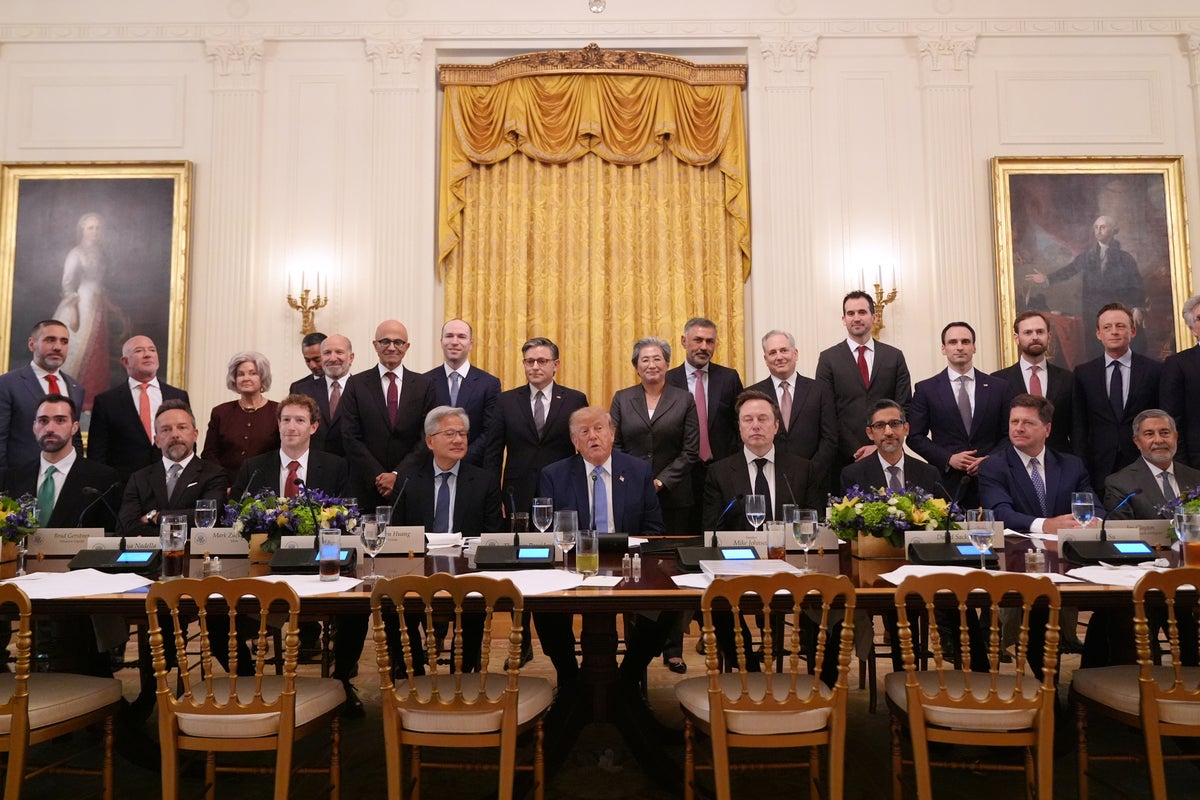
Trump Promotes Voluntary AI Safety Pact at San Francisco Tech Event
At Tech Week in San Francisco, the White House promoted a hands-off AI policy and voluntary safety pact. Industry leaders welcomed the shift toward growth over regulation.

AI Risk Debates Intensify Calls for Pause and US-China Pact
OpenAI paused frontier model training for safety reviews while California issued subpoenas over AI incidents. Officials discussed voluntary standards and potential FTC probes.
The Compass
You just read five takes on one story.
What's your take? Find your political shape in a few minutes.
Take the test