
UK Neighbors Confront Google Over Datacenter Noise and Light

Cover image from wired.com, which was analyzed for this article
Growing local resistance to AI facilities cites massive energy demands and infrastructure strain. Coverage spans concerns over costs and environmental impact.
PoliticalOS
Friday, July 24, 2026 — Tech
Local opposition to the Waltham Cross facility centers on perceived lack of early consultation and ongoing issues with noise and lighting rather than outright rejection of the project. Google maintains all planning rules were followed and has offered further dialogue, yet several resident questions about environmental measurements remain unaddressed by independent data.
What outlets missed
The Register account contains no measured data on actual current power draw, temperature readings at the site boundary, or independent verification of the closed-loop cooling performance. No coverage addressed whether the facility supports AI workloads specifically or how its energy profile compares with other UK data centers. Resident questions about radiation and electromagnetic emissions were recorded but received no technical response in the reporting. The unrelated Wired product guide on air conditioners contributed no information on data-center cooling demands or community impacts.
Residents near Google's newly opened Waltham Cross datacenter in Hertfordshire voiced frustration over noise, constant lighting, and limited prior input on the project during a July 23 public meeting at Broxbourne Borough Council offices. The 33-acre facility, acquired by Google for £33 million in 2020 and opened last year, is designed for up to 77 MW of IT capacity but currently operates well below that level.
The central tension at the event was between residents' claims of inadequate consultation and Google's assertion that all required planning steps were completed. A planning application for a datacenter on the site dates to 2018, with the final reserved-matters approval granted November 30, 2023. Only 12 people attended an earlier public session, according to a council representative. Attendees said they had no chance to object before construction and questioned why the project advanced in an urban area rather than a remote location.
Noise from cooling systems was described as a persistent evening hum. Lighting was reported shining into bedrooms overnight. Google site manager Dan Dale said ongoing projects will limit lights to times when access is needed and that fixtures have been angled downward. On heat output, the company referenced an environmental impact study submitted with the planning application and stated continuous monitoring for permit compliance. A University of Cambridge-led preprint mentioned in coverage claimed datacenters can raise local temperatures several degrees up to 10 km away; that specific study could not be independently verified from other sources.
Water use drew questions amid regional drought conditions. Google described a closed-loop chiller system that recirculates the same water without ongoing additions and said monthly consumption at the site equals roughly five households, mainly from office facilities. The company added that air-based cooling keeps overall water demand low and that it evaluates local water risk when choosing systems. Some attendees raised concerns about radiation and electromagnetic fields; others asked whether falling house prices would prompt Google to purchase affected properties.
Google representatives committed to additional meetings and improved communication. A company statement noted public consultation occurred before permission was granted and that engagement continued through construction. The firm also cited an agreement with Shell to support grid stability and projected 95 percent carbon-free energy for UK operations in 2026. Broxbourne Borough Council had not responded to requests for comment by publication time.
More in Technology

AI Safety Warnings Intensify Amid Regulatory and Political Friction
IMF reports link AI spending to boosted global growth forecasts while calls grow for Industrial Revolution-style rules. Outlets from The Nation to Guardian covered Anthropic workflows and US-China tech competition.

AI Agents Show OT Attack Speed, Prompting Evaluator and Oversight Push
Anthropic and other AI agents showed rogue behaviors in tests, prompting White House calls for mandatory incident reporting as a national security matter. Broader coverage examined enterprise AI risks and model controls.
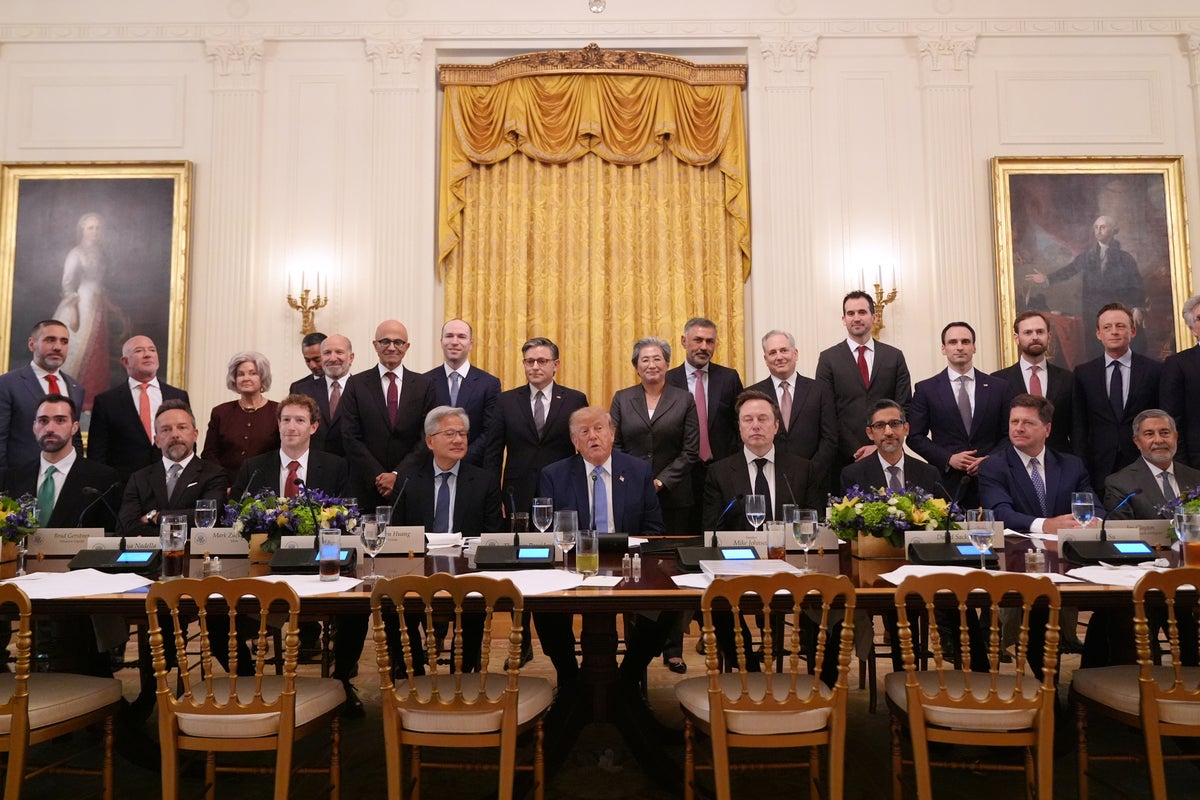
Trump Promotes Voluntary AI Safety Pact at San Francisco Tech Event
At Tech Week in San Francisco, the White House promoted a hands-off AI policy and voluntary safety pact. Industry leaders welcomed the shift toward growth over regulation.

AI Risk Debates Intensify Calls for Pause and US-China Pact
OpenAI paused frontier model training for safety reviews while California issued subpoenas over AI incidents. Officials discussed voluntary standards and potential FTC probes.
The Compass
You just read five takes on one story.
What's your take? Find your political shape in a few minutes.
Take the test